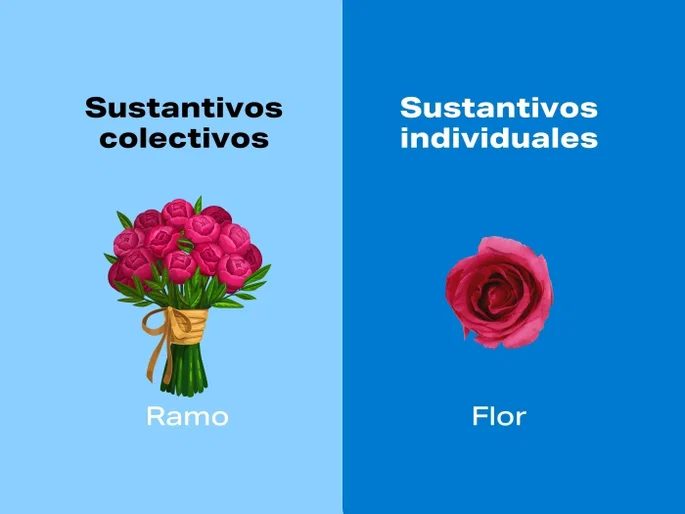
Most people think a noun is just a person, place, or thing. They are not wrong. But some nouns are tricky. They look singular. They act singular. Yet they describe a massive group.
These are collective nouns.
Understanding the difference between collective and individual nouns changes how you see language. It simplifies communication. It lets you talk about a whole forest without listing every single tree.
Let’s break down the mechanics.
What are collective nouns?
A collective noun represents a group of elements that share common characteristics. It is a single word for a collection.
Think of the word herd. One word. But it contains many animals.
Common examples include:
– Rebaño (flock/herd of sheep)
– Manada (pack of wolves/animals)
– Equipo (team)
– Baraja (deck of cards)
– Olivar (olive grove)
– Cubertería (cutlery set)
– Flor (bouquet/bunch of flowers)
The grammar is strict here. Even though the meaning is plural, the noun itself remains singular.
“Manada” is singular. It describes lions. The lions are plural. The group is one unit.
What are individual nouns?
Individual nouns are straightforward. They name one entity. One object. One being.
If “manada” is the group, “león” (lion) is the individual.
Examples include:
– Oveja (sheep)
– Lobo (wolf)
– Jugador (player)
– Carta (card)
– Olivo (olive tree)
– Tenedor (fork)
– Ramo (single stem/bouquet element)
Both categories cover animals, people, objects, places, and concepts. Knowing which is which helps you choose the right verb agreement and clarifies your message.
Animal Collective and Individual Pairs
Animals often have specific collective terms. Using the correct term adds precision.
| Collective Noun | Individual Noun |
|---|---|
| Rebaño | Oveja |
| Bandada | Ave |
| Banco | Pez |
| Enjambre | Abeja |
| Caballada | Caballo |
| Nube | Mosquito |
| Piara | Cerdo |
| Clan | Hiena |
| Jauría | Perro de caza |
| Hormiguero | Hormiga |
| Camada | Cachorro |
| Manada | Lobo, León, Elefante |
Why does this matter? If you say “a pack of wolves,” you imply a social hunting group. If you say “wolves,” you might just mean two of them in a park. Context changes with the collective.
People and Groups
Human organizations rely heavily on collective nouns. They define structure.
| Collective Noun | Individual Noun |
|---|---|
| Ejército | Soldado |
| Cofradía | Devoto |
| Familia | Miembro |
| Alumnado | Estudiante |
| Gremio | Trabajador |
| Elenco | Actor |
| Tropa | Explorador, Soldado |
| Vecindario | Vecino |
| Orquesta | Músico |
| Coro | Cantante |
| Tropel | Individuo |
| Horda | Nómada |
| Profesorado | Profesor |
| Compañía | Bailarín |
| Cuadrilla | Albañil |
| Público | Espectador |
| Patrulla | Policía |
Consider “Alumnado” (student body). You don’t say “the student bodies are here.” You say “the student body is here.” The singular verb matches the singular collective noun, even though dozens of people are present.
Objects and Collections
Objects become collective when grouped by function or location.
| Collective Noun | Individual Noun |
|---|---|
| Biblioteca | Libro |
| Escuadrón | Avión |
| Ristra | Ajo |
| Colonia | Vivienda |
| Archipiélago | Isla |
| Manojo | Espárrago |
| Bosque | Árbol |
| Vajilla | Plato |
| Ramo | Flor |
| Religión | Dogma |
| Cosecha | Fruto |
| Constelación | Estrella |
| Pinar | Pino |
| Cordillera | Montaña |
| Baraja | Naipe |
| Racimo | Uva |
| Galería | Retrato |
| Sistema | Órgano |
| Ideología | Idea |
Think of a “deck of cards” (baraja ). It’s one object. But inside are fifty-two individual cards (naipes ). The collective simplifies the mental load. You don’t count the cards. You hold the deck.
Using Collective Nouns in Sentences
See how the grammar works in action. The verb stays singular.
- The documentary is about a pack of lions. (El documental trata sobre una manada de leones. )
- Javier is part of the cast. (*Javier es uno de los