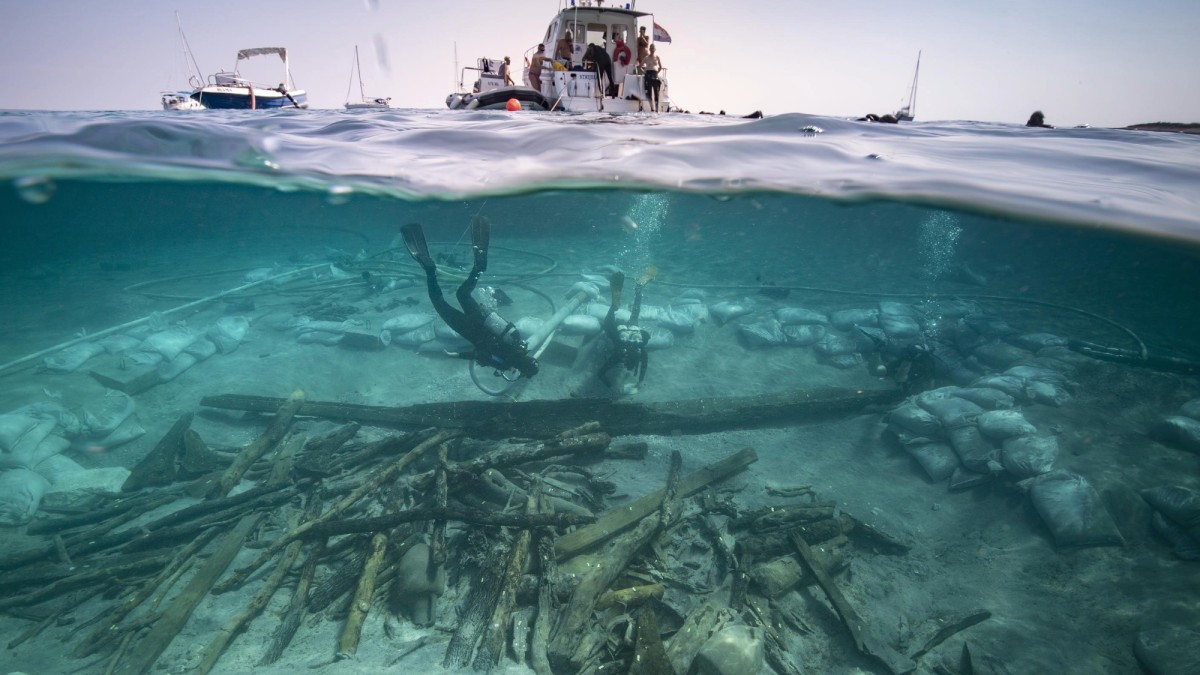
Archaeologists have long focused on the “treasures” of shipwrecks—gold, pottery, and amphorae. However, a recent study of the Ilovik–Paržine 1 shipwreck, a vessel from the Roman Republic era dating back 2,200 years, has shifted the scientific gaze toward something far more functional: the ship’s waterproofing layer.
By analyzing the microscopic residue used to keep the vessel afloat, researchers are uncovering a detailed map of ancient maritime technology, trade routes, and repair habits.
The “Sticky” Time Capsule
The shipwreck, discovered in 2016 off the coast of modern-day Croatia, contains a unique protective coating that acted as a biological trap. Much like tree sap, the sticky waterproofing material captured pollen grains at the moment of application.
By examining both the molecular composition of the coating and the pollen trapped within it, scientists from the University of Strasbourg and other institutions have been able to reconstruct the ship’s history. This method allows researchers to move beyond simply knowing what a ship was, to understanding where it was built and how it was maintained.
Decoding the Recipe: Pitch, Resin, and Zopissa
Through structural and molecular analysis of ten coating samples, the research team identified a “molecular fingerprint” for the vessel’s protection. The findings revealed a sophisticated use of organic materials:
- Coniferous Resin and Tar: The primary ingredients across most samples were heated coniferous tree resin or pitch.
- Zopissa: One specific sample revealed a mixture of beeswax and tar. This substance, known to the Greeks as zopissa, was famously documented by the Roman scholar Pliny the Elder.
The presence of zopissa is a significant find. It suggests that even within the Roman sphere, Greek shipbuilding traditions and material recipes remained in active use throughout the Adriatic region.
Mapping a Journey Through Pollen
The pollen analysis provided a biological GPS for the vessel. The samples contained a diverse array of flora, including:
– Mediterranean staples: Holly oak, pine, olive, and hazel.
– Riverine and forest species: Alder, ash, fir, and beech.
These findings support the hypothesis that the ship was likely constructed in Brundisium (modern-day Brindisi, Italy), a region with deep ties to Greek colonies. The pollen profiles suggest the initial coating was applied near this Italian coast, while subsequent layers were applied as the ship moved along the Adriatic.
A History of Repairs and Routes
One of the most revealing aspects of the study is the uneven distribution of the coating. While the stern and central sections of the ship featured uniform layers, the bow showed three distinct batches of application.
This discrepancy suggests a pattern of “patch-up” jobs. The ship likely underwent several rounds of maintenance—four to five coatings in total—using materials sourced from different parts of the Mediterranean. This indicates that the vessel was not merely a single-trip cargo ship, but a working vessel that traveled extensively between the western and eastern Adriatic coasts, stopping at various ports for repairs.
“Our study highlights navigation routes based on clues related to the ship’s construction areas and, especially, to the different phases of coating application,” notes lead author Armelle Charrié-Duhaut.
Conclusion
By studying the microscopic remnants of waterproofing, researchers have transformed a sunken wreck into a detailed record of ancient logistics. The Ilovik–Paržine 1 shipwreck proves that the “glue” holding an ancient vessel together can reveal as much about maritime history as the cargo it once carried.