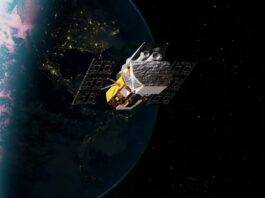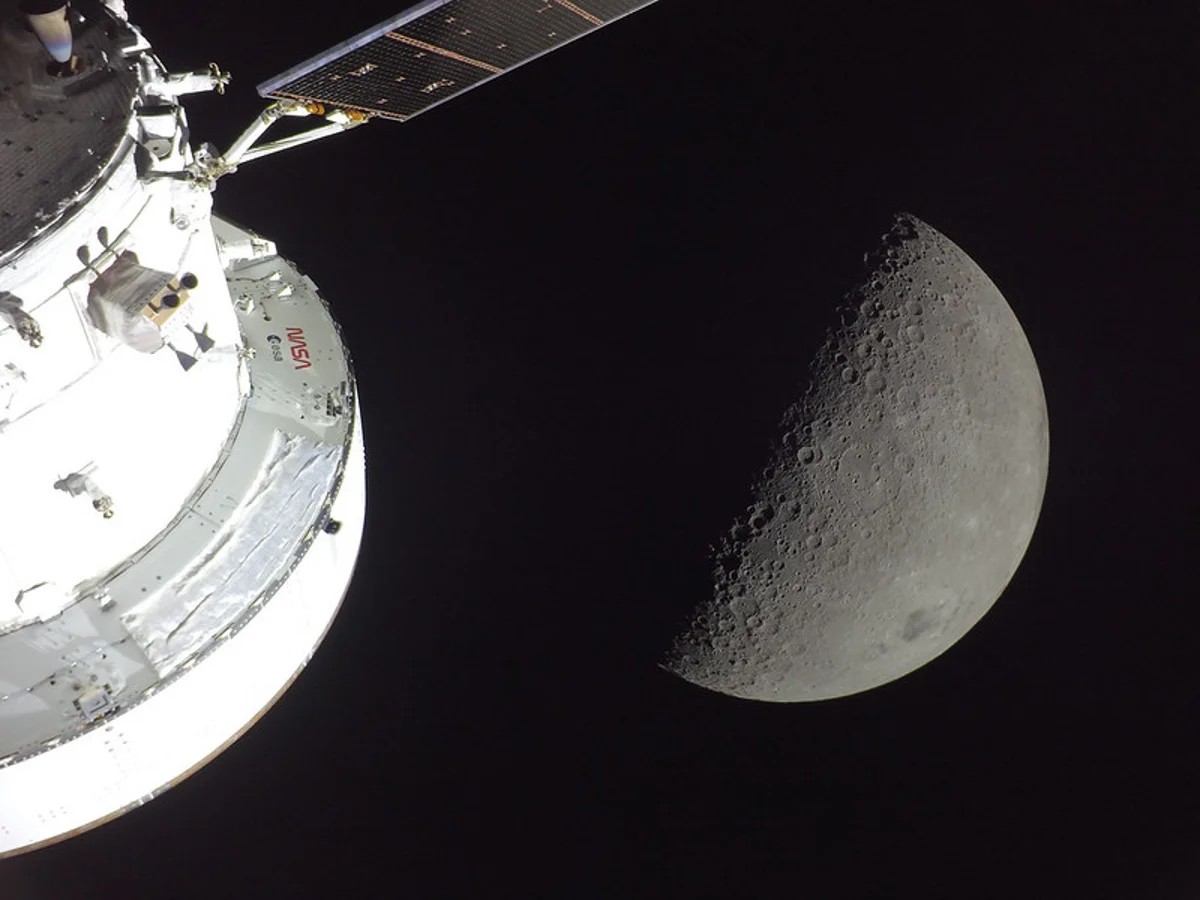
The Artemis II mission recently completed a historic milestone, successfully carrying four astronauts on a 10-day journey around the Moon. The mission achieved its primary goals: demonstrating the Orion spacecraft’s ability to sustain human life during deep-space transit and returning the crew safely to Earth with pinpoint precision.
However, despite the high-tech triumph, the crew encountered a surprisingly unglamorous obstacle: the toilet wouldn’t flush.
A Leap Forward in Astronaut Comfort
To understand why this issue matters, one must look at how far space travel has come. During the Apollo era, moon-faring astronauts had to rely on rudimentary, disposable bags for waste management. In contrast, the Artemis II Orion capsule was equipped with the Universal Waste Management System (UWMS) —a sophisticated, 3D-printed titanium unit designed to provide privacy and much more efficient waste processing.
Mission Commander Reid Wiseman praised the hardware itself, noting that the toilet functioned well for the crew. The problem was not the “seat,” but rather the plumbing.
The Technical Glitch: A Clogged Vent Line
Midway through the 10-day mission, the urine vent line became blocked. While NASA is still investigating the exact cause, two primary theories have emerged:
1. Freezing: Extreme temperature fluctuations in space may have caused urine to freeze within the line.
2. Chemical Debris: Additives used in the wastewater may have created sediment or buildup that obstructed the flow.
Unlike the systems used on the International Space Station (ISS), which are designed to recycle liquid waste into drinking water, the Orion system was designed to “vent”—meaning it essentially ejects liquid waste into the vacuum of space.
Why Plumbing in Space is a Physics Nightmare
The difficulty of managing fluids in orbit highlights one of the most persistent challenges in astronautical engineering. On Earth, gravity provides a constant, predictable force that pulls liquids “down” into drains. In the microgravity of space, that predictability vanishes.
According to experts from Cornell University and the University of North Dakota, several factors make space plumbing incredibly complex:
- Fluid Dynamics: Without gravity, fluids are governed by surface tension and the physical shape of the pipes. Liquids don’t just flow; they cling, swirl, and move in unpredictable patterns.
- The Bubble Problem: Using air pressure to push waste through pipes can inadvertently create air bubbles. In microgravity, these bubbles can get trapped in the plumbing, creating significant blockages.
- Extreme Temperatures: Space experiences violent temperature swings. A system can transition from extreme heat to extreme cold in minutes, making thermal management for liquid lines a constant struggle.
Lessons for Future Missions
While a clogged toilet might seem like a minor inconvenience, for NASA, it is a critical data point. The Artemis II UWMS was a prototype—the first time this specific system has been tested in a deep-space environment.
The mission’s success in every other metric suggests that the “fix” for the plumbing will likely be manageable. Potential solutions currently under consideration include:
* Installing integrated heaters to prevent freezing.
* Adjusting air/water flow to minimize bubble formation and debris buildup.
“If you go 400,000 kilometers and get back and the only issue you have is that the urine dump is not perfect, well, we have a good day.”
Conclusion
The Artemis II mission proved that the Orion spacecraft is capable of deep-space travel, providing NASA with the essential data needed to refine life-support systems. While the plumbing issues require technical adjustments, the mission stands as a successful leap toward permanent human presence in the lunar vicinity.