Winter has arrived, bringing colder temperatures and shorter days. While humans rely on layers, heating, and indoor comfort to survive the season, animals employ a surprising range of strategies to endure frigid conditions. From dormancy to outright freezing, here’s how some species weather the cold.
The Art of Slowing Down: Brumation vs. Hibernation
Many reptiles and amphibians enter a state called brumation, a less intense form of hibernation. Unlike mammals who sleep through winter relying on fat reserves, brumating animals wake periodically for basic needs like drinking. As Karen McDonald of the Smithsonian Environmental Research Center explains, it’s “like taking a long nap, getting up when it gets warmer, going to the bathroom, and then going back to sleep.”
This distinction matters because it highlights how diverse survival mechanisms are in the animal kingdom. Hibernation is a deeper shutdown; brumation is a slowed-down existence, allowing animals to conserve energy without complete cessation of activity.
Frozen Solid: The Wood Frog’s Extreme Strategy
Some species take cold adaptation to the extreme. Wood frogs, found in New England and the Midwest, freeze completely solid during winter. Their heartbeat, breathing, and brain activity all stop for months.
This isn’t just resilience; it’s a competitive advantage. By thawing early in spring, wood frogs gain a head start on mating and egg-laying in rapidly warming ponds, beating other frog species dependent on slower-thawing lakes.
Feathered Resilience: Birds Staying Put
Not all birds migrate. Cardinals, chickadees, and blue jays endure the cold by meticulously maintaining their feathers. Some grow new plumage for better insulation; others fluff their feathers to trap air. Preening with oil from a tail gland waterproofs them against snow and ice.
Supplementing natural resources with well-maintained bird feeders can also help these birds survive the lean months.
Underwater Dormancy: Crabs and Oysters
Blue crabs in the Chesapeake Bay burrow into the mud, slowing their metabolism until water temperatures reach around 50°F. While not full hibernation, this inactivity allows them to conserve energy through the winter.
Oysters, essential for water filtration and storm protection, also enter dormancy, relying on glycogen stores built up during warmer months. They can filter up to 50 gallons of water daily in summer, ensuring enough energy reserves for winter survival.
The Unexpected: Turtles Breathing Through Their Butts
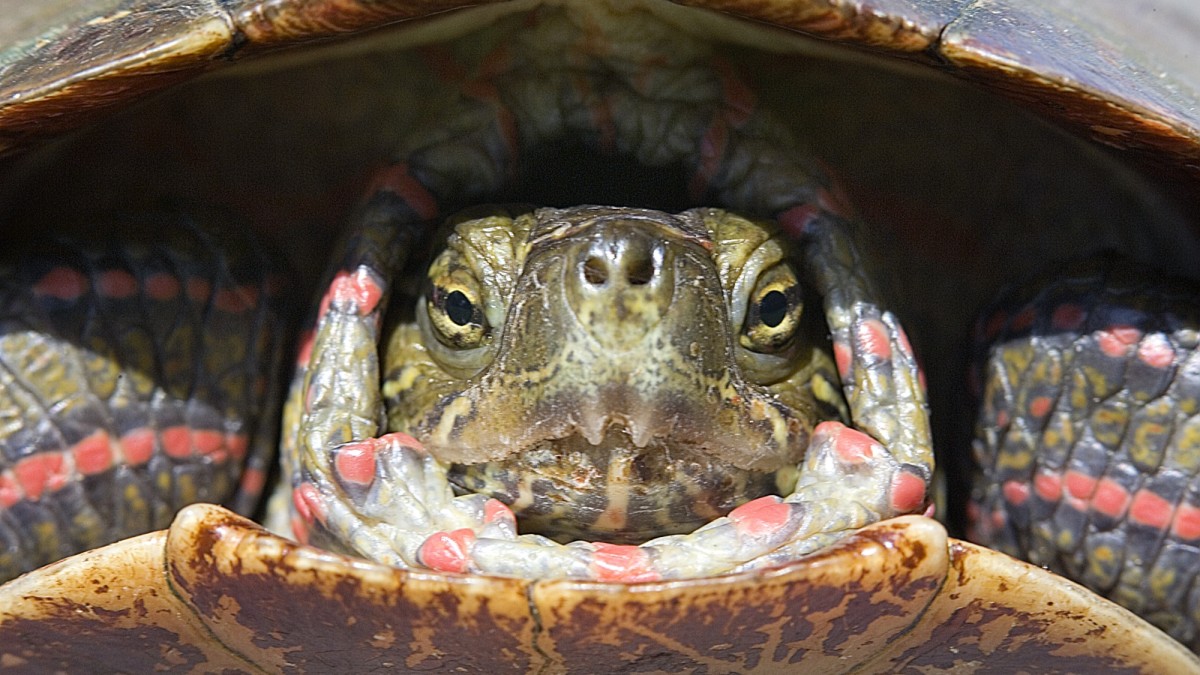
Perhaps the most unusual strategy belongs to turtles. Snapping and painted turtles survive underwater by breathing through their cloaca – the opening for waste and reproduction. This process, called cloacal respiration, allows gas exchange even while frozen under ice.
This adaptation illustrates how animals can overcome seemingly insurmountable challenges through evolution. What appears bizarre to humans is essential for survival in extreme environments.
Animals survive winter in ways that are often stranger and more effective than we give them credit for. From brumating reptiles to butt-breathing turtles, their strategies demonstrate the incredible adaptability of life in the face of harsh conditions.