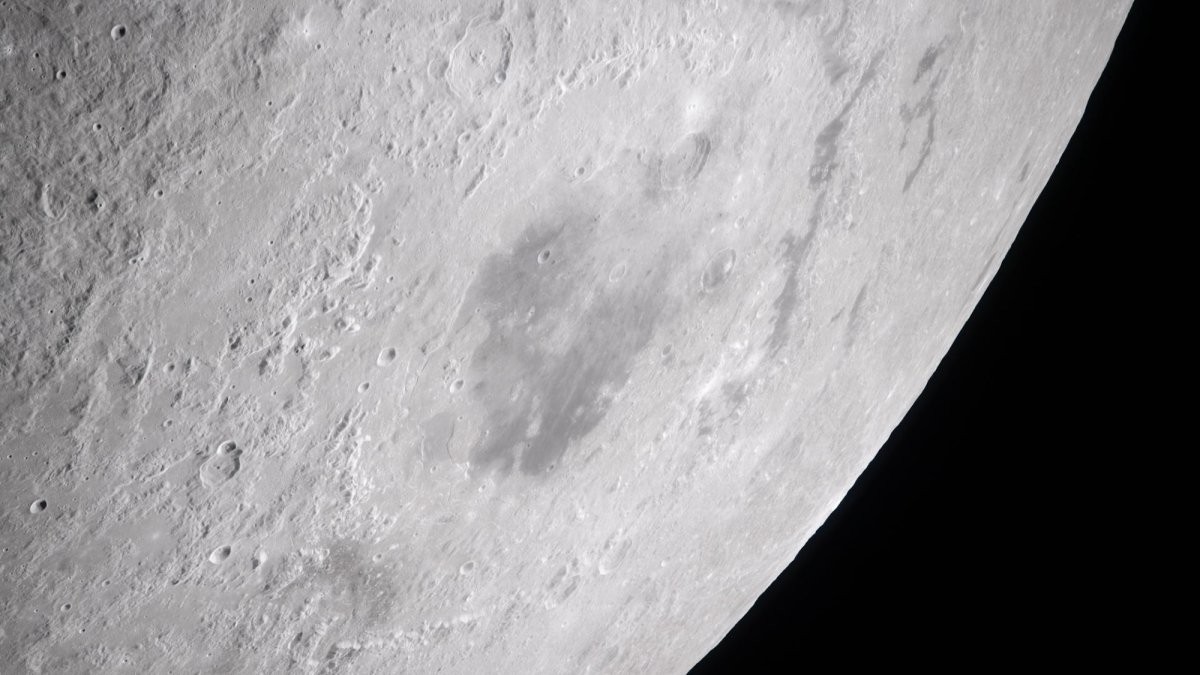
Establishing a permanent human presence on the Moon is one of the most ambitious goals in modern space exploration. However, the lunar environment presents a constant, violent threat: a relentless bombardment of meteoroids. To prepare for future lunar bases, NASA is turning to the public through the Impact Flash project, asking amateur astronomers to help monitor these celestial collisions.
The Lunar Bombardment Problem
Unlike Earth, which possesses an atmosphere that burns up most small space debris, the Moon has no such protection. This makes the lunar surface a high-stakes target for cosmic impacts.
The scale of the threat is significant:
– Daily Strikes: Astronomers estimate that roughly 100 meteoroids the size of ping-pong balls hit the Moon every single day.
– Explosive Force: Each of these small impacts releases energy equivalent to approximately seven pounds of dynamite.
– Large-Scale Events: Every four years, a meteor with a diameter of at least eight feet strikes the Moon with the force of a kiloton of TNT.
For astronauts and future lunar settlers, these impacts are not just astronomical curiosities; they are structural risks that must be accounted for when designing resilient habitats.
What are “Impact Flashes”?
To understand the frequency and intensity of these strikes, scientists monitor impact flashes. These are split-second flares of light produced when a meteoroid strikes the Moon’s dark side.
While the crew of the Artemis II mission recently provided high-quality visual and equipment data during their lunar flyby, a single mission cannot provide the long-term data required to map these trends. To build a comprehensive database, NASA-funded researchers from the Geophysical Exploration of the Dynamics and Evolution of the Solar System (GEODES) at the University of Maryland need a continuous stream of observations.
How You Can Participate
The Impact Flash project invites “citizen scientists” to contribute by using their own telescopes to capture these fleeting moments of light.
To participate effectively, the project suggests using equipment with the following specifications:
– Aperture: At least a 4-inch mirror or lens.
– Tracking: Automatic tracking capabilities to keep the Moon centered.
– Recording: Video capability set to 25–30 frames per second.
The Process:
1. Observe: Point your telescope at the Moon’s darkened hemisphere.
2. Identify: Use publicly available software to attempt to identify new impact flashes in your footage.
3. Submit: Upload all clips to the official Lunar Impact Flash database.
Once submitted, professional astronomers will analyze the data to extract vital information about the size and frequency of the meteoroids.
Beyond Base Building: Peering into the Moon’s Interior
The utility of this data extends far beyond protecting lunar colonies. Ben Fernando, a planetary scientist at Los Alamos National Laboratory and lead for the project, notes that these observations will play a crucial role in studying moonquakes.
By correlating the timing and intensity of impact flashes with data from future seismometers sent to the Moon, scientists can better understand what triggers seismic activity. This connection will ultimately allow researchers to create a clearer picture of the Moon’s internal structure, revealing how the lunar interior is composed and how it behaves.
By monitoring the surface impacts, we are not just watching flashes of light; we are learning how to read the Moon’s internal heartbeat.
Conclusion
By contributing to the Impact Flash database, amateur astronomers are providing the critical data needed to safeguard future lunar missions and unlock the geological secrets of our closest celestial neighbor.