


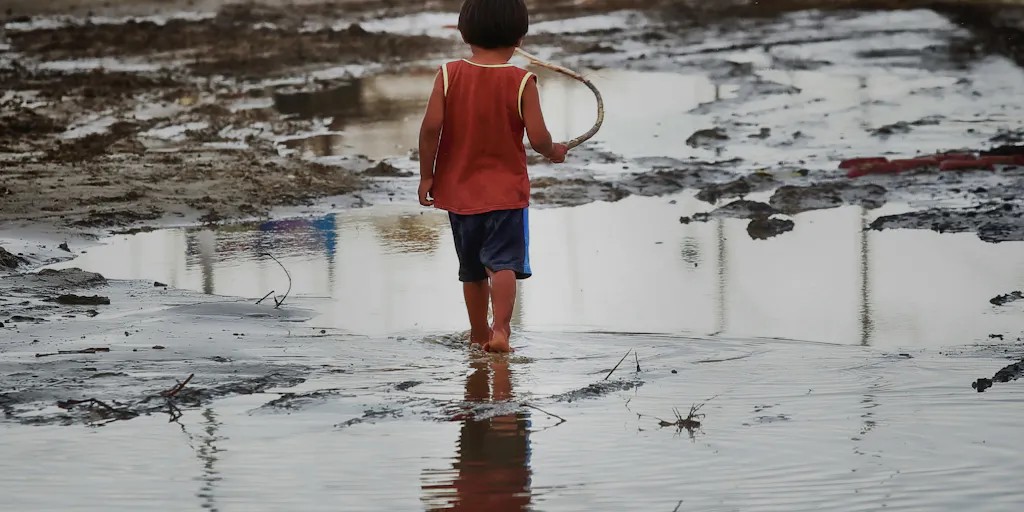
Погіршення впливу зміни клімату не є абстрактною загрозою майбутнього; вони вже руйнують життя, особливо маленьких дітей і людей, які ними опікуються. Останні екстремальні погодні явища, включно з такими руйнівними ураганами, як «Мелісса» в Карибському басейні та лісовими пожежами в Лос-Анджелесі, демонструють чітку тенденцію: стихійні лиха стають все більш частими та серйозними.
Підвищена вразливість дітей
Діти особливо вразливі до наслідків зміни клімату з кількох причин. Їхні тіла регулюють температуру менш ефективно, ніж дорослі, що робить їх більш сприйнятливими до сильної спеки. Вони також дихають швидше, що збільшує їх вплив поганої якості повітря через лісові пожежі та забруднення. Окрім фізичних ризиків, ці події можуть спричинити травму та змінити поведінку маленьких дітей, які часто відображають стрес своїх опікунів.
Нещодавнє національне опитування показало, що більше половини батьків, які мають дітей віком до шести років, повідомили, що пережили принаймні одну екстремальну погоду за останні два роки, і приблизно стільки ж вважають, що ці події негативно вплинули на добробут їхніх дітей.
Криза раннього дитинства
Особливо вразливим є сектор ранньої освіти. Лісові пожежі та урагани вже змусили закрити сотні центрів денного догляду, залишивши як персонал, так і сім’ї без дому та роботи. Фінансова незахищеність вихователів раннього дитинства — майже половина з них покладаються на державну допомогу — означає, що їм бракує ресурсів для швидкого відновлення після стихійних лих. Це створює порочне коло: коли опікуни дестабілізовані, діти, яких вони обслуговують, також піддаються більшому ризику.
Необхідність активних інвестицій
Рішення, кажуть експерти, полягає в збільшенні державних інвестицій на всіх рівнях влади. Однак, враховуючи поточні політичні та економічні обмеження, це може бути нереалістичним. Більш негайні кроки включають інтеграцію кліматичної стійкості в місцеве управління та створення міцніших мереж підтримки громади.
«Нам потрібно перейти від реактивного управління кризою до проактивного планування», — каже Гейлі Гіббс з Центру американського прогресу. «Підтримка вихователів раннього віку є надзвичайно важливою, оскільки вони є опорою для вразливих сімей, які долають ці проблеми».
Зрештою, подолання впливу зміни клімату на маленьких дітей та опікунів вимагає не лише екологічних заходів, але й фундаментального зобов’язання захистити тих, хто найбільше ризикує. Якщо цього не зробити, цикл нестабільності та шкоди збережеться, в результаті чого наймолодші покоління будуть нести основний тягар кризи, яку вони не створювали.