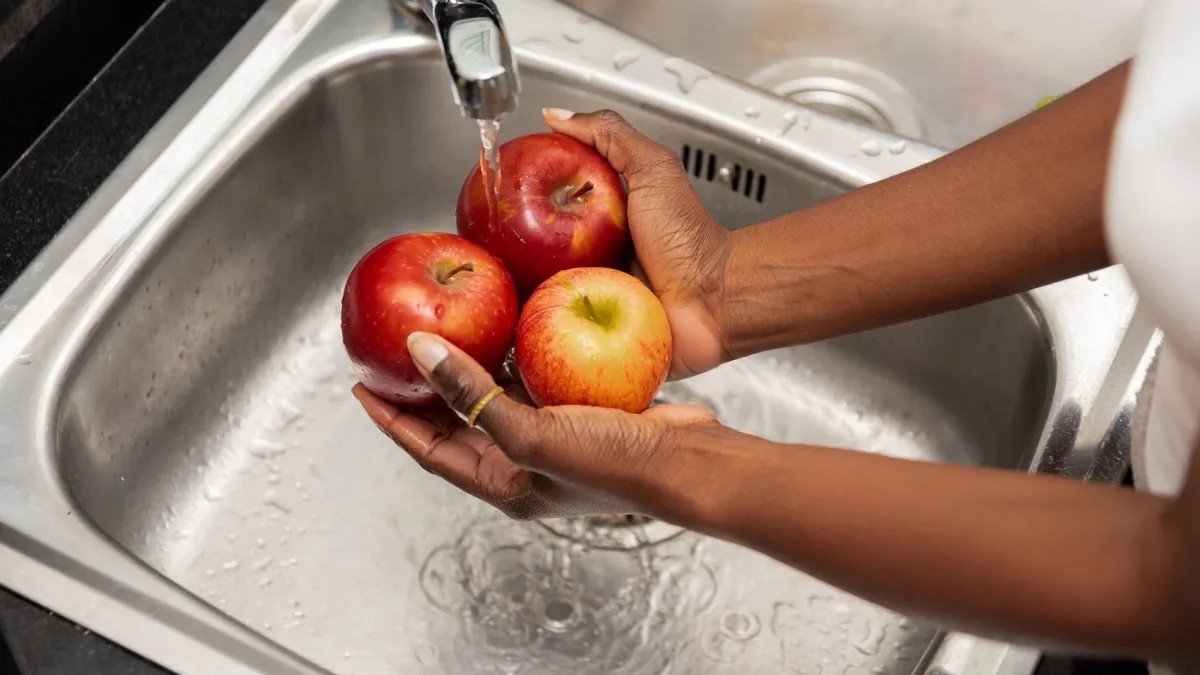
A major challenge in the global food supply chain is the delicate balance between food safety and food longevity. While consumers are encouraged to wash produce to remove bacteria and pesticides, water alone is often insufficient to extend shelf life or effectively strip away chemical residues. Addressing this gap, researchers at the University of British Columbia (UBC) have developed a biodegradable rinse that simultaneously cleans fruit and keeps it fresh for much longer.
The Science of the “Second Skin”
The breakthrough, recently published in the journal ACS Nano, moves away from harsh synthetic chemicals in favor of a solution derived from natural sources. The research team, led by scientist Tianxi Yang, utilized a base of starch extracts —the same carbohydrates found in common grains and potatoes.
To turn this starch into an effective cleaning agent, the researchers added two key ingredients:
– Iron
– Tannic acid (a substance commonly found in tea and wine)
When combined, these components create an adhesive mass. This “sticky” property allows the solution to latch onto pesticide molecules on the surface of the fruit, making them easier to wash away.
Proven Results: Cleaning and Preservation
To validate the effectiveness of the wash, the team conducted comparative tests using apples treated with industry-standard concentrations of pesticides. The results demonstrated a significant performance gap between the new solution and traditional methods:
- Pesticide Removal: The starch-based wash removed between 86% and 94% of surface chemicals, whereas a standard water rinse removed less than half.
- Shelf Life Extension: When applied to grapes, the coating acted as a “breathable second skin.” This layer prevented moisture loss, allowing grape bunches to remain plump and fresh for up to 15 days at room temperature.
- Quality Retention: Beyond just preventing rot, the coating helped maintain the fruit’s internal quality, keeping acidity and soluble sugar levels higher than untreated fruit.
- Antimicrobial Properties: The mixture also appears to provide a protective barrier against microbial decay.
Why This Matters for the Food Industry
This development arrives at a critical time. With millions of pounds of fresh food wasted annually in the United States alone, any method that extends the “window of freshness” has massive implications for both environmental sustainability and economic efficiency.
The researchers have also addressed the most common hurdle for new agricultural technologies: cost. Because the ingredients are inexpensive and readily available, the team estimates that applying the treatment would add only about three cents per apple. This makes it economically competitive with existing industrial coatings.
Future Applications
The versatility of the starch-based solution suggests several paths for implementation:
1. Industrial Scale: Large-scale agricultural producers could use the wash during the post-harvest processing stage.
2. Consumer Use: The technology could be adapted into household products, such as specialized sprays or dissolvable tablets, allowing consumers to treat their produce at home.
“People shouldn’t have to choose between eating fresh produce and worrying about what’s on it,” says Tianxi Yang.
Conclusion
By combining natural starch with iron and tannic acid, researchers have created a low-cost, highly effective tool that tackles two problems at once: reducing chemical exposure and minimizing food waste through extended shelf life.