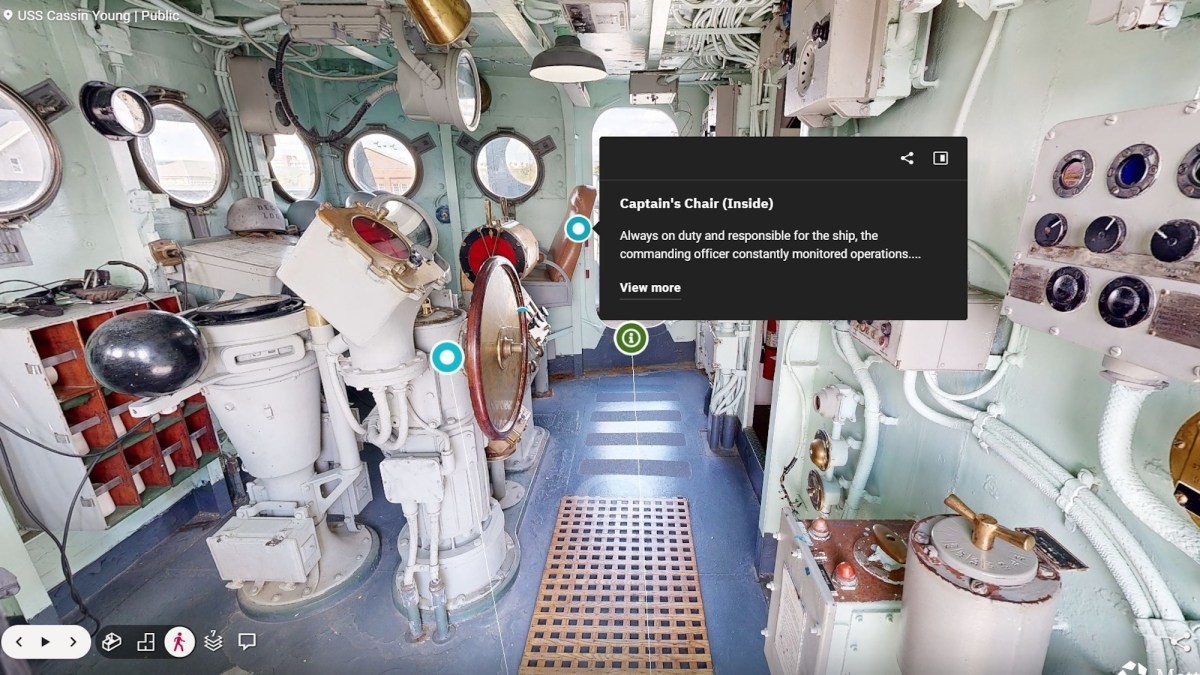
For most history enthusiasts, seeing a World War II destroyer in person is a rare opportunity. Of the 175 Fletcher-class destroyers commissioned by the United States between 1942 and 1944, only four remain afloat today. To bridge this gap between historical significance and physical accessibility, the Boston National Historical Park has launched a new digital initiative.
A Virtual Gateway to Naval History
The Boston National Historical Park has released a 3D virtual tour of the USS Cassin Young, a Fletcher-class destroyer that serves as a centerpiece of their collection. This digital experience allows users to explore the massive, 360-foot vessel through a smartphone or laptop, effectively bringing the museum to the user’s living room.
The tour is designed to function much like a physical museum visit. It features:
– Interactive stopping points that detail the ship’s complex design and weaponry.
– Logistical insights into what daily life was actually like for sailors aboard a wartime vessel.
– Multimedia integration, including links to historical video archives to provide deeper context.
The Legacy of the USS Cassin Young
The ship carries a heavy legacy, named in honor of Captain Cassin Young, a Medal of Honor recipient who was killed during the Naval Battle of Guadalcanal in 1942. The vessel itself was commissioned on December 31, 1943, and played a vital role in the Pacific Theater.
During its service, the ship functioned primarily as a picket ship —a critical defensive role where vessels acted as early-warning sentries to alert larger naval groups of incoming enemy attacks. Its combat history includes significant engagements near Guam, Palau, and the Philippines.
From Combat to National Landmark
The USS Cassin Young’s service life spanned several eras of naval warfare:
1. World War II: Participated in intense Pacific campaigns and survived kamikaze attacks in 1945.
2. The Korean War: Recommissioned in 1951, the ship returned to active duty during this conflict.
3. Post-War Service: The vessel continued through various global training exercises until its final retirement in 1960.
After decades of service, the ship was opened to the public in 1981 at the Boston Naval Yard. Its historical importance was officially recognized in 1986 when it was designated a National Historical Landmark.
This digital transition represents a broader trend in museum curation: using immersive technology to preserve and share “vanishing” history that is otherwise too fragile or rare for the general public to access.
The USS Cassin Young remains a vital link to the maritime history of the 20th century, now preserved through digital means for a global audience.