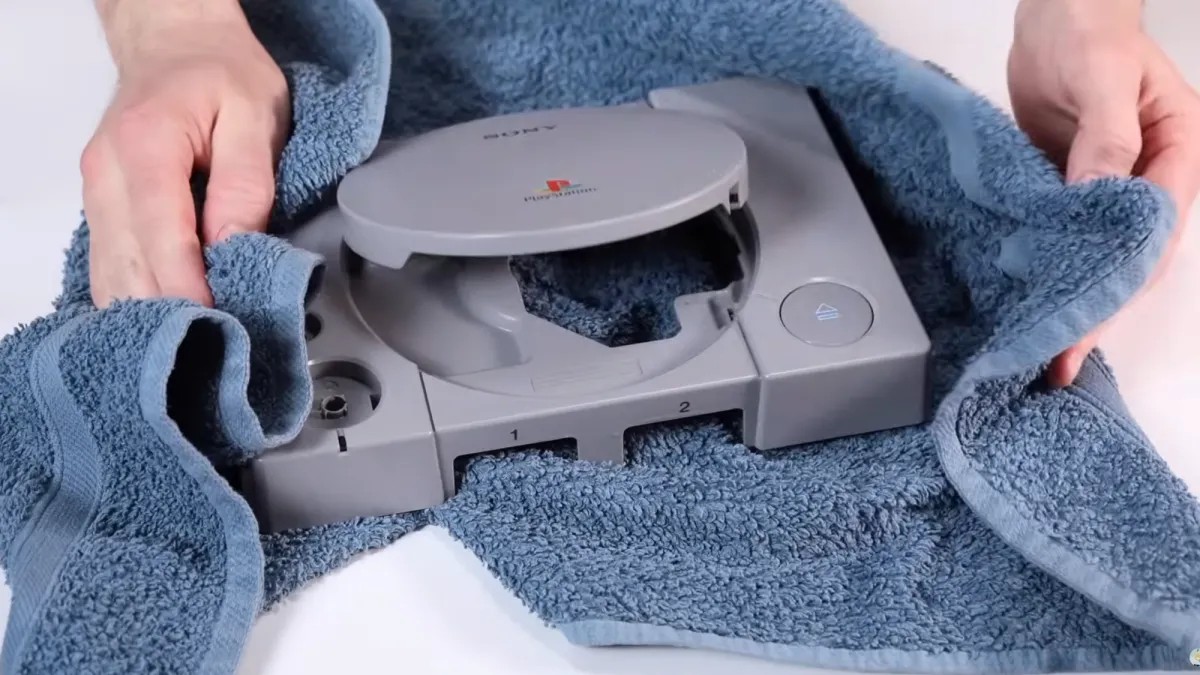
While modern gaming consoles boast breathtaking graphics and immense processing power, they often lack a key feature of their predecessors: repairability. Unlike the highly integrated, often sealed devices of today, 1990s hardware was frequently designed with a modularity that allows enthusiasts to extend its lifespan through “modding.”
Recently, YouTuber Elliot Coll, creator of the Retro Future channel, demonstrated the potential of this longevity by transforming a neglected, non-functional PlayStation 1 into a high-performance modern machine.
The Restoration Process: Cleaning the Canvas
Coll’s project began with a bargain find from eBay—a console that arrived in poor condition. Beyond being visually neglected and covered in decades of debris, the device was functionally dead upon arrival.
The restoration required more than just a cosmetic cleaning; it required a “digital forensic” approach. Upon opening the shell, Coll discovered that the console had been heavily modified by previous owners:
– Region-free hacks: A soldered metal component allowed the console to bypass geographic restrictions.
– Unofficial disc mods: Alterations to the motherboard enabled the playback of burned, non-original media.
After stripping away these old, messy modifications and deep-cleaning the exterior, Coll was left with a “blank canvas” ready for a professional-grade overhaul.
Modern Upgrades: Bridging the Decades
To turn a 30-year-old relic into a premium gaming experience, Coll integrated several modern technologies that address the most common pain points of retro gaming: visual clarity, storage, and ergonomics.
1. Visual Clarity and Output
One of the biggest hurdles in retro gaming is connecting old analog signals to modern digital displays. Coll installed an HDMI adapter capable of upscaling the output to 1080p. This ensures that classic titles look sharp on contemporary high-definition televisions rather than appearing blurry or distorted.
2. Digital Library Integration
To move away from the fragility of aging plastic discs, Coll utilized a PicoStation ZeroWire mod board. This allows the console to load games directly from an SD card, providing a much more reliable and convenient way to access a digital library.
3. Wireless Freedom
The original PlayStation was defined by its wired controllers, which often limited movement and cluttered setups. Coll implemented a Bluetooth modification, theoretically allowing users to pair modern peripherals—such as a PS5 controller—to the vintage hardware.
A Tribute to Gaming History
The project concluded with a stylistic nod to PlayStation’s heritage. The console’s shell was finished in a custom “dev kit blue” paint job. This specific shade is a tribute to the rare, dark blue promotional units used by developers in the 1990s that were never released to the general public.
The transformation was complete when the console was powered on and successfully tested with Tony Hawk’s Pro Skater, proving that with enough technical skill, even “trash” can be reborn as a premium piece of hardware.
This project highlights a growing trend in the gaming community: as hardware becomes more disposable, the art of “modding” serves as a vital way to preserve gaming history and adapt it for the modern era.
In short, by combining modern connectivity with classic hardware, Coll has created a bridge between 1990s nostalgia and 21st-century convenience.