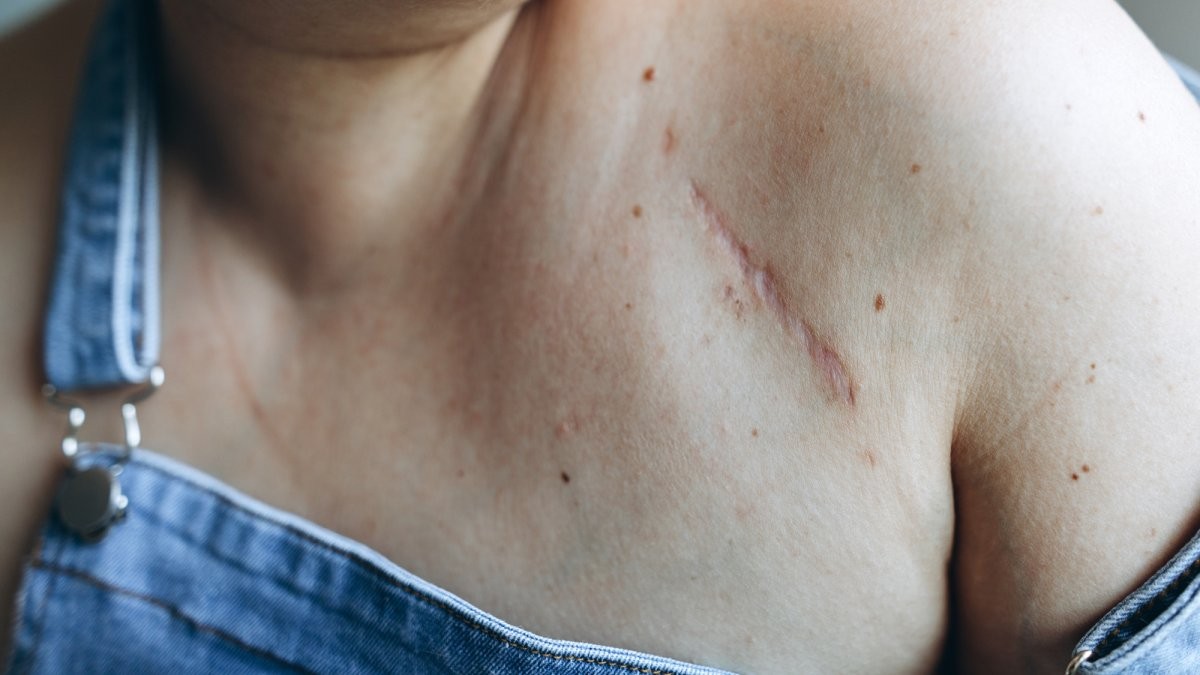
We have all experienced the sting of a scrape or the shock of a deep cut. While the pain eventually fades, the mark left behind often remains a permanent fixture on our skin. This raises a fundamental biological question: If our bodies are so efficient at healing, why can’t they simply erase the evidence of an injury?
The answer lies in a fundamental evolutionary priority: your body values structural integrity and protection far more than aesthetic perfection.
The Boundary of Scarring: Epidermis vs. Dermis
To understand why some wounds disappear while others leave marks, one must look at the architecture of the skin. Human skin is composed of three distinct layers:
1. The Epidermis: The outermost protective layer.
2. The Dermis: The thick middle layer containing connective tissue.
3. The Hypodermis: The deepest fatty layer.
Whether a scar forms depends entirely on the depth of the trauma. If an injury only affects the epidermis, the skin can typically regenerate itself perfectly, leaving no trace. However, once an injury penetrates the dermis, the body shifts its strategy from “regeneration” to “repair.”
The Biological Construction Site: How Scars Form
When a deep wound occurs, the body initiates a rapid-response sequence designed to seal the breach and prevent infection. This process follows several critical stages:
- Hemostasis: The body forms a blood clot to stop bleeding, which eventually dries into a scab.
- Immune Response: The immune system deploys specialized cells to neutralize invading microbes. These cells release cytokines —chemical signals that act as a “loudspeaker,” alerting the body to begin the cleanup and repair process.
- Scaffolding: Fibroblasts (specialized skin cells) rush to the site. They begin producing an extracellular matrix, a biological scaffolding made of long, fibrous proteins called collagen.
While this collagen provides the strength needed to close the wound quickly, it is fundamentally different from the organized structure of healthy skin.
Why Scars Never Truly Vanish
The reason a scar remains for a lifetime is rooted in the nature of the material used to fix it. In healthy skin, collagen is arranged in a neat, organized pattern. In a scar, however, the collagen is laid down in dense, disorganized bundles.
Furthermore, scar tissue is functionally different from the skin around it:
– It lacks sweat glands.
– It lacks hair follicles.
– It has fewer cells capable of renewal and replacement.
Because these tough, fibrous collagen molecules are essentially permanent, the scar remains a physical part of your anatomy indefinitely.
When Repair Goes Overboard: Hypertrophic and Keloid Scars
Sometimes, the body’s “emergency repair” mode becomes too aggressive. In an attempt to ensure the wound is sealed, the body may overproduce collagen, leading to complications:
Hypertrophic Scars
These are red, raised scars that remain within the boundaries of the original injury. They are a result of an overabundance of collagen during the healing process.
Keloid Scars
Keloids are more extreme. They are thick, often itchy or painful growths of scar tissue that extend beyond the original site of the injury. They can be difficult to treat, as surgical removal sometimes triggers the body to grow even larger keloids in response.
Managing the Marks
While scars may never fully disappear, they can be managed. Over time, disorganized collagen may flatten and become less noticeable, but it will never match the texture of original skin. Medical interventions—such as steroids to reduce redness or cosmetic procedures to alter depth—can help, but the most vital step is proper wound management.
Experts suggest keeping wounds clean and protected with dressings or ointments to prevent infection, ensuring the body can focus on structural repair rather than fighting off microbes.
Conclusion: Scars are not “failures” of healing, but rather a biological compromise. Your body chooses to prioritize a fast, strong, and infection-proof seal over the ability to return your skin to its original, pristine state.