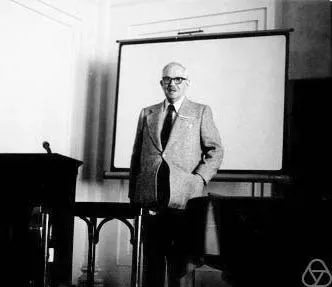
Jerzy Neyman wasn’t just a mathematician. He was an architect of the rules we use to test ideas today. Born in Bendery, a town in what is now Moldova, he arrived in the world on April 16, 1894. He left it on August 5, 1981, in Oakland, California. His life spanned the Russian Empire, independent Poland, and finally the United States.
He spoke Polish. He worked in Russian. Then he switched to English. Through these shifts, he helped build the statistical theory of hypothesis testing. This isn’t dry academic jargon. It is the backbone of modern science. Without his framework, we wouldn’t know how to tell if a new drug works or if a planet exists.
In 1968, the U.S. government recognized this impact. They awarded him the National Medal of Science. It was a fitting honor for a man who moved from a Polish-speaking family in Bessarabia to becoming a central figure in American academia.
From Kharkov to Berkeley
Neyman’s early career was a map of political change. He served as a lecturer at the Institute of Technology in Kharkov, Ukraine, from 1917 to 1921. The world was shifting. Empires were crumbling.
He moved to Poland. There, he worked as a statistician for the Institute of Agriculture in Bydgoszcz. By 1923, he was teaching at the College of Agriculture in Warsaw. The University of Warsaw added him to its faculty in 1928. He was building a reputation.
Then came the move to London. From 1934 to 1938, he was on the staff at University College. But the war clouds were gathering. He immigrated to the United States.
California called. He joined the faculty at the University of California, Berkeley. This was the turning point. He didn’t just join the department. He reshaped it. In 1955, he became the chairman of the new Department of Statistics.
“At Berkeley he built… what became known as a leading world centre for mathematical statistics.”
He attracted statisticians and mathematicians. They studied under him. They learned his methods. The symposia on probability and statistics became legendary. They were highly successful. They drew the best minds in the field. Neyman didn’t just teach stats. He created a hub.
Why Hypothesis Testing Matters
So, what is hypothesis testing anyway? It’s how we decide if something is real or just luck.
Neyman’s work covers estimation and testing. He didn’t see them as separate. He combined theory with application. This was his signature style. He didn’t want math that stayed in the ivory tower. He wanted it in the lab. In the field.
Where does it show up?
– Genetics. Understanding how traits pass down.
– Medical diagnosis. Deciding if a symptom indicates disease.
– Astronomy. Spotting signals in noise.
– Meteorology. Predicting weather patterns.
– Agricultural experimentation. Testing which crop grows best.
He made statistics practical. He showed that math could answer real-world questions. This is why students and researchers