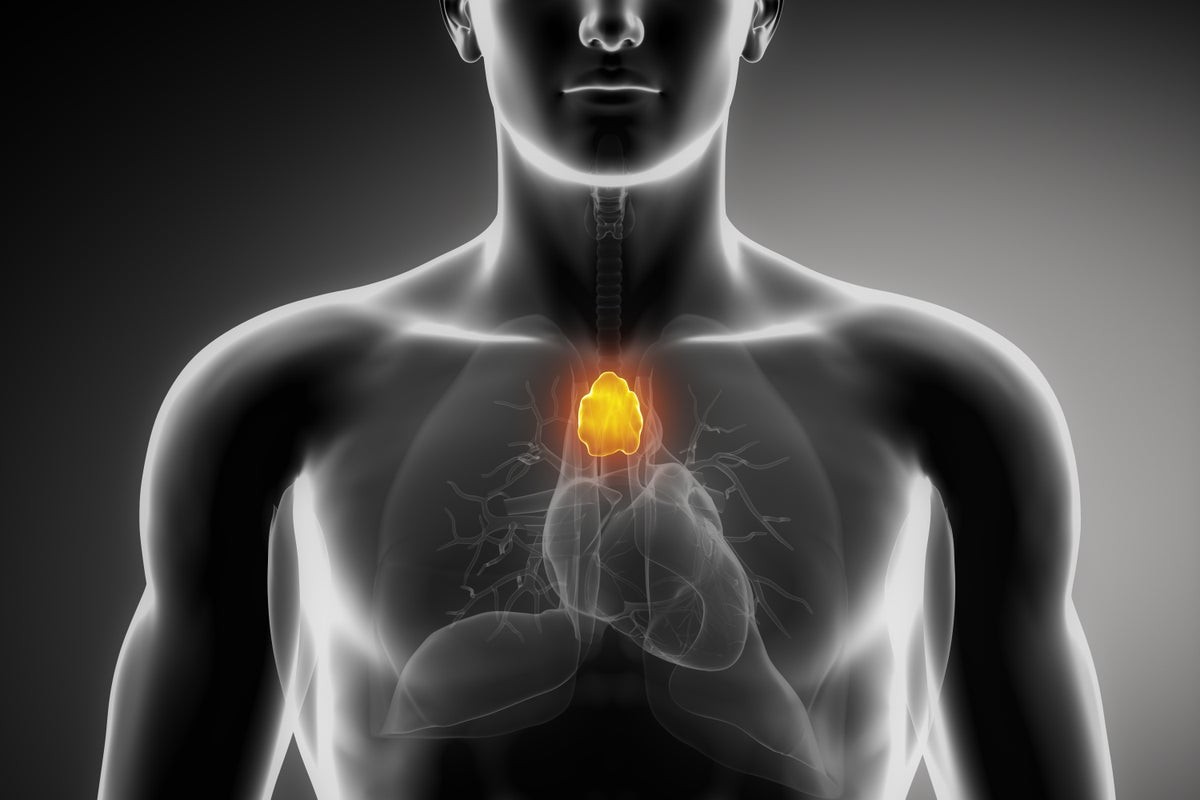
It’s about the size of a dried apricot if you have a dried apricot in your chest. Buried between your lungs is the thymus. Most people ignore it. It does too.
For decades, scientists watched this tiny gland shrink. Puberty hits, the thymus starts to atrophy, and the consensus was simple: it’s done. Its job, producing pathogen-fighting T cells, was largely a childhood gig. After that, it’s just a vestigial leftover in the immune system.
They were wrong.
A new study in Nature Communications suggests the thymus is holding back something much messier: age-related inflammation. And it’s doing so through a hormone called thymulin.
Thymulin’s role in reducing inflammation
Fumito Ito, the senior author and immunologist at USC’s Keck School of Medicine, calls the hormone’s role in aging “somewhat overlooked.” For about 50 years, thymulin has sat on the sidelines of research.
Now, it’s center stage.
In older mice, thymulin clamps down on the systemic inflammation that drags us down as we get older. This condition, known as “inflammaging,” is a driver of chronic disease. It’s why your knees hurt, why your brain fog gets thicker, and why your immune system starts fighting itself.
The study found that mice with higher levels of thymolin had fewer inflammatory cytokines. Cytokines are proteins meant to fight infection, sure. But when there’s too much of them? It’s a fire in your veins. Myeloid cells in these mice produced lower levels. The inflammation died down.
Why this matters for longevity and cancer treatment
This isn’t just about feeling better in your 70s. It’s about surviving harder treatments.
The researchers didn’t just look at healthy mice. They looked at older mice with cancer. They administered thymulin. The results were stark. Tumor growth slowed. Survival rates improved. And the mice responded better to standard treatments.
Previous data already hinted at a link between the thymus and a long life. An analysis of ~27,000 records published in March showed that robust thymus function correlates with lower rates of lung cancer, cardiovascular disease, and longer lifespans. But correlation isn’t causation. You can’t say the thymus causes longevity just because healthy thymuses are found in long-livers.
This study provides that causal link.
“Our study shows that this hormone can slowly down tumor growth, improve survival and also enhances the treatment efficacy of cancer immunotherapy.”
— Fumito Ito
The implications for cancer therapies are massive. If this hormone is naturally occurring, Ito expects minimal side effects. That’s a bold claim in a field rife with toxic treatments. Immunotherapy is powerful but expensive and often ineffective for some. Adding a cheap, natural regulator to the mix could change the game.
When will humans see these benefits?
We need to confirm this in humans first.
Mouse models are useful, but they aren’t us. Their lifespans are short. Their immune systems are different. But the biology is close enough to warrant hope.
The study suggests that the thymus isn’t a relic. It’s an active participant in our aging process. If we can harness thymulin, we might be able to blunt the worst effects of inflammaging.
Think about that for a second. A hormone that doesn’t just treat cancer, but also quiets the inflammatory noise that degrades our bodies over time.
The thymus shrinks, yes. But its influence doesn’t have to fade.