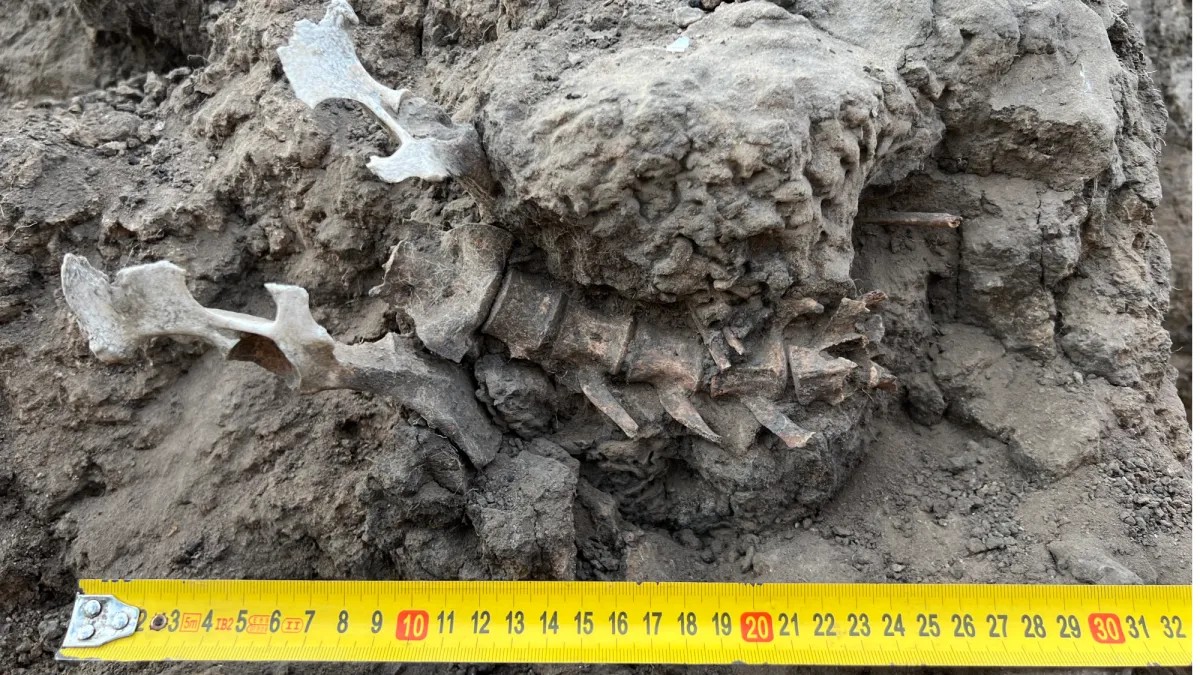
We think we know how humans treat animals. Then comes this.
About a thousand years ago along the Baaka, or Darling River, a male dingo lived. He died. But his people didn’t leave him.
They buried him.
Not Just a Pet, An Ancestor
This wasn’t some casual disposal of a wild dog. The Barkindji people, whose ancestors lived deep in what is now western Australia, gave this dingo what they call a midden. A spot for organic material, sure. But here it was something more. They built it. Maybe just for him.
“If garli were buried with same care as human ancestors, including mothers… it tells us these animals were deeply loved.” — Dr. Amy Way
Garli. That is what the Barkindji call the dingo. He wasn’t an outsider. He was family. Or at least, very close to it.
The evidence? He was old. Maybe seven. Maybe four. His teeth were worn down from hunting. Hard work. He had survived. And then, he was broken.
He had a healed broken leg. Healed ribs too. Likely kicked by a kangaroo in the thick of a hunt. Most dingos might die from that. Not him. Someone fed him. Someone let him rest. He recovered. He lived a long life before passing away between 916 and 963 years ago.
A Ritual That Lasted
The discovery came in 2020. Erosion gave up the secret along a road cutting. Uncle Badger Bates, an elder, found the bones first. Then the digging began. Dan Witter from the National Parks and Wildlife Service was there. Dave Doyle and Elder Barb Quayle guided everything. They smoked the site first, honoring the ancestor. Respectful, always respectful.
And then they noticed something strange.
For hundreds of years after the dingo died, people kept bringing mussel shells back to this exact spot. Adding layer after layer. It wasn’t accidental. Barkindji elders call it a “feeding” ritual. They kept feeding him in memory. They honored him across generations.
Who keeps a shrine to a dog for a millennium?
It challenges the old academic idea that dingoes were just tolerated wild dogs hovering around campsites. They weren’t tolerated. They were tamed. Integrated.
“These relationships were deep, deliberate and ongoing,” notes Dr. Way.
Dr. Loukas Koungoulos puts it plainly: this proves the traditions were widespread. More common than we thought. The garli was embedded in daily life.
When the analysis finally ended, the bones were taken back. Returned to Country. That capitalized word means more than dirt and grass. It means identity. History. Soul.
So, a thousand-year-old story about a broken dog who was loved well enough to be fed long after his death. We used to think human history was one way. Turns out it was another.