



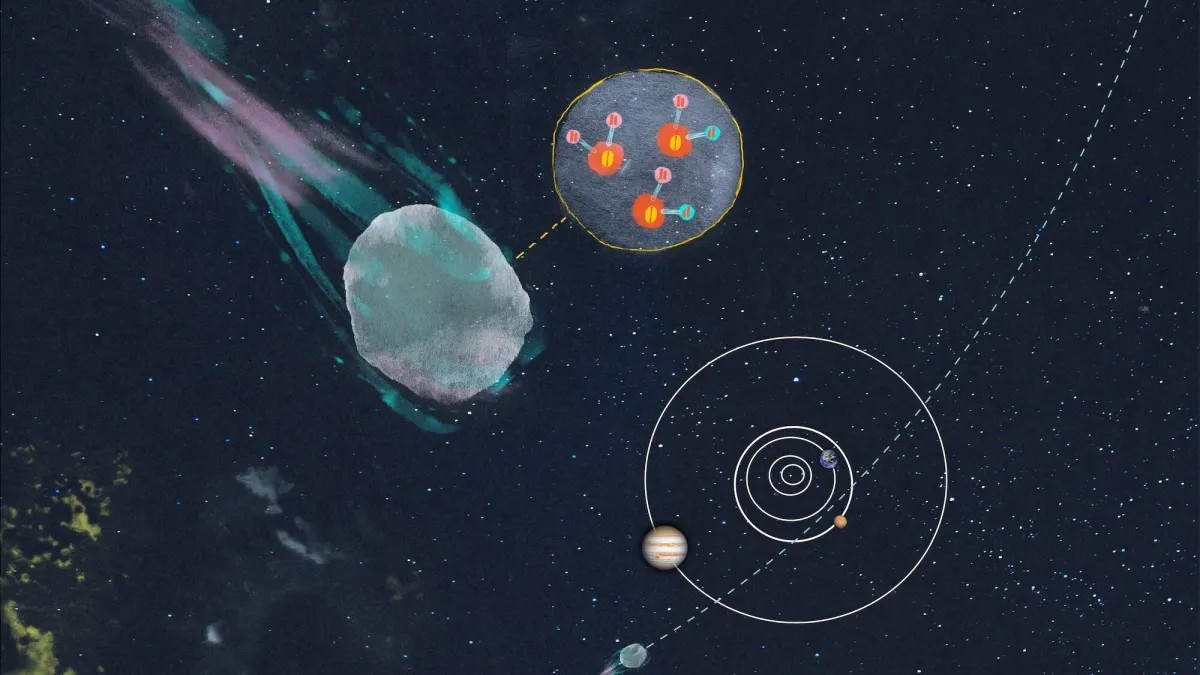
Недавній проліт 3I/ATLAS через нашу Сонячну систему надав астрономам рідкісну можливість на високій швидкості вивчити хімічний склад чужої зіркової системи. Будучи лише третім міжзоряним об’єктом, колись виявленим людством, ця комета — не просто гість; це біологічне та хімічне креслення регіону космосу, який кардинально відрізняється від нашого власного.
Рекордний гість
Вперше помічена в липні 2025 року комета 3I/ATLAS вже встановила кілька астрономічних рекордів. Офіційно вона визнана найшвидшою кометою в історії: її швидкість дозволяє їй пронизати нашу Сонячну систему і стрімко піти в глибоку прірву міжзоряного простору.
У міру руху комета залишає за собою виразний хімічний слід, що характеризується такими ознаками:
– Крижані вулкани, що покривають її поверхню.
– Пиловий шлейф, що складається з метанолу та ціаніду.
– Масивні викиди води, обсяг яких оцінюється у 70 олімпійських басейнів щодня.
Дейтерієвий підпис: свідчення екстремального походження
Хоча обсяги води вражають уяву, справжній науковий прорив полягає в складі цієї води. Використовуючи надчутливе обладнання обсерваторії MDM в Аризоні та антенну решітку ALMA (Atacama Large Millimeter/submillimeter Array) у Чилі, дослідники виявили незвичайну концентрацію дейтерію.
Дейтерій це важкий ізотоп водню, що містить додатковий нейтрон. Хоча він є і в нашій Сонячній системі, рівні, виявлені в 3I/ATLAS, безпрецедентні:
– У ній міститься у 30 разів більше дейтерію, ніж у типових кометах нашої Сонячної системи.
– У ній міститься в 40 разів більше дейтерію, ніж в океанах Землі.
Чому це важливо
В астрохімії співвідношення дейтерію до звичайного водню є свого роду «космічним термометром». Високий рівень збагачення дейтерієм зазвичай спостерігається в екстремально холодних середовищах – зокрема, при температурі нижче 30 Кельвінів (-243,15 ° C) **.
Це дозволяє припустити, що 3I/ATLAS сформувалася в набагато суворішій, холоднішій і, ймовірно, менш схильній до радіації середовищі, ніж та, в якій зародилася наша Сонячна система. Ця відмінність є критично важливою, оскільки вона доводить: хімічні процеси, які створили наші планети та океани, не є універсальним стандартом, а є специфічним результатом еволюції нашого локального галактичного оточення.
Віха в міжзоряному аналізі
Дане дослідження, опубліковане в журналі Nature Astronomy, знаменує собою технічний прорив: це перший випадок, коли вченим вдалося провести детальний ізотопний аналіз міжзоряного об’єкта.
Здатність відокремити звичайну воду від дейтерованої на відстані мільйонів миль стала можливою лише завдяки надвисокій точності системи ALMA. Цей подвиг дозволяє астрономам вийти за межі простого спостереження та приступити до свого роду «криміналістичної хімії» об’єктів з інших зіркових систем.
«Це доказ того, що умови, що призвели до створення нашої Сонячної системи, не є повсюдними у космосі», — зауважила астроном Тереза Панеке-Карреньо.
Висновок
Вивчення 3I/ATLAS підтверджує, що Чумацький Шлях – це різноманітне полотно планетарних середовищ, де «правила» формування можуть кардинально змінюватись в залежності від температури та радіації. Цей міжзоряний гість є важливим нагадуванням про те, що наша Сонячна система є лише одним із багатьох можливих сценаріїв еволюції галактики.