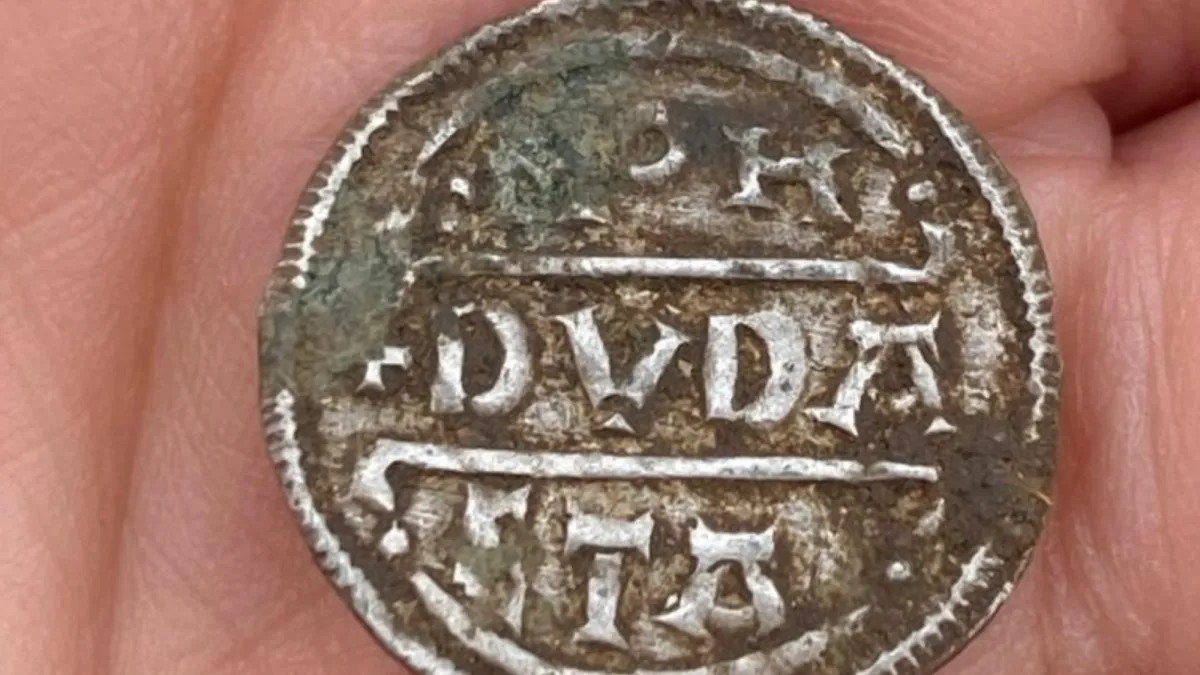
A group of metal detecting enthusiasts has triggered a significant archaeological breakthrough in Worcestershire, England. What began as a hobbyist’s find has evolved into the discovery of the Bickmarsh Hoard, a collection of 63 rare early medieval coins that offers a rare window into a period of intense conflict and transition.
A Discovery Driven by Hobbyists
The find was made by members of Go Detecting (Midlands) Ltd, who promptly alerted the authorities upon locating the treasure. This triggered a coordinated response from Worcestershire Archaeology, which moved from initial investigations to geophysical surveys and, ultimately, a targeted excavation.
The excavation proved even more fruitful than initially expected. As archaeologists dug deeper, they identified two additional concentrations of coins, significantly expanding the scope of the site. While the team also uncovered various artifacts dating back to the Roman era, these appear to be unrelated to the primary Anglo-Saxon find.
Why the Bickmarsh Hoard is Historically Significant
The discovery is far from routine for this region. To understand its importance, one must look at the rarity of such finds in the local context:
- Extreme Rarity: Discoveries of coins from the 5th to the early 11th centuries are exceptionally uncommon in Worcestershire.
- A Statistical Outlier: Prior to this find, fewer than 100 such coins had ever been documented in the county. The only other major find of note was the Severn Stoke Hoard, which contained only 18 coins from the 800s.
- A Snapshot of Crisis: Most of the coins were issued under the reign of King Burgred of Mercia (r. 852–874). Based on the minting dates, experts believe the hoard was buried between 871 and 874 AD.
This specific timeframe is critical. It coincides with the height of the Viking invasions in England. The burial of such a significant amount of wealth suggests a desperate attempt by locals to hide their assets from advancing Viking armies.
Clues in the Soil
While archaeologists did not find a specific chest or structure directly tied to the coins, they did uncover 35 fragments of lead sheet near the site.
In English archaeology, coin hoards are frequently found wrapped in lead to protect them from moisture and soil acidity. While it is currently unconfirmed if these fragments belonged to the Bickmarsh Hoard, they provide a strong circumstantial link to how the coins were originally stored.
The coins themselves were found relatively close to the surface. Evidence of both medieval and modern ploughing suggests that centuries of agricultural activity have churned the topsoil, likely shifting the coins from their original, deeper burial point.
Conclusion
The Bickmarsh Hoard serves as a tangible reminder of the instability of the Anglo-Saxon era, marking a moment when the wealth of the Mercian kingdom was hidden away to survive the Viking Age. Through the collaboration of amateur detectorists and professional archaeologists, this “lost” history has been brought back to light.