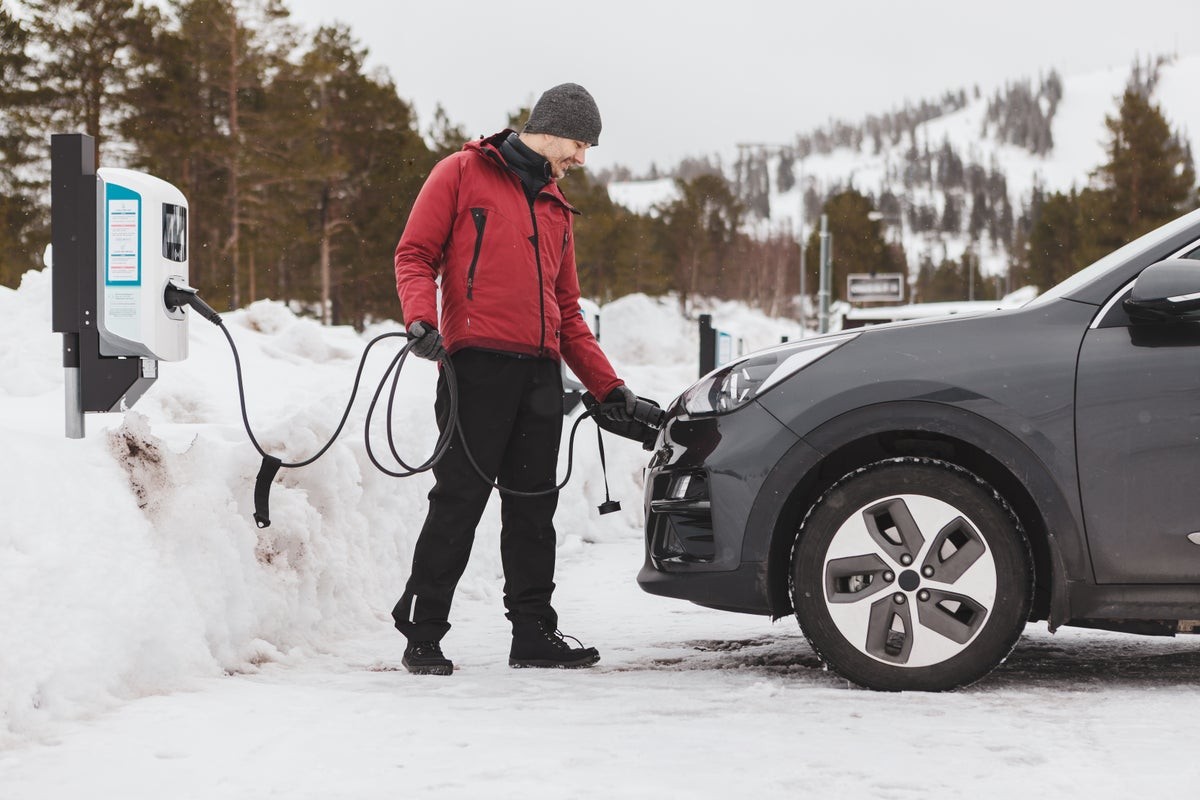
A new battery technology leveraging common table salt could dramatically improve electric vehicle (EV) performance in frigid temperatures, according to China’s Contemporary Amperex Technology Co. Limited (CATL), the world’s largest EV battery manufacturer.
The company, working with Changan Automobile, plans to launch sodium-ion powered cars by mid-2026. This move signals a potential shift in EV technology, particularly in regions where cold weather significantly reduces battery range and charging speed.
The Problem with Cold Weather and EV Batteries
Lithium-ion batteries, the standard in most EVs today, struggle in low temperatures. Chemical processes within the battery slow down, leading to diminished power output and sluggish charging times. Drivers in cold climates often experience a noticeable drop in range on frigid mornings – a major barrier to wider EV adoption.
The core issue is that cold thickens the electrolyte, the liquid that allows charged particles to move between electrodes. This makes it harder for ions to flow, reducing battery efficiency.
How Sodium-Ion Batteries Offer a Solution
Sodium-ion batteries replace lithium with sodium, an element far more abundant and readily available in salt.
While sodium ions are larger than lithium ions, they form weaker bonds with the electrolyte. This allows them to move more easily, even in cold conditions where lithium ions become sluggish.
CATL claims their new Naxtra battery can operate stably at –50°C (–58°F). At –30°C (–22°F), it delivers nearly three times the discharge power of standard lithium iron phosphate (LFP) batteries, which dominate the Chinese market. The battery can charge to 90% full at –40°C (–40°F) and maintain “stable power delivery” at –50°C.
Testing and Real-World Concerns
While these figures are promising, industry analysts caution that they likely represent ideal test conditions. Real-world performance will depend on factors such as driving habits and environmental variations.
CATL has invested heavily in sodium-ion development, spending nearly $1.4 billion over the past decade. Early models with limited range (170km) sold poorly, but the new generation aims for 400km on the China Light-Duty Vehicle Test Cycle (CLTC). This is roughly equivalent to 90% of the energy density of current LFP batteries.
The Cost Factor
Manufacturing sodium-ion batteries is currently about 30% more expensive than lithium-ion in China. Mass production is expected to ramp up later this decade as the supply chain matures. If the technology delivers on its cold-weather promise without a significant price premium, it could gain traction in colder regions.
“If the car performs well at low temperatures without costing a premium, sodium-ion technology could find a foothold in colder regions,” says Phate Zhang, founder of CnEVPost.
Ultimately, the success of sodium-ion batteries will hinge on their ability to balance performance, cost, and durability in real-world driving conditions.