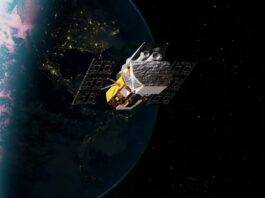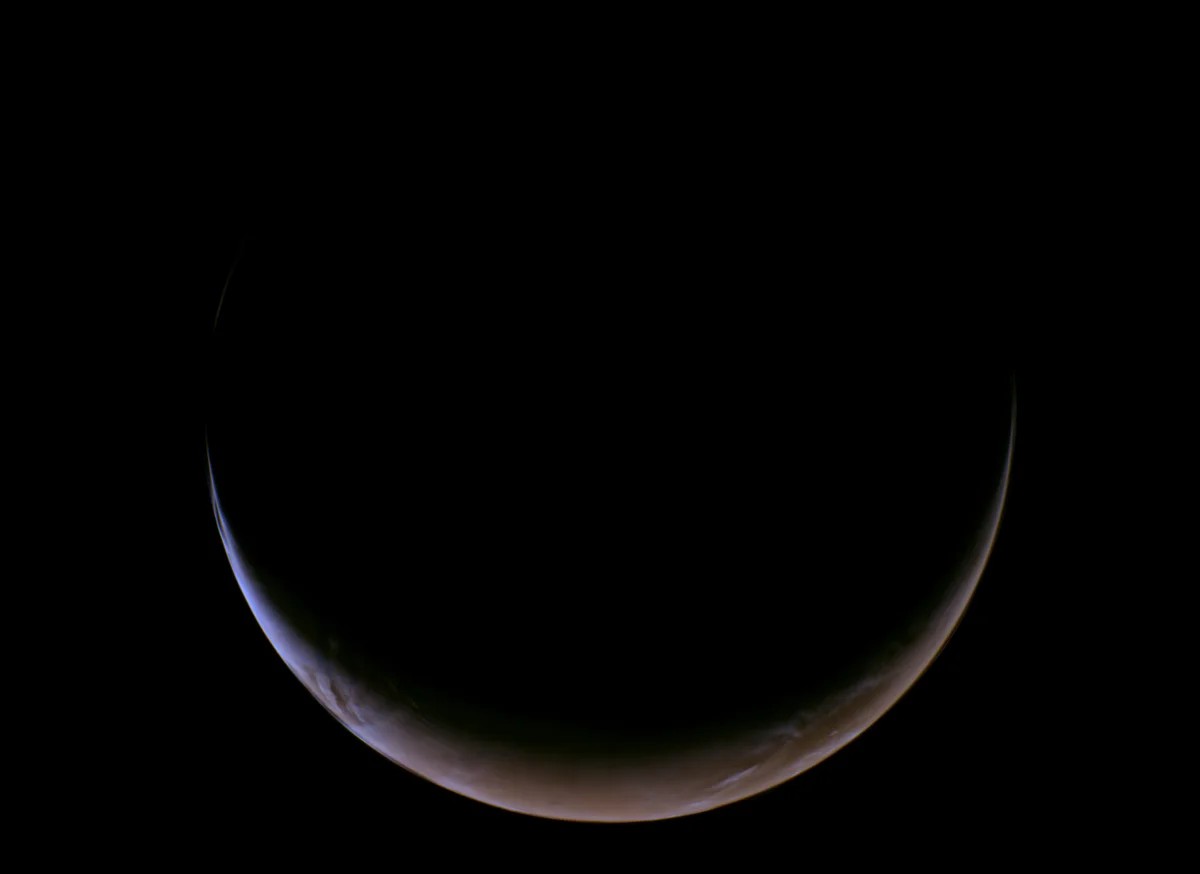
Space tourism. Or maybe just good optics. NASA’s Psyche mission swung past the Red Planet last week. It didn’t just wave. It snapped photos. Gorgeous ones, really. A sharp crescent of Mars. The spacecraft dipped close, only 2,864 miles above the surface.
Why stop there? The team also caught the south pole. That 430-mile-wide icecap? Clear as day.
This was a pitstop, though. The destination is the metal-heavy asteroid named 16 Psyche, floating out in the void between Mars and Jupiter. The flyby served a purpose heavier than Instagram clout. Gravity. Psyche used Mars’s pull to accelerate, shifting its speed and trajectory without burning fuel. It’s an ancient trick. Very efficient.
The journey started on October 13, ²023. A long haul. Six years. Over two billion miles. By August ²0²9, Psyche arrives. Then the real work begins. It will orbit the asteroid, map it, stare at it with cameras, and probe its chemical makeup using a magnetometer and a gamma-ray spectrometer.
We’re trying to find out what the asteroid is made of. Metal. Iron and nickel, likely. Some scientists think ¹6 Psyche might be the exposed core of an ancient protoplanet. A building block of a world that never finished forming. It’s big—¹73 miles wide at its broadest.
Can we bore a hole into Earth’s own core to study its secrets? No. We can’t. So this metal rock is our next best bet.
The flyby was also a stress test. The team needed to verify how the Deep Space Network handles Doppler shifts while tracking the probe. Don Han, the navigation lead, confirmed the boost. Mars gave Psyche ¹,00⁰ mph extra oomph and tilted its orbital plane by about a degree relative to the Sun.
“We are now on course,” Han said. Summer ²⁰²9 is the target.
We look at these metal cores because we want to know how planets start. It feels indirect. Maybe incomplete. But it’s the best data we have right now.
The rest of the way out there is silent. Just cameras humming. Waiting.