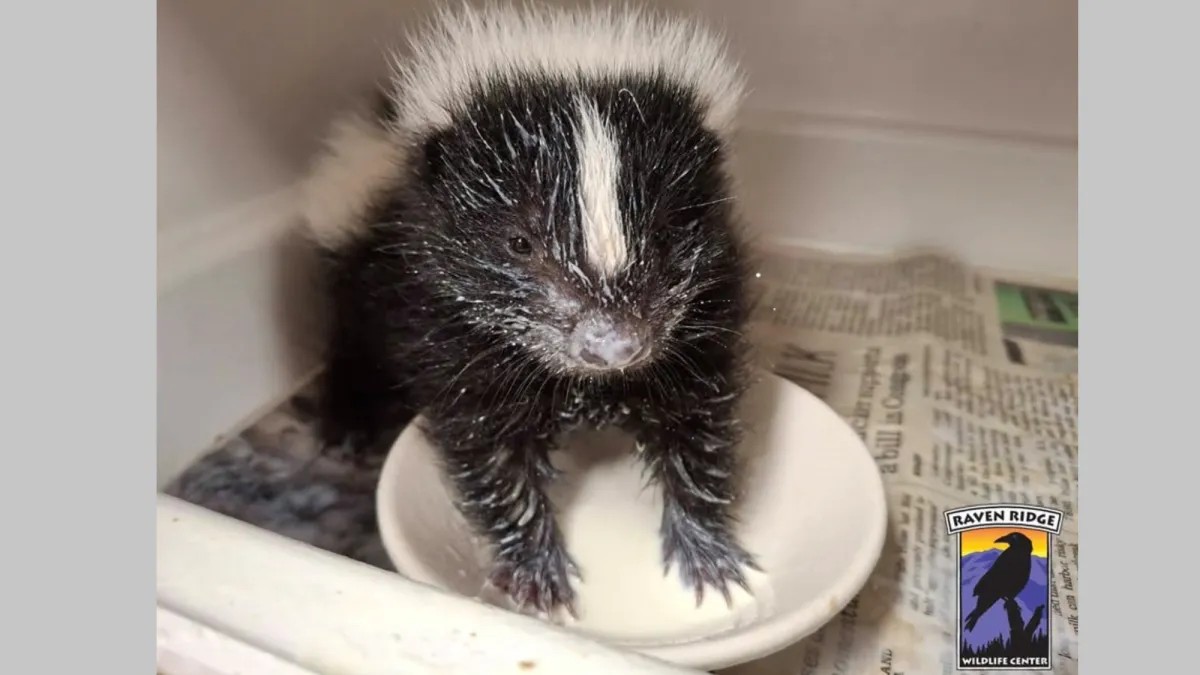
Feeding a stray animal feels like the right thing to do. Your instincts scream at you to help. That impulse is good. Acting on it with a handful of dog kibble is a bad idea.
Don’t feed the baby skunk.
It sounds cruel. It isn’t. It’s biology. And biology doesn’t care about your good intentions.
Why Feeding a Baby Skunk Can Be Fatal
Take Raven Ridge Wildlife Center. Located in Washington Boro, Pennsylvania. They recently handled 50 juvenile skunks at once. Not one. Fifty.
You might assume they just poured out some pet food.
You’d be wrong.
Their daily menu was a logistical nightmare of specific nutrition: 15 cups of fruit. 15 cups of vegetables. A dozen eggs. 15 cups of moistened狗 dog food (yes, dog food). Six cups of meat. Three cups of mealworms. Plus calcium. Plus taurine supplements.
For kits arriving at the center? That complex meal list means nothing yet. They need a specialized formula. It has to mimic the mother skunk’s milk. Exact nutrients. Exact ratios.
If you give a puppy formula, you are failing them. Puppy milk lacks the specific proteins a skunk needs. If you give them cat food, you’re likely setting them up for failure there, too. Cat food is often too high in fat and protein for a small skunk. It leads to obesity. It leads to serious health issues down the line.
There’s a bigger immediate threat though.
Dehydration.
A wild skunk you find is probably severely dehydrated. It might need two full days of rehydration. No solid food. Not yet. If an animal eats before its body is ready, you risk triggering refeeding syndrome. The metabolic shock can kill them. Dead before you even fix the problem.
What You Should Actually Do
So. You see a tiny black and white creature. It’s alone. It looks sad.
Do not cook for it. Do not give it water. Do not try to Google a DIY diet. Google gives general advice. General advice gets wild animals killed.
Raven Ridge’s rule is strict. Do not offer food. Any age. Any stage. It complicates rehabilitation.
Instead?
- Gently place the animal in a ventilated box.
- Keep the box in a warm place. Dark is better. Quiet is mandatory.
- Call a licensed wildlife rehabilitator. Now.
This isn’t about playing vet. It’s about staying out of the way of the professionals.
Metabolic Bone Disease is a real thing for skunks. Caused by unbalanced nutrients. Calcium issues. Phosphorus problems. If you mess with their diet, you risk breaking their bones. Or worse.
Skunks are omnivores, sure. Like humans. They eat fruit. They eat veggies. They need lean protein. But when they eat those things? And what kind of protein? That’s science. Not guessing.
So. Box. Warm. Dark.
Call someone who knows what they are doing.
The internet can tell you everything. Except how to save a specific wild lifeform. Sometimes the most helpful thing you can do is absolutely nothing. Except move them to safety and wait.