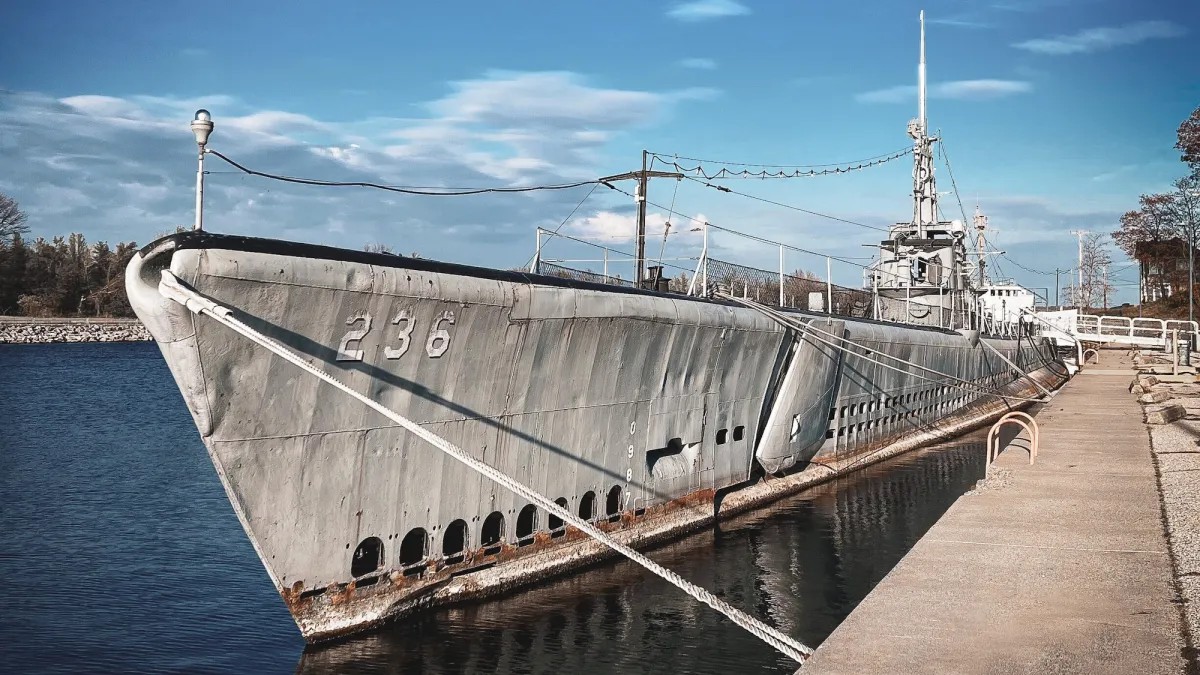
The USS Silversides just showed up in Wisconsin. Not for a tour. For a fix.
This specific World War II submarine restoration project isn’t your standard museum polish. The vessel has traveled to Fincantieri Bay Shipwriting in Sturgeon Bay for the first dry-dock preservation work in more than fifty years. It’s been sitting exposed to the elements since moving to Michigan back in the day. Now? The metal is tired. The paint is tired. They’re taking it apart.
The scope of this 1944-era sub maintenance
Let’s look at what they are actually doing. Workers have three months. That’s it. They need to inspect the structural integrity. They need to strip and clean the hull. Then comes the coating—multiple layers meant to shield the vessel from another few decades of wind, rain, and lake salt.
Why send it to Sturgeon Bay instead of staying local?
Capacity. And expertise. Jeffrey Frank, vice president of Fincantieri, told WBAY this requires careful planning and skilled trade work. It’s heavy engineering, not just scrubbing deck plates. You can’t DIY this.
A decorated vessel with a lot of miles
Before we talk about the paint job, we need to talk about the sub. Launched on August 21, 1941, the Silversides is a Gato-class boat. Built in under a year. It’s nearly 312 feet of steel.
Armed to the teeth, too.
– 10 torpedo tubes
– .50 caliber deck gun
– 40 mm cannons
– 20 mm cannons
It wasn’t a white elephant. During the Pacific theater patrols, this boat sank 23 enemy vessels. That’s more shipping tonnage than almost anyone else in its class. The U.S. Navy decommissioned it in 1946. Then they used it as a training ship for Reservists in Chicago. A weird transition. Fighting war yesterday. Teaching theory the next day.
By 1987 it ended up in Michigan, eventually getting its own museum in Muskegon.
“This effort is a testament to what can happen when communities get behind their own history.”
— Veronica Campbell, Executive Director, USS Silversides Museum
She’s not wrong. It cost $3.5 million. That’s for the dry dock phase only.
Watching the restoration live
Want to see it happen? Stream it. The museum is live-streaming the inlet process. You’ll watch it float in. Then you’ll watch an empty basin for a bit while the real work starts. Boring parts included. That’s the deal.
The plan? Finish by October. Then send it back across Lake Michigan to its permanent home in Muskegon.
Is three months enough to fix a ship that survived hell? Hopefully. Time will tell if the new coating holds. If it cracks, they’re back on the list.