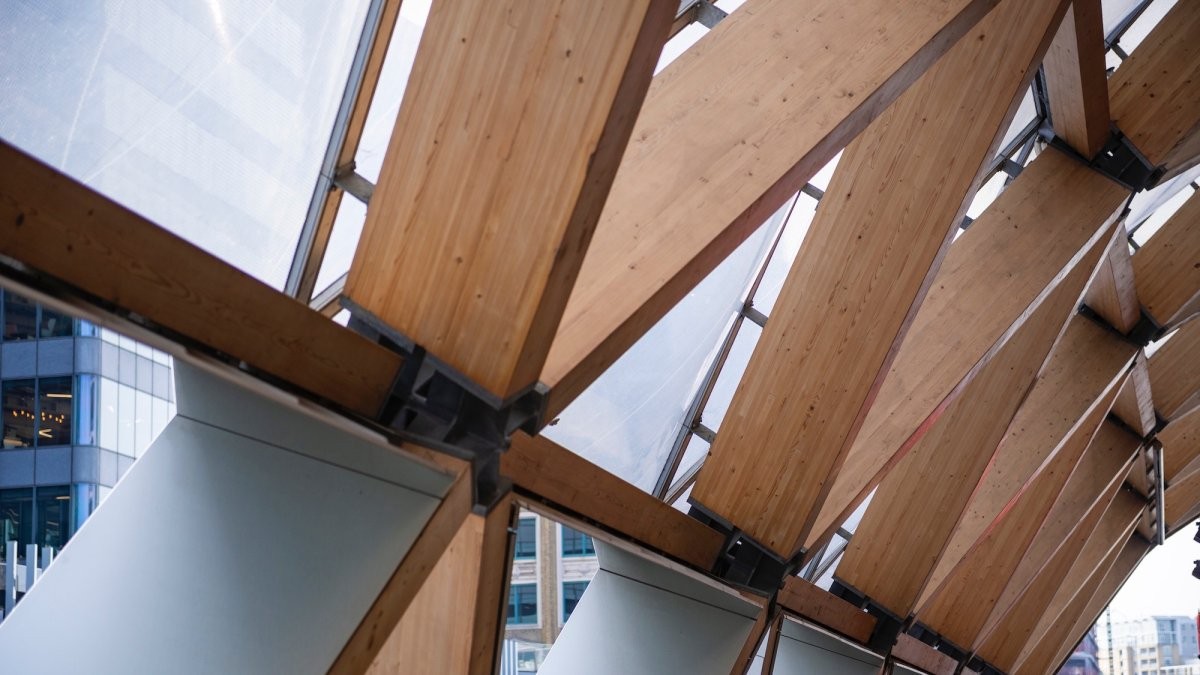
For decades, the symbol of the modern metropolis has been the steel-and-glass monolith. As cities grew taller, architects turned to steel for its strength and ability to flex under the pressure of high winds and seismic activity. However, a quiet revolution is occurring in the construction industry: architects are looking backward to nature to move forward sustainably.
The rise of “mass timber” —engineered wood products like cross-laminated timber (CLT) and glue-laminated timber—is transforming how we think about high-rise construction, offering a way to build massive structures that are both resilient and carbon-negative.
From Forest Floors to High-Rises
The logic behind using wood is rooted in evolutionary biology. In a forest, trees are not rigid; they flex with the wind to avoid snapping. Modern mass timber mimics this property. By layering and gluing smaller pieces of wood together, engineers create beams that are incredibly strong, lightweight, and capable of absorbing energy.
This technology is already pushing height limits:
– The Ascent MKE Building in Milwaukee, Wisconsin, stands as the world’s tallest timber building at 284 feet.
– The Hive in Vancouver, Canada, recently completed its 10-story frame, serving as North America’s tallest seismic-resistant timber structure.
The Climate Connection: Carbon as a Building Material
The most compelling driver behind this shift is the climate crisis. Traditional building materials like steel and concrete are carbon intensive; their production releases massive amounts of CO2 into the atmosphere.
In contrast, mass timber acts as a carbon sink. As trees grow, they absorb CO2 from the atmosphere. When those trees are turned into building materials, that carbon is “locked” inside the structure for decades.
Furthermore, using mass timber can actually improve forest health. By utilizing smaller and medium-sized trees for construction, forestry agencies can thin out overcrowded forests. This practice reduces the fuel load that leads to catastrophic wildfires—a growing threat in a warming world—and helps restore natural biodiversity.
Engineering Resilience: Surviving Earthquakes and Fire
A common skepticism regarding wooden skyscrapers involves two main concerns: fire safety and structural stability during natural disasters.
🛡️ Fire Resistance
Contrary to intuition, mass timber is not a “tinderbox.” When exposed to fire, thick laminated wood forms a char layer on its surface. Much like a campfire log that remains solid at its core after a night of burning, this char acts as an insulating shield, protecting the structural integrity of the beam from the heat.
🏗️ Seismic Strength
To handle the lateral forces of earthquakes, engineers are integrating advanced technology into timber frames:
– Dampers: Devices like “Tectonus dampers” act as giant shock absorbers to dissipate energy.
– Rocking Walls: Researchers at the University of California, San Diego, have successfully tested “rocking walls” anchored with steel rods. In simulations, these timber structures survived 88 consecutive earthquake scenarios with zero damage.
A Human-Centric Approach
Beyond the technical and environmental benefits, there is a psychological element to the shift. While steel and concrete can feel sterile and industrial, wood offers a tactile, natural quality. Architects note that humans have an innate desire to connect with nature, and living or working in spaces with exposed wood can create a more inviting, biophilic environment.
While mass timber buildings still require steel brackets and concrete foundations, the goal is a significant net reduction in the industry’s carbon footprint.
“You build not only a sustainable structure, but also a resilient structure.”
Conclusion
By combining ancient biological wisdom with modern engineering, mass timber offers a path toward urban growth that works with the planet rather than against it. The cities of tomorrow may well be defined by the very forests that help sustain them.