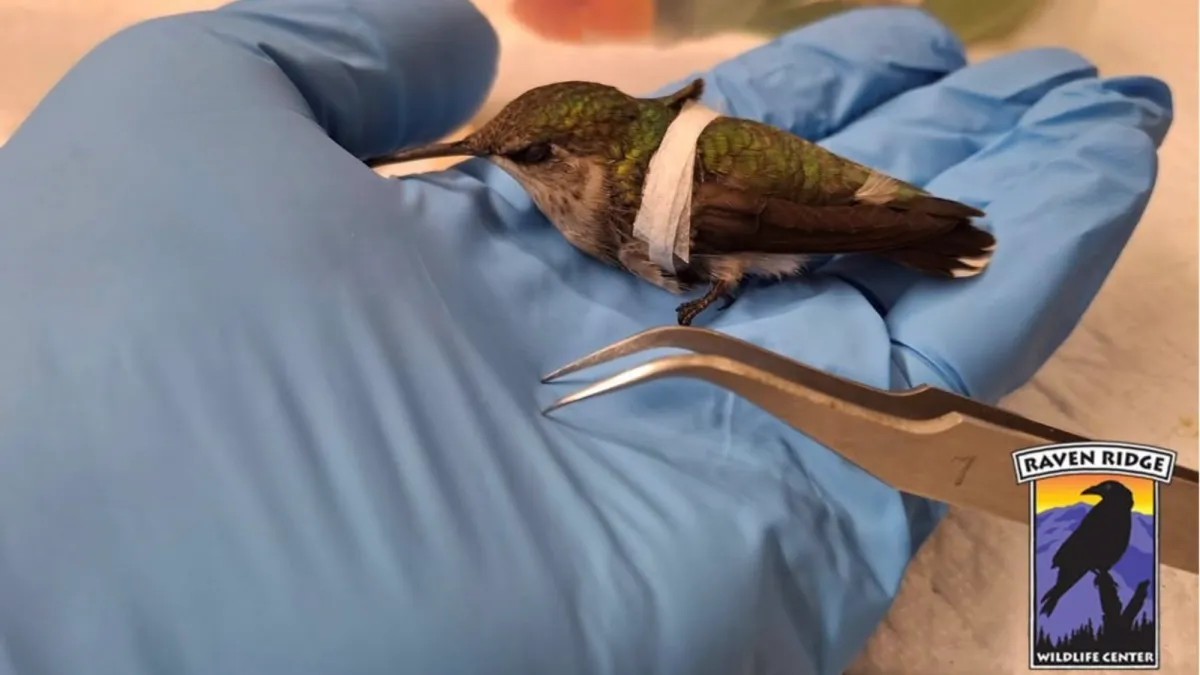
Pennsylvania vets fix a hummingbird’s tiny broken wing. It sounds absurd until you see the photos. A ruby-throated hummingbird, a creature so small it weighs less than a penny, sits in the care of Raven Ridge Wildlife Center in southern PA. The injury? A snapped wing. The treatment? Tweezers. Medical tape. And a lot of praying.
The center isn’t new to trauma. Earlier this year, they treated a bobcat with two broken limbs. That cat needed custom kennels. This bird needs something else entirely. Tracie Young, the center’s director, notes that hummingbird injuries are common but delicate.
Wind strikes. Car collisions. Fishing line traps. Cat attacks.
“We get hummingbirds quite often for several of those reasons,” Young told Popular Science.
This specific patient arrived with a fractured wing. The rehabilitation process is microscopic in scale. Staff members used tweezers to realign the tiny bones. Then, they secured the limb with medical tape. Timing was critical. Had the wing healed incorrectly, the bird would likely not have survived.
“The team feels this bird was lucky,” Young says. But luck only gets you so far.
Recovering a ruby-throated hummingbird is a coin flip. Literally. It’s a 50/50 shot. These migratory species beat their wings over 50 times a second. Their metabolism is a furnace. A single day without feeding is a death sentence. They range from North to Central America, but right now, they are stuck in a recovery cage.
Adult males flash iridescent ruby throats. Otherwise, they look black in most light. They are roughly sparrow-sized but weigh only 0.1 to 0.2 oz. You can hold one in your palm. It feels like a hot, vibrating leaf.
The tape stays on for 7 to 10 days.
After that window closes, the vets will remove the bandage. It won’t be instant freedom. The bird needs time to remember how to use that wing again. A few days of tentative movement. A few days of learning gravity all over again.
“We are hopeful, as it is not severe, but we will remove the tape… in about 7 to 10 to evaluate it.”
True recovery won’t be confirmed until the hummingbird flies. Not flutters. Not hops. Actual flight. The staff will need to watch it soar in a flight cage to know if the surgery worked. If it fails, the bird stays at the center. It becomes an educational ambassador. A permanent resident of Raven Ridge.
It is a fragile existence. One second it’s diving for nectar, the next it’s immobilized by tape and hope.
Will this ruby-throat make it back to its migratory route? Who knows. The statistics are against it. But then again, so is physics when you weigh less than two ounces and have the structural integrity of a sugar crystal.
Here’s hoping the little guy makes a speedy recovery. Here’s hoping he gets back to his humdrum life before the next wind storm or stray cat decides to interrupt.