It was 1967. Benoit Mandelbrot looked at Great Britain’s map. He couldn’t measure the coast. The perimeter got longer the harder he looked. Eight years later, he coined the word. Fractal.
A shape made of smaller shapes just like the big one. Zoom in, and it repeats. Infinitely. It’s how we thought Earth worked. At least the geography parts. The “coastline paradox” is famous. You can’t measure the edge. It’s messy. It’s infinite complexity.
Now? Maybe not.
New research flips this assumption on its head. Over 130,001 islands. Cataloged. Measured. The study, out on arXiv.org and in Geophysical Research Letters, says the Earth is not as fractal as we liked to believe. Specifically, coastlines. They’re last place. In complexity, that is. Surface elevation? Much messier. Size distribution? Wildly fractal.
The coastline paradox is the one people hear about, but here, the coastlines are the simplest part of the equation.
Matthew Oline. Mathematician. UChicago. Lead author. He sees fractal dimension as a measure of zoom-ability. High dimension? You keep seeing bumps. Forever. Low dimension? Smoothness wins out as you get closer. Most islands fit somewhere in the middle.
But the model was wrong. Traditional Earth science treats every feature with the same fractal rulebook. Size scales with shape, shape scales with height. All equal. Oline’s data says no. They don’t match up. Some parts handle zooming better than others.
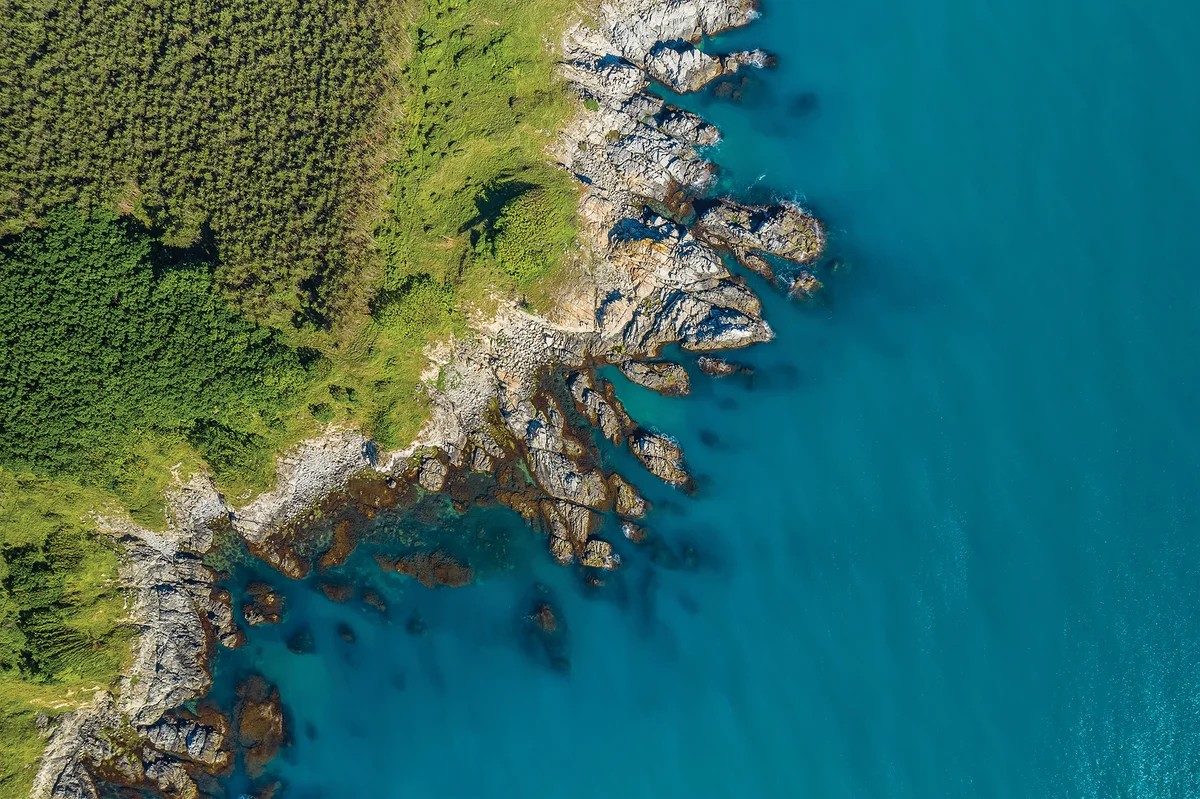
Coastlines are surprisingly tame.
Think about it. Sediment piles up. Erosion wears things down. The edge of land is smoothed by water, by time, by physics. A mountain peak? Rougher. Older. Less touched by that smoothing force. Oline calls the old models “toy models.” Useful for teaching, sure. But not accurate maps.
Andreas Baas wasn’t in on the study. A geomorphologist from King’s College. He checked the work. Called the method rigorous. Still cautious. Smooth coastlines? Surprising. Especially compared to past estimates.
Does it matter? Maybe. Maybe it helps fix the gaps between how we model surfaces and how we measure edges. Baas wants to combine the models. See if they hold. See if the math matches the mud.
The point isn’t that the coast is simple. It’s that our assumptions were simpler than reality. We built a universe out of fractal loops because it felt right. Because the math was beautiful. The earth doesn’t care about our aesthetics. It erodes what it wants.
So what now? We redraw the maps? Probably.