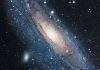



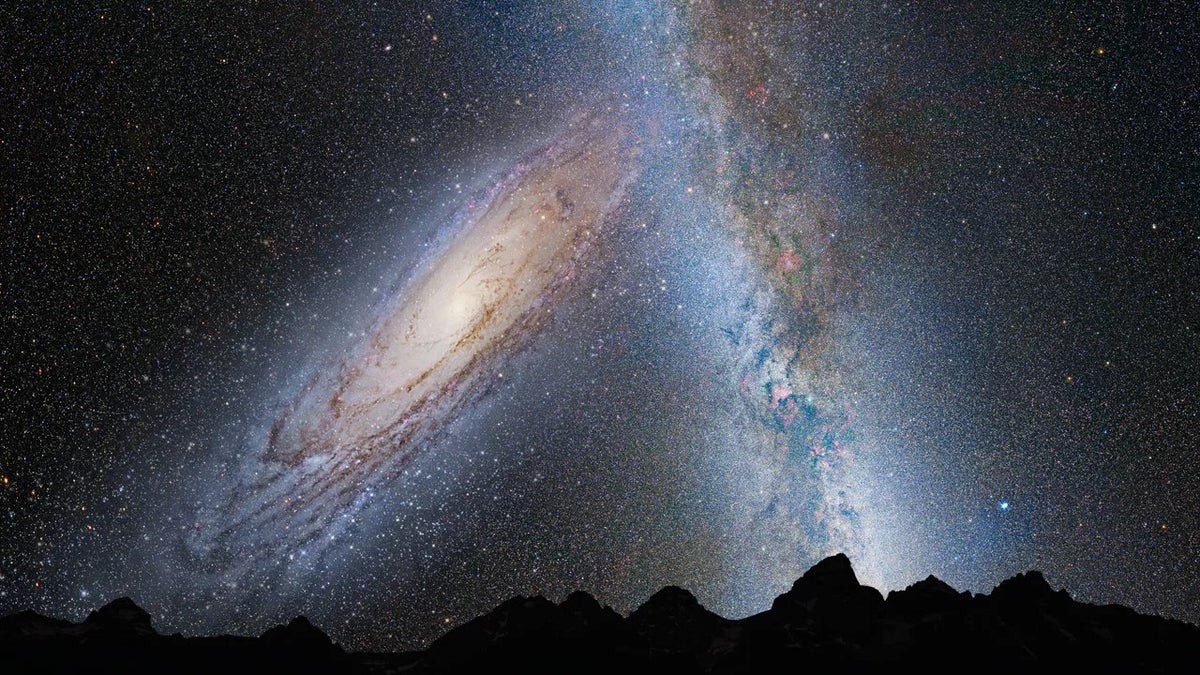
Пам’ятаєте спостереження Хаббла 2012? Вчені вивчали рух Андромеди в космосі і трохи панікали. Їхній висновок був жорстким. Андромеда летить просто на нас. Пряме влучення. Розрахунковий час — приблизно за чотири мільярди років.
Далі змінилися.
Наступні дослідження показали, що ми можемо взагалі промахнутися. Можливо процес займе більше часу. Можливо, нічого не станеться ще вісім мільярдів років. Поточний консенсус, що враховує гравітаційний вплив супутникових галактик, становить 50 відсотків. Монетки на межі. Орел – ми стикаємося, решка – пролітаємо повз.
Вам варто переночувати на дивані, якщо це вас турбує, хоча здебільшого тому, що це зовсім не важливо. Ми маємо вісім мільярдів років на те, щоб переживати. Але припустимо, ми приймемо найгірший сценарій, і вони справді зіткнуться. Чи потрібно збирати валізи?
Відповідь – ні. Принаймні не в прямому розумінні.
Приливні сили, а не вантажівки
Ось математика. Дві галактики стикаються зі швидкістю близько одного мільйона кілометрів на годину. На шосе це миттєва смерть. У космосі? Це повільно. Диски цих галактик сягають більш ніж 100 тисяч світлових років. У такому масштабі “зіткнення” розгортається протягом сотень мільйонів років. Наслідки відчуватимуться ще мільярди років.
Маси, задіяні у процесі, абсурдні. Андромеда важить 1,5 трильйони сонячних мас. Чумацький Шлях легший – близько 800 мільярдів. Гравітація між ними величезна, але це не простий тягар. Воно диференційоване.
Уявіть дві галактики, що стоять руба. Відстань між ними – близько 120 тисяч світлових років. Зірка на боці, зверненій до Андромеди, зазнає сильного тяжіння. Зірка на протилежному боці? Вона відчуває набагато менше тяжіння. Ця різниця розтягує галактику.
Вони не розбиваються як 18-тонні вантажівки. Галактики – це порожній простір. Вони більше схожі на привидів. Вони пролітають прямо один крізь одного. Гравітація розриває їх на довгі щупальця з газу, пилу та зірок, звані приливними хвостами. Це схоже на те, як тягучку розтягують у повільному космічному танці. Гарно, справді. Потім гравітація знову збирає їх разом. Знову і знову, поки вони остаточно не зіллються воєдино.
Зірки промахуються. Газ стикається.
Чи можуть окремі зірки зіткнутися одна з одною? Імовірність лякаюче низька. У нашому районі середня зірка має діаметр близько мільйона кілометрів. Відстань до найближчої зірки? Приблизно чотири світлові роки. Це 40 трильйонів кілометрів порожнечі між ними.
Потрап у таку мету.
Зірки у нашій частині галактики не зіткнуться. Галактичні околиці надто тихі. Ближче до ядра, де мільйони зірок упаковані щільно, стає важче. Зіткнення відбуваються. Вони породжують події на зразок V838 Monocerotis – зіркової системи, яка роздулася і різко збільшила яскравість після того, як поглинула сусіда. Жахливо. Видовищно. Але для нас це рідкість.
Але хмари газу – інша річ. Вони розкинулися на сотні світлових літ. Коли галактики зливаються, ці хмари постійно стикаються.
Викликані цим вибухи зіркоутворення будуть настільки яскравими, що зможуть відкидати тінь на новій планеті, якщо вона ще залишиться.
Це запускає швидке, насильницьке народження зірок. Випромінювання від цих новонароджених гігантів буде небезпечним, так. Але давайте не забігатимемо вперед.
Справжня проблема: Чорні діри
Страшна частина – це не зірки і не газ. Це те, що знаходиться на дні вирви.
В обох галактиках є надмасивна темна діра. Стрілець A у Чумацькому Шляху має масу в чотири мільйони разів більше за масу нашого Сонця. M31 в Андромеді ще важчий. 140 мільйонів сонячних мас.
Під час злиття газ падає усередину. Він нагрівається. Утворюються акреційні диски, що сяють високоенергетичним випромінюванням, що лякає. Обидві галактики можуть перетворитися на активні квазари, обстрілюючи випромінюванням навколо. Це погано для біології.
Потім чорні дірки зливаються.
Коли вони нарешті об’єднуються, через кілька мільярдів років у розпалі хаосу, вони випромінюють гравітаційні хвилі. Ці хвилі будуть нести стільки енергії, скільки всі зірки у Всесвіті, що спостерігається, разом узяті. Сама тканина простору-часу тремтітиме. Ми не знаємо, що це зробить із локальними орбітами, але інтуїтивно зрозуміло, що знаходитись поруч — погана ідея.
Але є тонка смужка світла.
Землі на той час просто не буде.
До моменту прибуття Андромеди, за вісім мільярдів років, Сонце роздується до червоного гіганта. Воно приготує планету, здере атмосферу, а потім сколапсує у крихітного білого карлика. Шоу розпочнеться після того, як будинок уже згорить.
Ми повністю пропустимо цю подію. 🌌