We like to tell ourselves humans are naturally selfish.
It makes the bad news easier to digest. War. Famine. A burning planet while the rich buy yachts.
If we are fundamentally rotten at least the destruction is our own fault.
Jeremy Lent thinks that’s nonsense.
He argues we aren’t broken. We are just running old software.
Bad software.
Installed around the 17th century.
The operating system glitch
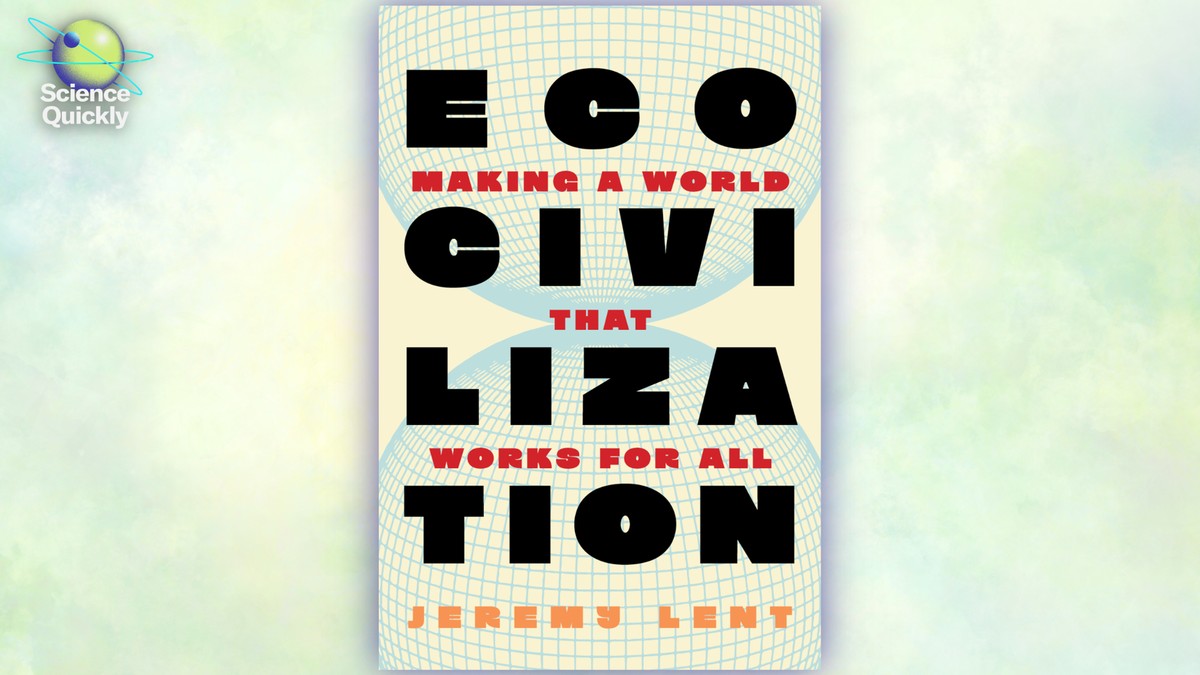
Lent is the guy behind the Deep Transformation Network and a new book called Ecocivilization.
His point? Modern civilization isn’t natural.
It’s a cultural choice. A bad one.
Born from European modernism.
From the idea that nature is a machine to be conquered.
“Francis Bacon told us to conquer nature. That wasn’t just a slogan. It was a worldview.”
This mindset did two things.
One. It gave us science. Tech. Antibiotics. Good stuff.
Two. It convinced us we are separate from Earth.
Separate from each other.
Resources to be mined. People to be managed.
This leads to a comfortable lie.
That competition is human nature.
That extraction is inevitable.
Lent says science proves this wrong.
We evolved to collaborate. Not compete.
The current system treats us like isolated atoms.
But atoms aren’t real. Everything connects.
Rewriting the code
So where does an ecocivilization come from?
Not from wishful thinking.
From systems science.
Modernism gave us reductionism.
Descartes said chop things up.
Understand the parts to know the whole.
It worked for a while.
Until it didn’t.
Over the last 150 years fields like ecology and complexity theory have shown the opposite is often true.
You can’t understand a forest by studying one leaf.
You have to look at the web.
The connections matter more than the parts.
This matches what Indigenous knowledge and Eastern philosophy have known for millennia.
Everything is linked.
Science and spirituality aren’t enemies.
That split? Also part of the old operating system. A mythology we bought into.
Lent’s work traces this shift.
First book: The Patterning Instinct. A history of how humans made meaning.
Second book: The Web of Meaning. Integrating science with traditional wisdom.
Now. Ecocivilization. The practical manual.
Is it actually possible?
Skeptics will laugh.
You want to change global economics?
Nice dream. Too late. Too entrenched.
Lent points at the sky.
Literally.
The Stockholm Resilience Center mapped nine planetary boundaries.
Things like ocean acidification. Climate change. Biodiversity loss.
We have breached seven of them.
The UN secretary-general calls this “collective suicide.”
When a building is on fire you don’t adjust the thermostat.
You put it out.
Incremental change is the delusion now.
Staying the course is suicide.
So we use backcasting.
Start with the future.
Where do we need to be to survive? To thrive?
A regenerated Earth. Abundance for all.
Then work backward.
What steps get us there?
This forces different choices. Now.
The corporate experiment
Think corporations can’t change?
Look at Mondragon.
Based in Spain’s Basque Country.
A massive cooperative. 80,00 employees.
Huge industries.
But it’s not owned by distant shareholders.
It’s owned by the workers.
The CEO makes six times what the lowest-paid worker earns.
Six times.
Not a thousand.
Not five hundred.
Just six.
They are competitive. Efficient. Profitable.
They prove the point.
Structure dictates behavior.
If you design for extraction you get poverty and inequality.
If you design for mutualism you get stability.
The 100 biggest economies on Earth?
69 are corporations. Not countries.
We have given the levers of global power to entities legally required to exploit us for profit.
Is this inevitable?
No.
It’s just the current patch version of society.
We can update.
The tools exist.
The science supports it.
The models work.
So why aren’t we there yet?
Because changing an operating system is hard.
Because we’ve forgotten how to share.
Maybe we just need to remember.