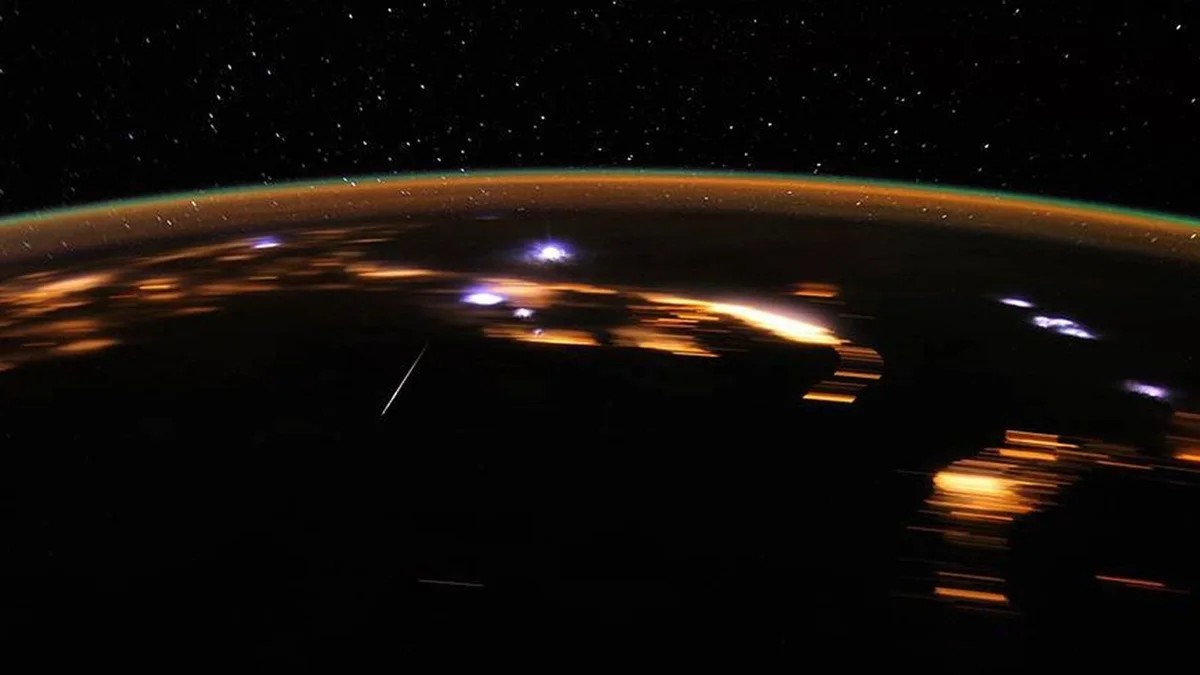
The night sky is set for a seasonal highlight this April as the Lyrid meteor shower returns. Known for producing bright, fast-moving streaks and occasional brilliant fireballs, this celestial event offers a rare opportunity to witness cosmic debris interacting with our atmosphere in real-time.
What are the Lyrids?
The Lyrid meteor shower is not a recent phenomenon; it is one of the oldest recorded meteor showers, with observations dating back over 2,700 years.
The “shooting stars” we see are actually the result of Earth passing through a trail of debris left behind by Comet C/1861 G1 Thatcher. As these tiny fragments of rock and ice collide with Earth’s atmosphere at high speeds, they burn up, creating the luminous trails known as meteors.
What to Expect
While the intensity of meteor showers can vary from year to year, the Lyrids generally follow these patterns:
– Frequency: On average, observers can expect to see about 18 meteors per hour.
– Peak Performance: Under ideal conditions, the shower can become much more active, sometimes yielding up to 100 meteors per hour.
– Visual Style: The Lyrids are prized by enthusiasts for their speed and the possibility of seeing “fireballs”—larger, brighter explosions of light that last longer than typical meteors.
Viewing Guide: When and How to Watch
To catch the best display, timing and location are critical.
The Peak Timing
The shower reaches its maximum activity during the nights of April 21 and April 22. While the mathematical peak occurs around 4 P.M. EDT on Wednesday, the best viewing windows will be:
– In the early morning hours before dawn.
– In the evening hours after sunset.
Finding the “Radiant”
Although the meteors are caused by a comet, they will appear to originate from a specific point in the sky near the constellation Lyra, close to its brightest star, Vega.
Pro Tip: To see the longest and most impressive streaks, do not stare directly at the constellation Lyra. Instead, look slightly away from the radiant point to allow the meteors to “streak” across a larger portion of your field of vision.
Tips for Success
- Escape Light Pollution: Find a dark, open area away from city lights.
- Allow for Adaptation: Give your eyes at least 30 minutes to adjust to the darkness; this is essential for seeing fainter meteors.
- Get Comfortable: Lie on your back with your feet pointed toward the east to maximize your view of the sky.
Summary: The Lyrid meteor shower offers a historic celestial display of bright, fast meteors peaking on the nights of April 21–22. For the best experience, find a dark location and look slightly away from the constellation Lyra to witness the meteors streaking across the sky.