While the Artemis II mission is widely celebrated for pushing the boundaries of human spaceflight, a recent mathematical analysis has revealed a fascinating nuance: the crew was never actually “farthest from humanity” when they were at their maximum distance from Earth.
The distinction may seem pedantic, but it highlights a fundamental shift in how we define our place in the cosmos. As space exploration moves from Earth-centric orbits to deep-space voyages, the metric of “distance from home” is being replaced by a more complex question: How far apart are we?
Breaking the Distance Record
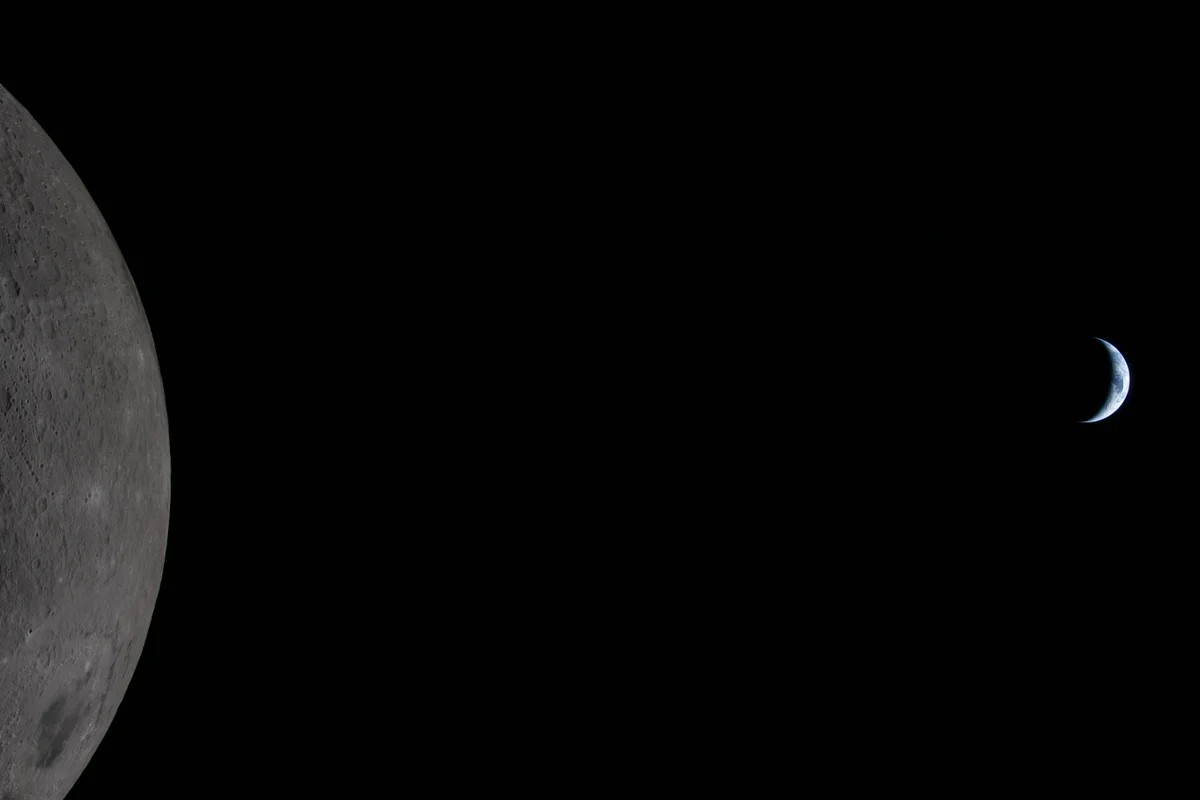
On April 6, at 7:02 P.M. EDT, the Artemis II crew—Reid Wiseman, Victor Glover, Christina Koch, and Jeremy Hansen—reached a peak distance of 406,771 kilometers (252,756 miles) from Earth. This milestone officially surpassed the 1970 record set by Jim Lovell during the Apollo 13 mission, marking the furthest any human beings have ever traveled from our home planet.
However, the moment of peak distance from Earth was not the moment of maximum isolation.
The “Humanity” Variable
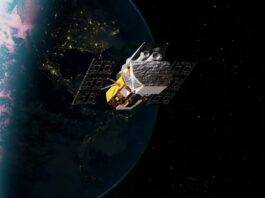
Astrophysicist Jonathan McDowell identified a logical loophole in the traditional way we measure these milestones. While we often use “distance from Earth” as a proxy for “distance from humanity,” the two are not synonymous. At the time of the Artemis II flyby, humanity was not solely located on Earth’s surface; it was also distributed across several orbital platforms.
To find the true moment of maximum isolation, McDowell had to account for:
– The location of the crew: The Orion capsule, named Integrity.
– The locations of other humans: Seven astronauts aboard the International Space Station (ISS) and three astronauts aboard China’s Tiangong space station.
– Relativistic effects: The slight differences in how time passes in different gravitational environments.
– Orbital mechanics: The constant, rapid movement of space stations around the planet.
The Result: A New Record for Isolation
By calculating the geometric distance between the Orion capsule and the various crews in orbit, McDowell discovered that the astronauts’ moment of being “farthest from any other human” occurred approximately 40 minutes before they reached their maximum distance from Earth.
The data revealed a razor-thin margin of difference between the two orbital stations:
– Distance from the ISS crew: ~419,581 km
– Distance from the Tiangong crew: ~419,643 km
Because the Tiangong crew (Zhang Lu, Wu Fei, and Zhang Hongzhang) was positioned slightly further away from the Orion capsule at that specific moment, they represented the true “farthest point” of human separation.
Why This Matters for the Future
This calculation is more than a mathematical curiosity; it is a preview of our future in space. As NASA and other space agencies move toward establishing permanent lunar bases and eventually Mars colonies, the concept of “home” will become increasingly fragmented.
“It raises the idea of a time when we’re not so much asking, ‘How far are people from Earth?’ but ‘How far are people apart?’” — Jonathan McDowell
We are entering an era where humanity will no longer be a single, Earth-bound entity, but a scattered collection of outposts. In this new reality, our sense of connection will be defined not by our distance from a planet, but by the vast, shifting gaps between ourselves and our fellow explorers.
Conclusion: The Artemis II mission proved that while we can reach further from Earth than ever before, the true measure of human isolation is shifting from our distance from a planet to our distance from each other.