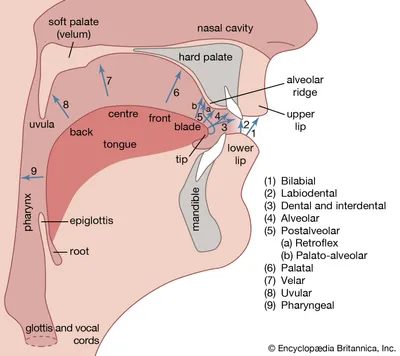
Pronunciation is far more than just getting the letters right. It is the physical manifestation of language. Think of it as the arrangement of segmental phonemes—the raw sounds of speech—organized into patterns of pitch, loudness, and duration.
When you speak, you are encoding a message. Pronunciation is that output. When you listen, you are decoding. Pronunciation is the input. It shapes how the speaker communicates and how the hearer perceives. If a judgment is needed, it is applied here. This makes pronunciation so basic to language that you cannot discuss communication without addressing it.
Pronunciation is both an activity and a state. It is what the speaker does and what the hearer perceives.
The Problem with “Correct” Pronunciation
In everyday conversation, we often treat pronunciation as a moral or social issue. We call it orthoepy. It is the parallel to orthography, or correct spelling.
Ask someone how to pronounce a word and you are usually looking for a standard. You are checking for evidence of correctness. Or you are probing to see if they speak a different dialect. Maybe they have an idiosyncrasy.
Only mispronunciations catch our attention. They distract. They introduce noise into the communication system. That noise reduces efficiency. We notice the error because we expect a specific pattern.
How Speech Production Actually Works
The act of producing speech is not magic. It is physics. It is the same as producing any other sound. You set up vibrations in the air. Those vibrations affect the organs of perception in the ear of the hearer.
Speech differs from a guitar or a drum. Speech organs can change the quality of the sound. They can alter pitch, loudness, and duration in real time.
Think of it this way. Speech is like playing a number of instruments at once. One instrument makes the ah sound. Another makes the sh sound. Each one operates for only a few hundredths of a second.
They are smoothed out into a continuous flow. That is how we speak. That is how we are understood.

What exactly counts as pronunciation?
When we talk about pronunciation, we are usually zooming in on specific speech sounds and their stress patterns. It is a narrow definition. We focus on the qualities of the sounds themselves. If you swap a vowel for another, that is a pronunciation shift. If you drop an accent mark on a consonant cluster, that counts too.
But the line gets blurry fast. Consider voice quality. Is a breathy voice part of pronunciation? Not really. Unless that breathiness is a distinct feature of the language you are speaking, it falls outside the scope. Nasality is similar. It is only relevant if it changes the meaning of the word. Otherwise, it is just how you speak.
“The term is only vaguely applied to stretches of speech longer than a word, such as the intonation of sentences.”
When does it become intonation?
Here is where things get tricky. Pronunciation is not the same as intonation. You can have perfect pronunciation. Your consonants are crisp. Your vowels are precise. Yet, your intonation might be flat or incorrect.
Think about a sentence. Intonation covers the rise and fall of your voice over a whole sentence. It is less about individual sounds and more about the musicality of the phrase. Most people separate these concepts. You can praise someone’s pronunciation while criticizing their intonation. It is a subtle distinction. But it matters.
Why the distinction matters for learners
If you are learning a language, focusing only on individual sounds can leave you sounding robotic. You nail the “th” sound. You get the vowel right. But your sentence lacks the natural rise and fall of a native speaker. You might be understood. You might even be considered to have “excellent pronunciation.” But you are still missing a layer of communication.
This is why language instruction often splits these skills. One module handles the phonemes. Another handles the prosody. It is not just about saying the word correctly. It is about saying it with the right rhythm.
How to fix the gap
So how do you bridge the gap? You stop treating words in isolation. You start practicing sentences. You listen to how the voice moves. You mimic the contour. Not just the individual letters. The whole phrase.
It takes practice. It feels unnatural at first. But the result is a more complete command of the language. You are not just reciting. You are speaking.
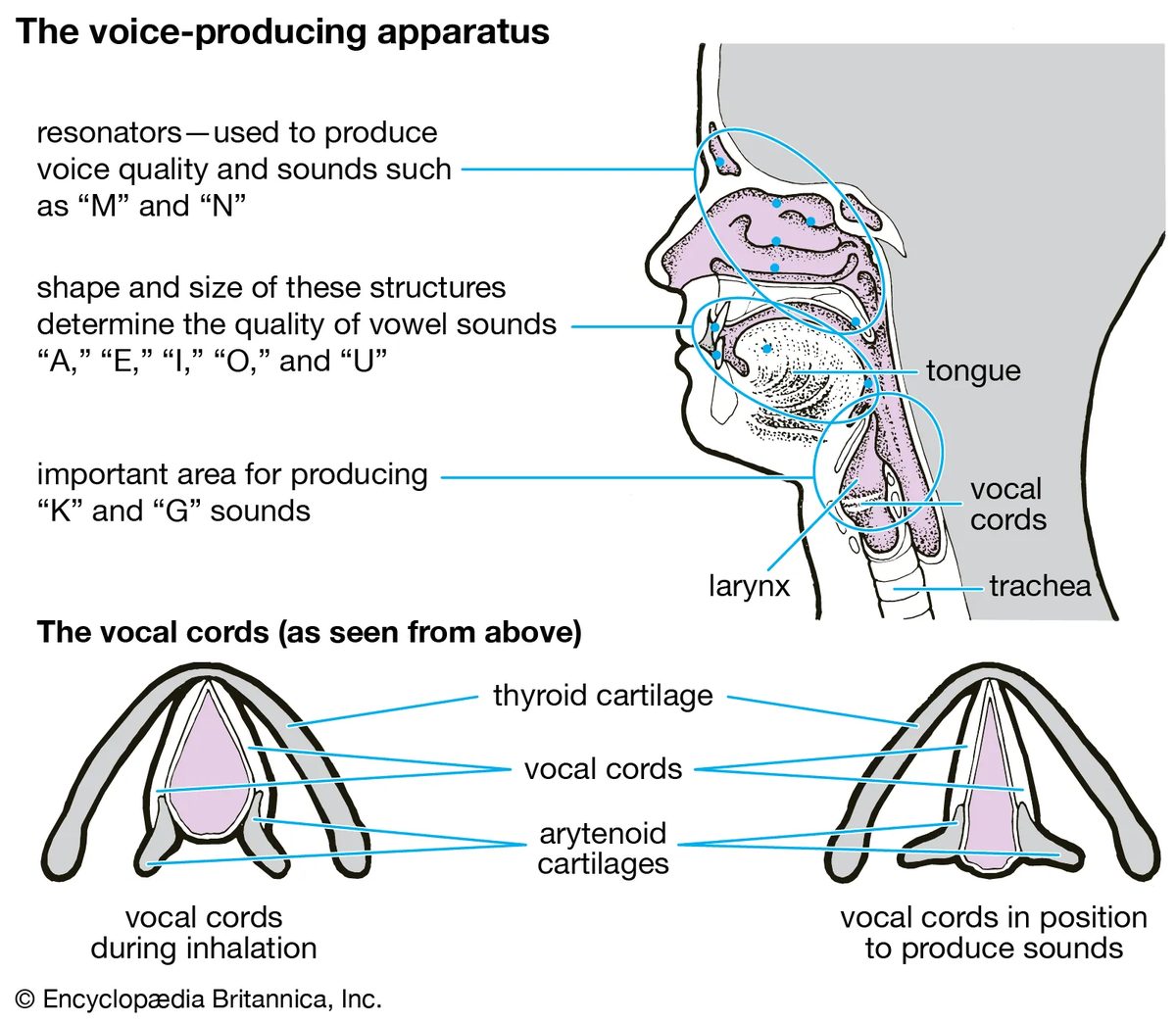
Linguists call it phonetics. It is the science of pronunciation, but let’s be honest about what that actually means for you. If you are trying to learn a language, you probably think you are practicing tongue placement. You aren’t. You are practicing listening.
Children do not learn to speak by staring in a mirror. They do not get instructions on where their teeth should sit against their lips. They learn by ear. The tactile sense of your own mouth is secondary. The ear is the primary monitor.
This matters because every language has a different rhythm of precision. In English, consonants are neat. They are stable. Vowels? Not so much. They drift. They blur. In Spanish, the reverse is true. The vowels are clean, precise little packets of sound. The consonants can be messy, sliding into fricatives or shifting positions.
If you try to force English into a hyper-articulated, surgical precision, you will not sound more professional. You will sound obnoxious. You will sound like a tourist who took a week-long accent workshop. You have to understand the system before you try to hack it.
The System and the Pronunciation
Why do we pronounce words the way we do? To distinguish meaning. That is the entire job. The system of pronunciation exists solely to create distinctions in the flow of speech.
Look at a simple English pair: writing vs. riding.
In German, it’s Seite (side) vs. Seide (silk). In Spanish, nata (cream) vs. nada (nothing).
The phonemic statement is simple enough for a child: /t/ is not /d/. That difference marks a difference in meaning. If you swap them, the word breaks. But here is where most learners get stuck. They focus only on making the distinction. They ignore the quality of the sound.
Native speakers do not just hear that you made a distinction. They hear how you made it. The qualitative propriety matters as much as the phonemic fact. If you hit a /t/ with the wrong articulation, the ear rejects it. It sounds “not quite right.”
Consider the phone [t]. In General American English, it can be voiced in certain environments. In German, it is aspirated. In French and Spanish, it is not. The [d] in Spanish is not a stop. It is a fricative. It slides. In Spanish, the tongue touches the edges of the incisors (dental). In standard English, it is strictly alveolar.
There are dozens of varieties of [t] in General American English alone. You can strain your description muscles to catalog them. But for most of them, if you deviate even slightly, you produce a pronunciation that feels wrong. It isn’t about being perfect. It is about being right for that specific language system.
Language Systems
You can compare languages by looking at their inventory of phonemes. It is a useful shortcut for understanding why your mouth feels awkward in a new language.
English has one of the most common stop systems: /p/, /t/, /k/. Add an affricate, /č/, and you have pin, tin, kin, chin.
Other languages are simpler or more complex. Hawaiian has only two stops. Yuma has six.
Fricatives vary just as wildly. English uses /f/, /θ/, /s. Scots adds /x (as in loch ). This sound survives in older English, German, and Spanish. Some languages go further, using uvulars or pharyngals. Chinese relies on an aspirated-unaspirated system for stops. Hindi has four kinds of stops. Nasal systems range from zero to four in different languages.
Then there are the liquids. Japanese does not contrast l and r. Spanish treats them as two distinct phonemes. English /r/ often sits in the semivowel system alongside /j/, /w/, and /h*.
Vowels are where the real friction happens. Spanish has a clean five-vowel system: /i/, /e/, /a/, /o/, /u/. Tagalog has three. American English? It is a mess. Some linguists count nine simple vowels plus complex nuclei. Others count fifteen vowels and diphthongs. German and French use front-rounded vowels. French also nasalizes them. English and Spanish do not.
And then there are the sounds that have no equivalent in English.
Burmese uses breathy voice in vowels. Igbo has inspired voiced stops. Georgian has glottalized stops, compressing air by raising the closed glottis. Khoekhoe has clicks—suction with the mouth.
Tone is another layer entirely. For tone languages, the pitch level or direction of a syllable is part of the phonemic system. It is not just intonation. It is meaning. Chinese is the most famous example, but there are many Asian, African, and American Indian tone languages. Even Swedish and Norwegian have limited tone systems.
When you learn a new language, you are not just memorizing words. You are learning a new way to manipulate air, sound, and pitch. You are learning to hear what the native speaker hears. If you focus only on the consonants, you will miss the nuance. If you focus only on the vowels, you will lose the structure.
The goal is not precision for precision’s sake. The goal is intelligibility within the system. Try to sound like a native speaker by mimicking their ear, not their anatomy. Listen to the flow. Watch how they connect the sounds. Notice where they hesitate.
It is not easy. It requires unlearning the habits of your first language. But once you stop trying to force English into a rigid framework, you might find it opens up. The sounds start to make sense. The rhythm clicks.
And if it doesn’t? Well. You are still speaking. That is something.
You speak a dialect. Every native speaker does. It is not a mistake. It is a technical reality. A dialect is simply the form of a language peculiar to a specific community. No romantic myths here. No “pure” speech. Just people talking to people.
Linguists use the term without judgment. It is not about being “lower class.” It is about geography and social structure. When you hear someone speak, your brain instantly files them away. You assign them a region. You assign them a social class. This happens automatically. The process is fast. It is subconscious.
The Complex Web of Language Features
Dialects are not just about how words sound. The pronunciation is tied to a larger system. Morphology changes. Syntax shifts. The lexicon expands or contracts. You cannot isolate sound from structure.
Attitudes toward these features vary wildly by culture. In Great Britain, dialects are often stigmatized. They are used as markers of lower status. This is a social attitude. It is not a linguistic rule. In Germany, the dynamic is different. Upper-class speakers may use dialect in intimate settings. It signals closeness. Trust.
“The emphasis on pronunciation in dramatic literature… is presumably to suggest the dialect without making it incomprehensible.”
Think of My Fair Lady. Or Pygmalion. George Bernard Shaw used speech patterns to define characters. But he kept the text understandable. Why? Because pure dialect can be opaque. You might miss the plot. You need a bridge between authenticity and clarity.
The American Context
The United States presents a different landscape. We do not have the same rigid dialect classes found in England. The equivalents are often found in the assimilation of foreign words. Or in code-switching. Not in deep morphological shifts.
Contrast this with Argentina. Spanish there has distinct dialects. They are not just accents. They involve grammar. They involve vocabulary. The gap between the standard and the local is wider. In the US, the gap is often narrower. It is mostly about sound.
Accents vs. Dialects: Where Do You Draw the Line?
This is where confusion usually starts. People use “dialect” and “accent” interchangeably. They are wrong.
An accent is only pronunciation and intonation. A dialect includes grammar. It includes word choice. It includes sentence structure.
Standard English is spoken everywhere. But it sounds different.
* London English.
* Edinburgh English.
* Chicago English.
* Sydney English.
These are accents. The grammar is the same. The sentence structures are identical. The words are largely the same. Only the sound changes.
Standard French behaves similarly. Paris speakers sound different from Marseilles speakers. Quebec French adds another layer of variation. Standard Spanish in Madrid differs from Buenos Aires. Standard German in Berlin differs from Munich.
When Pronunciation Actually Changes the System
Sometimes the phonemic system itself varies. This moves beyond simple accent differences. It approaches dialect territory.
Consider English. Scots. American English. These groups sometimes use different sets of phonemes. The sounds themselves change the meaning or the categorization of words. The same applies to Spanish in Spain versus Central and South America. The vowel systems shift. The consonant clusters change.
Why Your Pronunciation Shifted Without You Noticing
You might think your accent is fixed. It isn’t. It’s a living thing that breathes, contracts, and mutates.
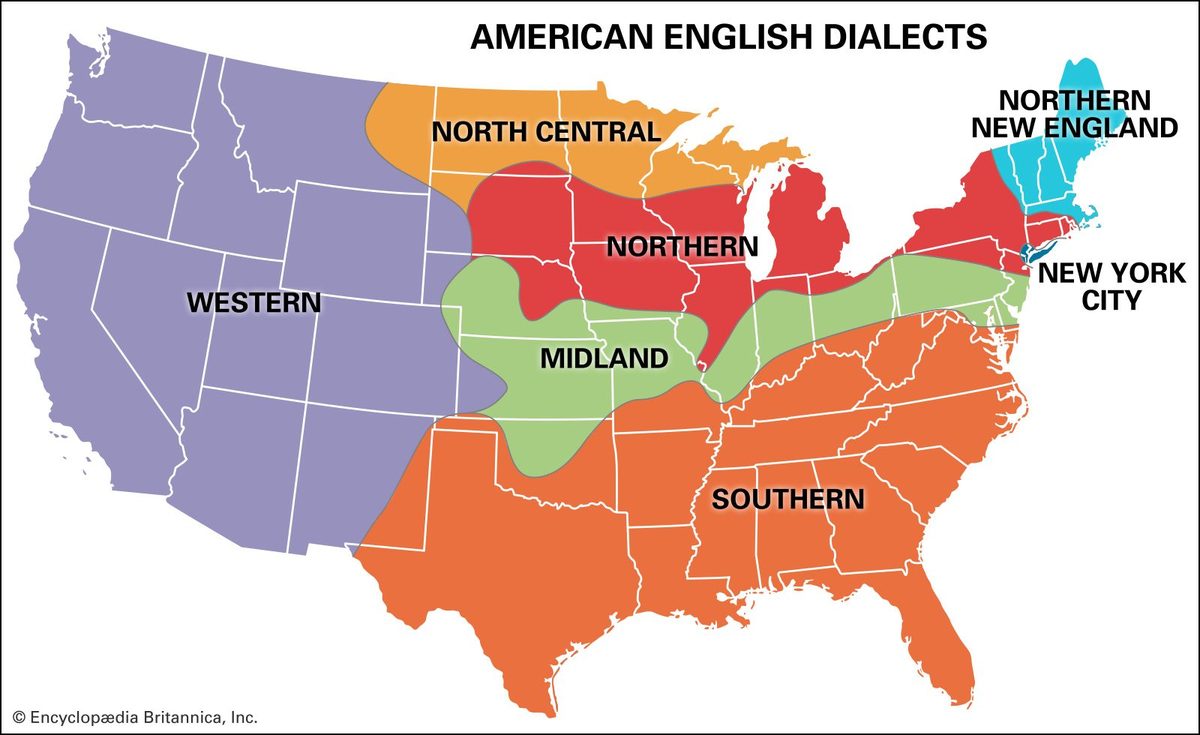
In linguistics, we talk about dialects as a spectrum. There isn’t a clean line between “local” and “regional.” There’s a gray area where social class meets geography. In the United States, we swap the words accent and dialect so casually that we forget they mean different things elsewhere. Here, pronunciation is the main marker of where you’re from. Grammar? That’s the marker of who you are socially.
This brings us to the elusive concept of a standard pronunciation.
Most cultivated languages believe in one “correct” way to speak. In France, it’s the speech of high Parisian society. In Spain, it’s the educated conversation of Castilians. In Germany, it’s a stage-developed ideal used as a benchmark for all educated speech.
But here’s the catch: nobody actually speaks like that anymore.
Few Germans outside of theater circles use that regionless ideal. Argentinians are proudly non-Castilian. The standard exists as a ghost—a rulebook that few follow but everyone acknowledges.
The British Exception and American Chaos
Great Britain is the odd one out.
In the UK, there is a non-regional, strictly upper-class dialect called Received Pronunciation (RP). If you learned it at home or in public school, you have it. If you don’t, your regional accent becomes your practical standard. It’s said that only an RP speaker can truly identify an RP speaker. It’s an in-group club.
America? We don’t have that luxury.
Linguist John S. Kenyon called it “familiar cultivated colloquial.” Some of us talk about an Eastern or Northern standard. Others point to the South. But “American English” is as loose a term as “British English.” It’s not one thing. It’s a collection of habits, none of which are “wrong,” just different.
How Pronunciation Changes
It’s a truism that pronunciation changes continuously. Why? Because no one inherits language. Every child has to learn it by listening. And listening is imperfect.
Most individual quirks die out because the community is conservative. We correct each other. The language self-corrects. But occasionally, a “mistake” catches on. It spreads. It becomes normal. Sometimes this happens so slowly we only notice it in retrospect.
Linguists break these changes into two buckets: isolative and combinative.
Isolative Changes: The Great Vowel Shift
An isolative change affects a sound regardless of its environment. It just… happens.
The Great Vowel Shift is the prime example. Somewhere between Chaucer and Shakespeare, English long vowels started moving. They didn’t move because the surrounding letters made it easier. They moved because the system shifted.
Look at life. Chaucer pronounced it with a long ee. Shakespeare kept it long. Today, we use a diphthong (eye ). The new sound wasn’t easier to produce than the old one. In fact, we reintroduced simple vowels later in words like calm and law.
We still don’t know why it happened. Or when. Or why it stuck.
| Chaucer’s Spelling | Chaucer’s Pronunciation | Shakespeare’s | Present Pronunciation | Present Spelling |
|---|---|---|---|---|
| lyf | li:f | leif | laif | life |
| deed | de:d | di:d | di:d | deed |
| deel | dɛ:l | de:l | di:l | deal |
| name | na:mə | nɛ:m | neim | name |
| hoom | hɔ:m | ho:m | houm | home |
| mone | mo:nə | mu:n | mu:n | moon |
| hous | hu:s | hous | haus | house |
Note: Some older forms had two syllables. Modern spelling often lags behind sound.
Combinative Changes: The Path of Least Resistance
Combinative changes are different. They happen because of what’s next to the sound.
The goal here is ease. The speaker wants to expend the least effort. The listener wants to understand. These two forces battle constantly.
Take the i -umlaut. In English and Germanic languages, if a front i or j sound appeared in the next syllable, the vowel before it shifted forward. You were preparing for the next sound before you finished the current one. Full became fill. Fulljan (Gothic) influenced the shift. It was anticipation.
Then there’s assimilation. This is when sounds become more similar to each other. The word assimilate comes from Latin ad- (to) + simil- (similar).
In America, issue is pronounced with a soft sh sound (ishu ). In England, it’s si-shu. Why? Reciprocal assimilation. The s and j merged.
This happens in literature (lich-er-uh vs ti-ch-er-uh ). It happens in can’t you (can-chu vs can-tu ). Sometimes these shifts are social signals. Using the merged sound might mark you as casual or affective.
When these new sounds fill a gap in the phoneme system, they stick. The shift from z + j to the “3” sound in vision created a new phoneme. British lexicographer John Hart had predicted this gap fifty years earlier. The language filled it in.
The Cost of Efficiency
The most obvious effort-reducing change in English? The obscuring of vowels in unaccented syllables.
When you stop stressing the little words, the vowels turn into a neutral “uh” sound. This neutral vowel is now the most common syllabic sound in the language.
The side effect? We lost inflectional endings.
Old English had complex endings marked by vowel contrasts. Because we stopped pronouncing the unstressed vowels clearly, those distinctions vanished. The endings simplified. They disappeared.
Linguist Charles Hockett calculated that changes in pronunciation have forced approximately 100 reconstructions in the English system.
We are still rebuilding the house. Every day.
Writing systems are imperfect tools for capturing speech. We try to freeze pronunciation into alphabetic or syllabic forms, but the written word never truly matches the spoken one. Consider a Chinese ideograph and an English word. Both represent meaning, but they operate on different levels. The ideograph is a first-order symbol. The English word is a second-order representation of how that sound is built.
Leonard Bloomfield had a sharp take on this. He said a language stays the same regardless of the writing system used to record it. It’s like a person. You can take their picture from any angle. They remain unchanged.
This means any language can technically be written with any alphabet. Roman, Cyrillic, Arabic. We see these scripts applied to wildly different tongues. They don’t work equally well for everyone. And writing often lags behind speech.
Take English. The early augmented Roman alphabet worked okay. But later phonemic shifts went unrecorded. Anglo-French scribes added useless spellings. They introduced analogical and etymological forms. Some of these encouraged “spelling pronunciations” where people read words exactly as they looked, ignoring how they sound. Most languages suffer from this drift. The ones with good phonemic writing are the outliers. The ones that recently adopted new alphabets or reformed spelling.
Attempts to fix this with phonetic alphabets have been mixed. Spelling reform in English was largely unsuccessful. Special-purpose systems exist for language learning. Nonalphabetic systems using articulation symbols, like Alexander Melville Bell’s, haven’t caught on. They are sometimes used for teaching the deaf, but generally, they lack favor.
Mapping Dialects Through Field Work
To understand pronunciation accurately, we don’t just guess. We use linguistic geography. Also known as dialect geography. The goal is to map the distribution of linguistic forms across a specific area.
The standard method involves direct investigation. Trained field workers enter selected communities. They interview typical informants. They follow a fixed scheme. Every finding is recorded in phonetic notation. Sometimes postal questionnaires supplement these direct interviews. Or replace them entirely.
When possible, recordings are made. These serve as the basis for phonetic interpretation. They also act as a supplementary check. The scale of these investigations varies wildly. It depends on the number of communities targeted. The number of informants per community. The length of the worksheets. It all hinges on special conditions. How many investigators do you have? How much funding and time is available?
Large-scale studies rarely limit themselves to pronunciation data alone. The strictly phonetic items on a worksheet might be small. Yet, the recording of morphological, syntactical, and lexical data is trustworthy. It can be used as proxy data for pronunciation.
Variations in Methodology
Not every study follows the standard plan. Some variations are noteworthy.
One approach quantifies a limited number of items. The informants are selected randomly or systematically. The results are expressed in percentages. This gives a statistical snapshot of a community’s speech patterns.
Another method relies on a single informant. The researcher uses their speech to describe the pattern of pronunciation. They map out the phonemic system. They define other features of the dialect. This letter method is particularly useful when informants are hard to find. It’s used more frequently for individual studies than for large-scale undertakings.
Why does this matter? Because language isn’t static. If we rely only on written records, we miss the subtle shifts in how people actually speak. We capture the history, not the present. Field work brings us closer to the truth of how a language sounds right now. It’s messy. It’s resource-intensive. But it’s the only way to hear the changes that spelling systems ignore.
The data sits in archives. Or on hard drives. Waiting for someone to ask the right questions. Who speaks like this? Where did this sound originate? How does it differ from the neighbor’s town? The answers are out there. Buried in phonetic notation.