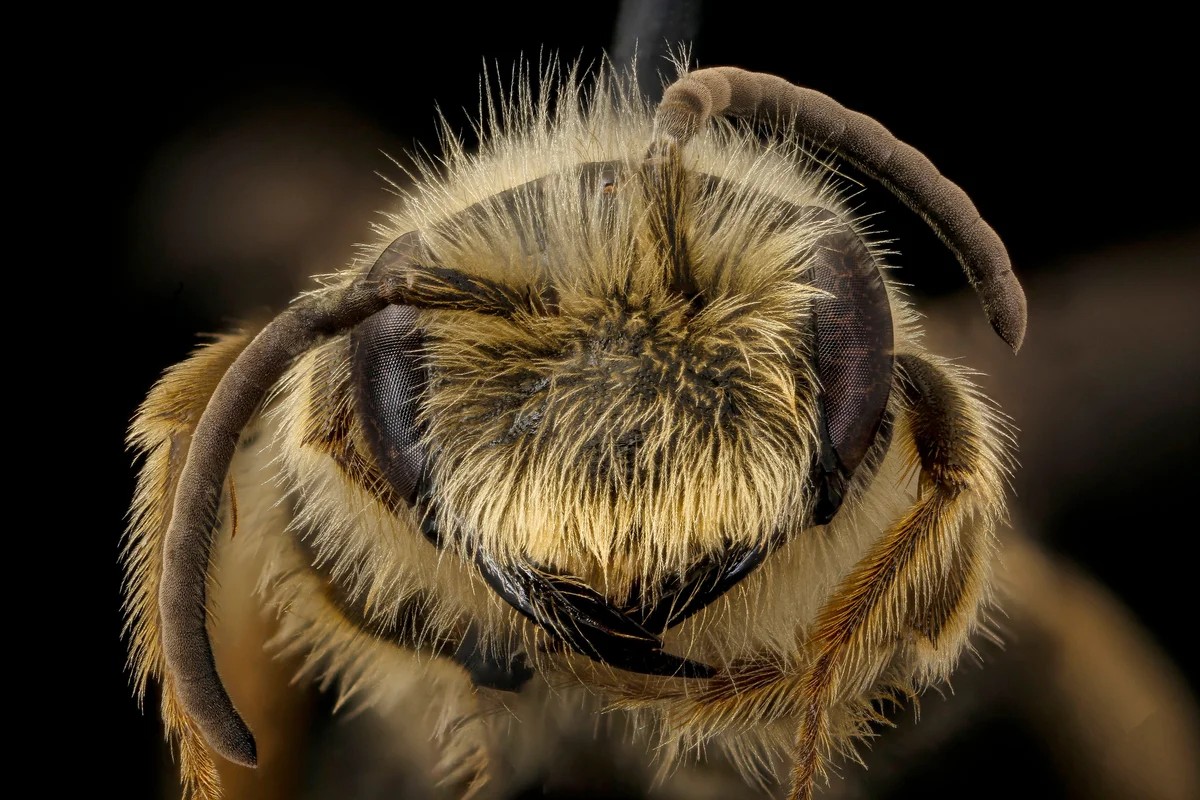
Bees have a magnetic sense. Not just honeybees. Almost all of them.
A recent study published in Science Advances tested 96 different species. Seventy-four of them showed measurable magnetic properties. This finding changes the entire narrative on how insects navigate the world. It suggests magnetoreception isn’t a specialized trick developed for social living. It’s something much older. Much more fundamental.
For decades, biologists knew that social, cavity-nesting honey bees could sense the Earth’s magnetic field. The consensus was that this internal compass evolved because bees live in colonies. They use complex dances to tell hive-mates where flowers are located. Direction matters. The geomagnetic field provides a stable reference point relative to the sun. Without it, the math doesn’t add up. So, researchers assumed this ability was tied to social complexity.
We were wrong.
Testing the magnetic strength of solitary and social bees
My colleagues and I decided to stop assuming. We started measuring.
We collected bee specimens across the family Apidae. This group includes social species like honey bees. It also includes solitary species like chimney bees. We dried the dead bees. We ground them into powder. Then we put the powder in a magnetometer to measure magnetic response.
The results were startling.
We expected to find magnetism only in social bees. Instead, we found it everywhere. Both social bees and solitary bees showed strong magnetic responses. This forced us to reject the hypothesis that magnetism was a requirement for group living.
One of our test subjects was a bee from a small social family called Halictidae. It was strongly magnetic. That pushed us to look further back in evolutionary time. We broadened our search. We included bees from across the entire evolutionary tree. We suspected the origin of this trait lay in older lineages.
We identified some clear patterns.
- Larger bees were more magnetic than smaller ones.
- Social bees tended to be slightly more magnetic than solitary ones.
- Cavity-nesting bees were more magnetic than ground-nesters.
But here is the catch: these trends didn’t hold up against the big picture. We detected magnetism in every bee family we tested. Solitary bees. Social bees. Nocturnal bees. Ground-nesters. Hive-dwellers. All of them.
Even beetles, wasps, and flies showed magnetic properties in our comparative samples.
This led to the conclusion that magnetism probably predates the origin of bees entirely. It is an ancient, conserved trait. An evolutionary heritage that bees didn’t invent. They just inherited.
Why magnetoreception is so hard to prove
If bees are magnetic, why don’t we fully understand how they use that magnetism?
The answer is simple: it’s incredibly difficult to study.
Magnetoreception is arguably the most controversial of animal senses. There is strong evidence that many organisms can detect Earth’s magnetic fields. But it is likely not their primary sense. Even for bees, who are known to use magnetic cues, it is hard to isolate. You need to remove organisms from their natural environment to test these boundaries. That disrupts the very behavior you are trying to measure.
Consider bumblebees. Biologists believe they are magnetoreceptive. But even there, questions remain. Doubts linger about how heavily they rely on this sense.
Honey bees are different. Researchers have actually trained them to distinguish between local magnetic anomalies. Because of that concrete evidence, we made an assumption about our other subjects. We assumed that if a bee species showed a stronger magnetic response than a honey bee, it was also magnetoreceptive.
Assumption is not proof.
Our data shows that magnetism exists across the board. But it does not explain why bees have it. Nor does it explain how it works mechanistically.
Some theories suggest magnetoreception operates through light-sensitive cryptochromes in insect eyes. Our results do not support that well. We found that while magnetic signal strength varied across different body parts, it was never restricted just to one area. It was whole-body.
This makes the picture murkier. We have confirmed the presence of the trait. We have mapped its evolutionary spread. But the actual function? The biological mechanism?
That is still out there, somewhere in the field. Waiting to be found.