It’s July. You buy salad. You get sick.
Again.
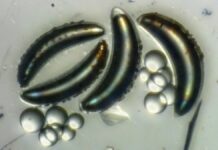
If you’ve spent any time this summer trying to enjoy leafy greens, you know the drill. Gastrointestinal misery is sweeping through the country, with the Midwest taking the hardest hits. The culprit is Cyclospora, a parasite that lives on fresh produce and causes diarrhea that ranges from uncomfortable to explosive.
People are asking the obvious question. When will it end?
Experts hesitate.
The Michigan Crisis: More Than Just Summer Heat
Look at Michigan. It is currently witnessing the largest outbreak of cyclosporiasis in recent memory.
As of July 24, the state had reported 8,176 cases since June 22. Natasha Bagdasarian, the state’s chief medical executive, calls the usual annual count of 40 to 50 “normal.” What happened in Michigan is unprecedented. And frankly, the real number is likely much higher.
Testing is expensive. It takes resources. So these thousands of cases? They’re probably just a sample.
“It’s just a sample of the true outbreak.”
— Natasha Bagdasarian
The Centers for Disease Control and Prevention (CDC) have linked Michigan’s spike to dozens of cases in eight other states across the Midwestern and Southern US. The FDA is simultaneously investigating a separate contamination cluster.
Is Cyclosporiasis Ending?
Some scientists say the peak is behind us.
Gerardo Lopez, a parasitologist at the University of Arizona, points to biology. Cyclospora has a defined seasonal pattern. Infections usually climb in early summer and crash by August. We are past mid-July.
“We’re already past mid-July… This should be the peak,” Lopez says.
The FDA agrees, emphasizing that the parasite has a defined lifecycle and cases will likely decline.
But here’s the catch. Tracing Cyclospora is a nightmare. The parasite can take two weeks to form spores after contaminating soil, and another two weeks to trigger symptoms in anyone who eats them. By the time you’re sick, the trail is cold.
Last week, the FDA traced some Michigan cases to iceberg lettuce from Taylor Farms de Mexico. The company recalled products sourced from Mexico. Then the FDA admitted a test result had been a false positive.
Does that mean the lettuce wasn’t the source? Lopez isn’t buying it. He says the products have been pulled. Things should return to normal. “We’ve never seen any type of outbreak that [continues] past that window,” he argues.
The System Is Failing Us
Bagdasarian disagrees. She sees an endgame, but it’s fuzzy.
This outbreak “goes way beyond normal seasonality.” She’s worried about machinery contamination or cross-contamination spreading the parasite beyond a single crop.
The state is doing “very tedious work.” Staff have abandoned other projects to interview thousands of sick people. They ask victims to recall every meal from the past month. Then, the data gets entered manually. It’s slow. It’s painful.
And it’s not enough.
Bagdasarian is begging for federal coordination. She wants to know what Ohio, Indiana, and New York are seeing. Right now, state-level tracking is disjointed.
“We really need to understand how our data matches what’s happening elsewhere,” she says.
More Outbreaks Lurking in the Shadows
Nicole Arnold, a food safety expert at Ohio State University, offers a colder perspective.
Yes, the current outbreak in the Midwest may taper off. That doesn’t mean summer is safe.
“Multiple cyclosporiasis outbreaks are taking place.”
The affected lettuce might hit its shelf-life limit soon, but other sources remain unknown. Arnold suspects concurrent outbreaks across different regions and suppliers are driving the national crisis.
So, what should you do?
Avoid bagged salads. Scrub produce. Remove the outer leaves of any fresh greens. It’s not glamorous, but it might save your weekend.
Bagdasarian hopes this chaos forces a change. This isn’t just bad luck. It’s a stress test for a stretched public health system.
“We have been raising the alarm for months,” she says.
She wants the public to see what happens when the system breaks. If that’s the point, maybe we’re still not learning it.