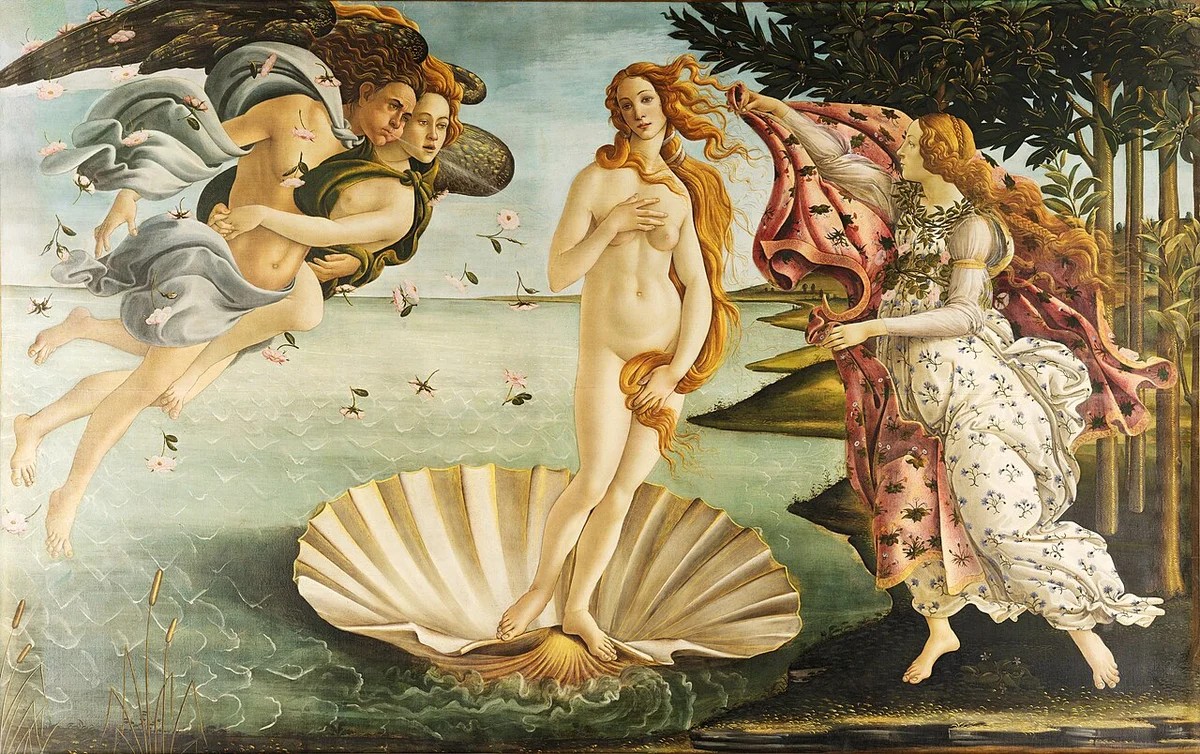
The face of Simonetta Vespucci is everywhere in Renaissance art. She is the muse behind Botticelli’s Venus and numerous other masterpieces. But she died in 1476 at just 23. Historians long assumed tuberculosis did her in. TB was common then. It killed quickly in some, slowly in others. The fading beauty narrative fit perfectly.
But what if the diagnosis was wrong?
In 2019, researchers proposed a different culprit. They looked closer. They didn’t just look at the paintings. They cross-referenced them with period texts. They searched for clues of a specific medical condition hiding in plain sight on canvas.
The Facial Evidence in Botticelli’s Portraits
The key lies in the subtle shifts across the portraits. Botticelli painted Simonetta repeatedly between the 1470s and the posthumous Birth of Venus (1482–1445).
If you look closely, her features change. The jawline shifts. The brow alters. Soft tissue in the face transforms. These aren’t artistic style changes. These are physiological ones.
They match the symptoms of a pituitary adenoma.
This is a tumor on the gland at the base of the brain. This gland controls hormones. When a tumor grows there, it can secrete excess growth hormone and prolactin. Over months or years, these hormones reshape the face. It’s a slow, visible process.
A tumor capable of slowly reshaping a face is also capable, if it erupts, of killing a person quickly.
One painting even depicts a figure with an allegorical symptom of this condition: unexpected lactation. It’s a specific sign. It points to prolactin levels spiking.
From Tumor to Catastrophe: Pituitary Apoplexy
The 2019 theory was cautious. It offered a plausible reading. It didn’t claim proof. Five years later, the argument has tightened. The team published new findings in Endocrinology, Diabetes and Metabolism. They believe they know how Simonetta actually died.
It wasn’t the slow burn of TB. It was a sudden medical emergency: pituitary tumor apoplexy.
This happens when a pituitary tumor bleeds inside the skull. Or swells rapidly. The result is catastrophic. Severe headache. Loss of vision. Confusion. The body’s hormonal regulation collapses almost instantly.
This explains the speed of her death. TB usually drags out. You fade. You weaken. Simonetta collapsed at a ball. The letters from Piero Vespucci to Lorenzo de’ Medici describe it vividly. She suffered headaches, hallucinations, vomiting, and fever. Then she was gone.
Chronic infection doesn’t hit that fast. Apoplexy does.
The Triggers: Dancing and Conflict
Three strands of evidence hold this case together.
First, the visual timeline. The portraits show a growing mass. It wasn’t there in the early 1470s. It was clearly present by the early 1480s.
Second, the clinical symptoms in the letters. The description of her final days aligns almost perfectly with the presentation of apoplexy. Sudden collapse. Neurological distress. Systemic shock.
Third, the timing of the triggers. What could cause a stable tumor to rupture? Two events are documented in the months before her death.
- Vigorous dancing at a ball. Physical exertion raises blood pressure.
- A reported violent encounter with Alfonso II of Aragon. Trauma. Shock.
Either scenario could have caused a bleed. One moment she’s healthy. The next, the tumor ruptures. The cascade begins. She dies days later.
Why This Matters Beyond History
We can’t be certain. There is no tissue sample. No scan from 1476. We have paintings, letters, and 500 years of medical hindsight.
But the combination is compelling. The facial changes show a chronic condition. The letters show an acute, deadly event. Together, they form a coherent medical narrative.
Tuberculosis struggles to explain the rapid onset. The tumor theory explains both the gradual physical changes and the sudden death.
This isn’t just about settling a centuries-old mystery. It’s about methodology. Medical knowledge can answer questions that history cannot. Historical puzzles, in turn, push medicine to look at disease progression in new ways.
Simonetta’s face may have been idealized by Botticelli. But her body told the truth. A growing tumor. A sudden bleed. A young woman’s life cut short by a internal storm.