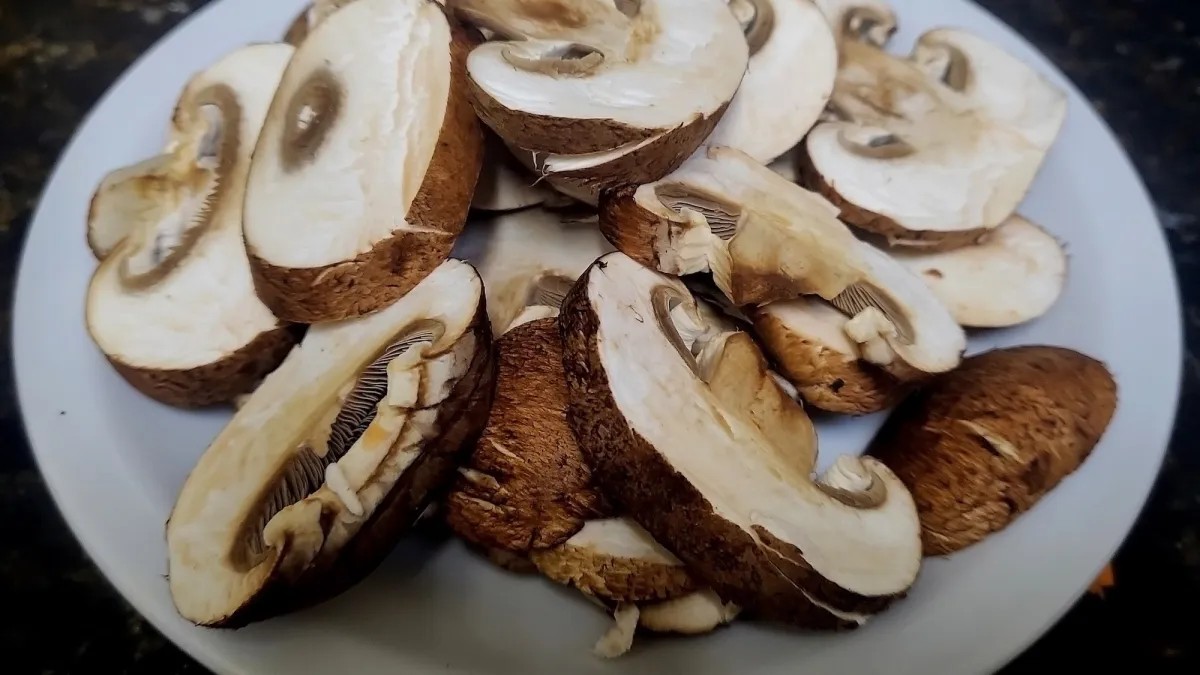
The Marketing Illusion Of One Mushroom
You might not realize it, but you’re eating the same organism whether it’s white, brown, or black.
Button mushrooms. Creminis. Portobellos.
They are all Agaricus bisporus. One species. Different marketing angles.
It gets stranger though. There’s a missing piece in the history books. Who actually coined the name “portobello”? No one knows. Not the mycologists. Not the historians.
Let’s rewind to 1925. Louis Ferdinand Lambert is farming mushrooms in Pennsylvania. He spots a mutation. A pale, chalky weirdo growing among the standard brown caps.
He calls it “Snow White.”
It grows uniform. It grows fast. The market eats it up—literally.
Why? Because America was obsessed with sterility back then. Clean. White. Predictable. The wild, rustic brown variants got pushed to the curb. Every white button mushroom on a grocery shelf today traces back to Lambert’s one lucky accident.
But fungi don’t stay buttons forever. They grow. They mature.
When they expand, those little caps widen into flat, wide discs. The gills pop out. In the mid-20th century, that was ugly. Too messy. So they stayed tiny.
Then the 70s hit. Counterculture rolls in. Processed food becomes the enemy.
Suddenly, those same overgrown Agaricus mushrooms become trendy. Rebranded. Earthy. Natural.
Enter the Portobello.
But here is the hole in the narrative. The name “portobello” isn’t Italian. It didn’t drift across the ocean from Rome or Naples. It just appeared. Fully formed. In print. 1986.
No clear author. No smoking gun. Just a sudden shift in vocabulary.
The name is not an Italian word. It just appeared in 1986.
It’s a con, technically. A rebrand of an aging vegetable. But we bought it.
Bees Do More Than Make Honey
On a completely different note, let’s talk about reproduction. Specifically, bee reproduction.
Dr. Kit Prendergast joins the show. She calls herself The Bee Babette.
She’s Australian. She’s written eighty-plus papers. She describes new species for a living. But she doesn’t just publish data. She performs.
Think The Lorax. Except for insects.
She runs a show called “The Birds & the Beeds” (with an extra ‘s’, naturally) about pollination. The science turns out to be spicy. Surprisingly wild, given their reputation as orderly pollinators.
You can follow her on Patreon if you want to dive deeper into the chaos of hive life.
Your Dog Is Smarter Than Entomologists
Here is another fact that should humble anyone who thinks they know better than their pets.
Invasive species. Spotted lanternflies. They suck sap. They poop sugary slime called honeydew. Wasps love honeydew. So does sooty mold. Vineyards hate it all.
These bugs arrived in Pennsylvania in 2018? No. 2014. Ten years in. Seventeen states spread.
We stomp them. We swat them. We feel productive doing it.
Meanwhile, the real experts are sleeping on your couch.
Virginia Tech tested it. 182 dogs. German Shepherds. Labradors. Miniature poodles. All breeds represented. They trained these volunteers to find egg masses.
The results were stark.
Controlled tests. Open fields. The dogs crushed the humans.
Trained entomologists? They lost. By a factor of two to one. The pets outperformed the professionals.
Citizen science usually involves apps. Or jars.
This time it involves sniffing.
Is there anything else your dog could help you solve while you ignore the problem? Probably. But we’ll let the mushroom mystery sit there a little longer. It feels right that we never figure it out. Some things stay undefined.