The biggest movie about everything just started filming. Not in Los Angeles. Out in Chile.
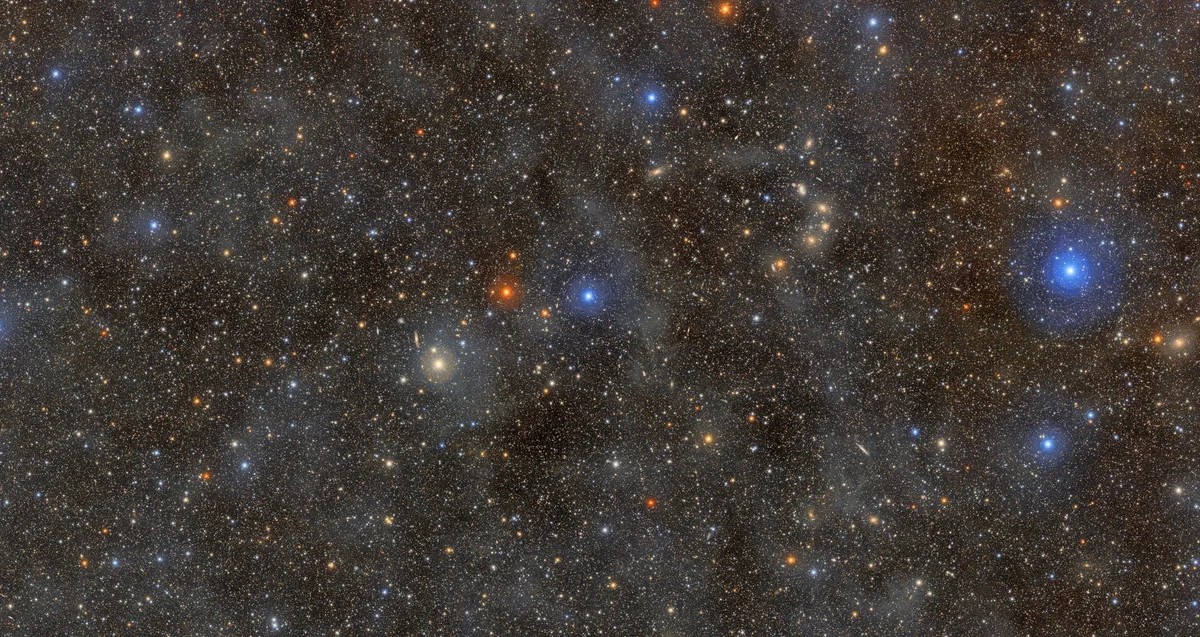
The Vera C. Rubin Observatory is now wide open, scanning the southern sky with an appetite that looks nothing like anything we have built before. It’s a cosmic time-lapse on a scale that makes your head spin. Every few nights it sweeps the entire visible hemisphere, building the most detailed history of change we can possibly imagine.
Rubin didn’t just switch on overnight. Its 8.4-meter mirror first saw the sky about a year ago, then sat there while scientists tweaked optics like they were balancing a plate of ice cubes in an earthquake. By June 30, though, the fiddling was done. The Legacy Survey of Space and Time (LSST) began. Ten years.
“It reminded me of the birth of my孩子.” Željko Ivezić actually said that. He led the LSST team. “You wait. You wait and finally it materializes.” Two decades of work condensing into one night. Can you blame him for feeling emotional?
After five to seven years we will be able to distinguish between the two main hypotheses regarding dark energy. — Željko Ivezić
Here’s why it matters.
Speed kills. And captures.
The camera behind all this was built at SLAC National Accelerator Lab. It weighs tons, costs more than your house, and takes an image of the whole sky roughly every forty seconds. Thirty-two hundred megapixels. The images are huge, yes, but the real trick is how much Rubin sees at once. Its field of view is roughly 100 times bigger than comparable telescopes, and it scans 100 times faster.
A millennium’s worth of data for other observatories? Rubin does it in ten years.
That volume serves a specific purpose: finding the stuff that changes. Sudden flares of light. Stars that vanish for no obvious reason. Asteroids buzzing through the solar system, some of them heading straight for us, some of them not. Mostly asteroids, actually, including the kind we worry about when they drift into Near-Earth space. But the headline isn’t rocks.
It’s dark.
Ghostly energy.
Most of the universe isn’t stuff we can touch. It’s dark matter holding galaxies together like glue we can’t see and dark energy pushing space itself apart, accelerating. The NSF and U.S. Department of Energy didn’t fund Rubin to stare at stars politely. They funded it to decide a very old fight.
Ivezić frames it as a fork in the road.
Option A: dark energy exists as we think it does. It is real. It pushes expansion faster and faster. Option B: there is no such thing, and our understanding of gravity simply breaks down when distances get unimaginably large. Either way we’re rewriting the book, but Rubin wants to know which chapter is right. If they answer that? The LSST calls it their most fundamental possible result.
Ten years to sort that out. The telescope just took its first real bites. We wait. We see what disappears, what flashes, what drifts into view, and whether gravity was ever really what we thought it was. The sky doesn’t hold still.