James Webb didn’t just see stars. It saw a problem.
Ever since JWST opened its eye in 2022. We have been looking back into the deep past. Into those first billion years. What came through wasn’t what astronomers expected. The early sky is crowded with tiny. Glowing. Red. Flecks.
They call them Little Red Dots or LRDs. They look like distant red giant stars. They probably aren’t.
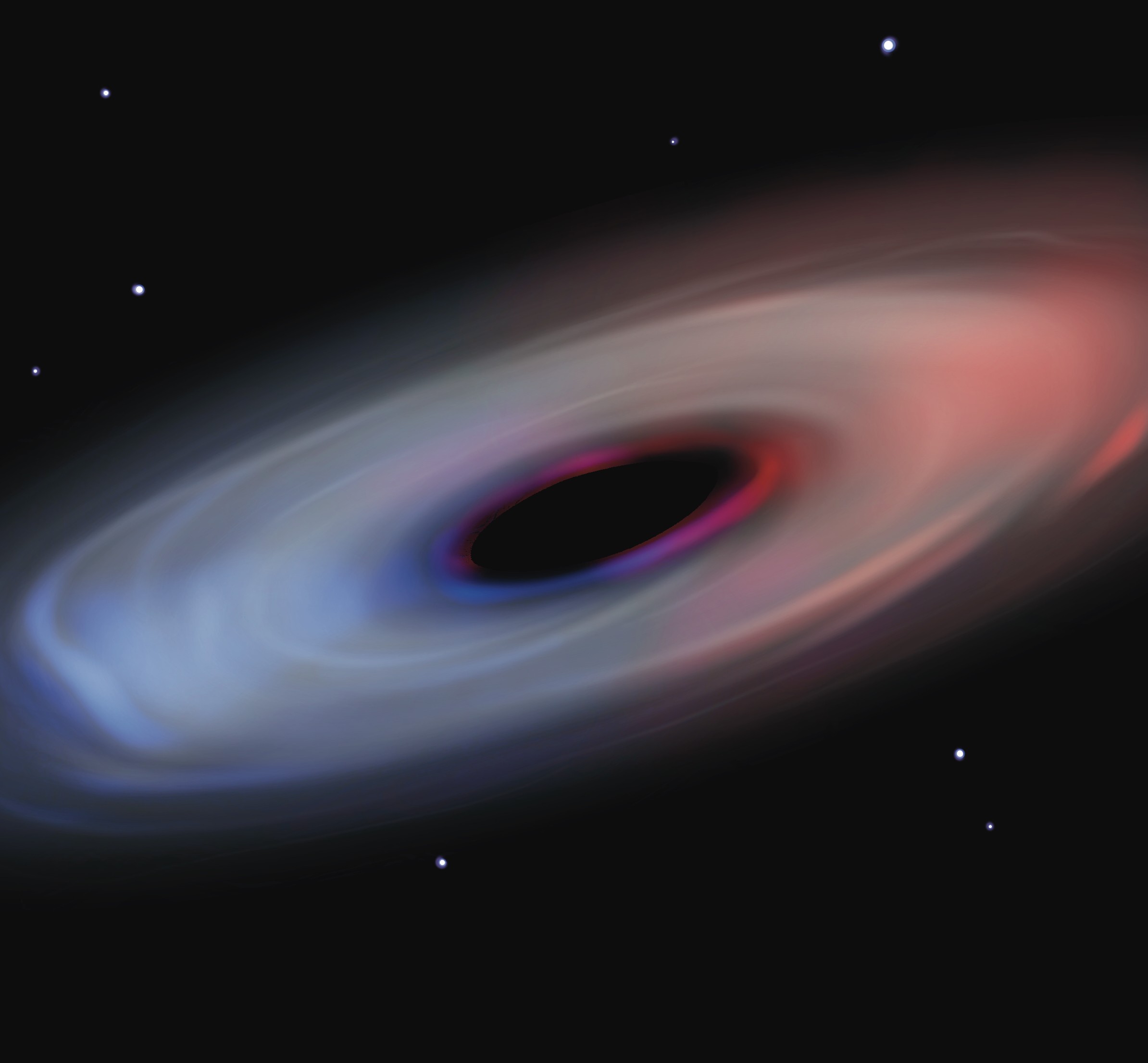
Most scientists now suspect these dots hide growing black holes at their cores. Big ones. But how big? That question has the astrophysics community tearing its hair out.
“If everything in this paper is true. At face value. Then we are living in a stranger world.” — Jenny Greene (Princeton)
Greene wasn’t involved. But she knows what’s at stake. The whole timeline of the cosmos is on the table. Did galaxies come first. Forming around stars. Did black holes wait for their galactic nurseries?
Or. Did the monsters arrive before the neighborhood existed.
A Weighty Claim
A new paper in Nature takes a hard stance. The authors say one of these LRDs weighs 50 million times as much as our Sun.
That’s heavy. Really heavy.
The method was new. They used something called spectroastrometry. They looked at the hydrogen gas swirling around the center of the dot. They measured how the color of that light shifted. Blueshift. Coming toward us. Redshift. Going away. Like a siren.
By tracking that Doppler shift across different orbits. They calculated velocity. Velocity gives mass. Simple physics. Harsh numbers.
50 million solar masses. Just 700 million years after Big Bang.
The astronomy community paused. Then sighed. Then argued.
If true. It breaks the standard model. Standard theory says black holes grow slowly. Eating matter over eons. To get to 50 million that fast? You can’t eat enough food. Unless you started huge.
Which implies they were born early. Before the galaxies wrapped around them. Maybe they are primordial seeds. Left over from the very first second.
The ‘Star’ Counter-Argument
Not everyone buys the weight. Critics argue the LRD isn’t a normal black hole environment.
They say the object is shrouded. Occluded. Dense gas clouds hide the truth. So maybe the standard weighing techniques don’t work. Maybe we’re misreading the signal.
Instead of a hidden monster. What if it’s a new kind of star?
They call it a black hole star. Imagine a red giant. Swollen. Glowing hot. But no nuclear fusion inside. Just a baby black hole feasting on the gas shell. The energy comes from the hole. Not the star. The glow is the meal.
If this is true. We found a new class of object. Exotic. Unknown.
Roberto Maiolino at Cambridge disagrees. He co-authored the Nature paper. He thinks critics are rebranding the unknown. Calling familiar things weird just because the angle is weird.
“I think with LRDs. It’s more likely we’re seeing a familiar object. From an unfamiliar angle.”
He’s right to be cautious. 50 million suns outweighs the galaxy itself. If that host galaxy even exists. The black hole would be heavier than its home. That’s bizarre. Violates our intuition about structure. But data is data.
The Skeptic’s Gaze
Raphael Hviding. Max Planck Institute. He sees the contradiction. If the black hole star hypothesis holds. This measurement kills it. A 50 million solar mass hole can’t hide inside a gas star. It would rip the thing apart.
But trust? Trust is thin.
The target is too far. The measurement is brave. But is it accurate?
Greene calls it hard. Really hard. She’s waiting for replication. Until another telescope sees it. The debate stays open.
Ignas Juodžbalis. The student lead author. He admits he is pushing the data. To the limits. Beyond.
“We’re pushing the data to its limits,” he says.
He’s betting on the next wave of eyes. Europe’s Extremely Large Telescope is coming to Chile. It will have the power. The resolution. The clarity.
In the 2030s? We will know.
For now. We have dots. Heavy or hollow. Monstrous or miraculous. They just hang there in the dark. Waiting.
Will they resolve into standard giants. Or will they remain these heavy. Ancient. Secrets.
Time tells.