Proper nouns. They are the labels we use to pick out specific things from a crowded room of identical objects. You use them every day. You just might not think about the rules governing their spelling.
Think of a proper noun as a unique identifier. It names a person, a place, a country, or even a specific animal and sets it apart from everyone else.
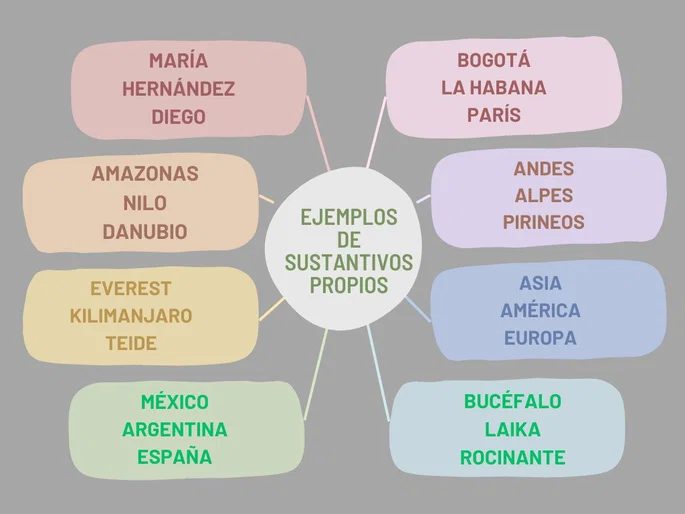
Take México. It isn’t just a word for a region. It points to one specific nation. You use it to distinguish that country from all others on the map. María is another example. It doesn’t refer to just any woman. It identifies one concrete individual.
These are also called nombres propios. The rule is simple. You always start them with a capital letter.
Asia.
Diego.
See the pattern? Capital letters signal that this name is unique. It stands alone.
But the rules get interesting when names span multiple words. You might think every single word gets a capital. That’s not quite right.
You capitalize the significant terms. The words that carry the weight of the name.
Los Ángeles.
Buenos Aires.
Nueva York.
Each of those key words starts with a capital. But what about the connecting words? The ones that just link things together?
Prepositions and articles stay lowercase. They do not get the spotlight.
Look at Río de Janeiro. Río gets a capital because it is part of the core name. de stays lowercase. It’s a preposition. It just connects Río to Janeiro.
Same with Ciudad de México. Ciudad and México are capitalized. de remains small.
Why does this matter? Because consistency creates clarity. When you follow these rules, your writing becomes easier to parse. Readers know immediately that you are talking about a specific entity. Not a general concept.
If you get it wrong, the name loses its punch. It looks sloppy. It suggests you don’t care about the distinction.
In Spanish, the distinction is rigid. You cannot write rio de janeiro and expect it to read correctly. It turns a proper noun into a common description. A river in January. That changes the meaning entirely.
So, keep the capitals where they belong. Drop the lowercase where the grammar demands it.
It’s a small detail. But it makes all the difference in how your text is received.
You might wonder why some names seem irregular. Los in Los Ángeles is capitalized. Isn’t los an article?
Yes. But in this case, it is part of the official name of the city. It’s not functioning as a generic article. It’s a significant term. Context dictates the capitalization.
This is where you have to pay attention. Don’t just memorize a list. Understand the logic.
Significant terms get capitals. Connectors stay down.
That’s the core of it.
Most people get this wrong on their first try. They capitalize De in Ciudad de México. They capitalize Y in México y Colombia.
Don’t be most people.
Check the grammar. Is it a preposition? An article? A conjunction? If
How to classify proper nouns by type
Proper nouns aren’t just capitalized words. They are specific labels that carve out unique identities from general categories. The way you classify them depends entirely on what they refer to. If you are tagging a noun, you need to know which bucket it falls into.
The main categories are anthroponyms, toponyms, and zoonyms.
Anthroponyms cover human names. This includes first names, surnames, and even nicknames. If a surname comes from a father’s name, it’s a patronymic. Take Martín. The derivative is Martínez.
Toponyms cover places. Cities. States. Oceans. Mountains. If it exists on a map, it’s likely a toponym.
Zoonyms cover animals. Real ones. Fictional ones. If an animal has a specific name, it’s a zoonym.
Examples of anthroponyms
Anthroponyms serve a single purpose: distinction. They isolate one individual from a crowd. You don’t call everyone Juan. You call him Juan.
Nicknames count here too. But there is a rule. If you use an article with a nickname, it stays lowercase.
Consider these pairings.
Surnames and first names
Fernández – Ana
Zambrano – Catalina
Quispe – Lorena
Soto – Andrés
Rosario – Enrique
Arribas – Leopoldo
Martínez – Diego
Vázquez – Fátima
Rojas – Antonio
Morales – Leonor
García – Silvia
López – Germán
Álvarez – Kevin
Orellana – Gabriel
Hernández – Eugenio
Roberto – Martínez
Valentín – Leonardo
Flores – Silvia
González – Kevin
Orellana – Gabriel
Hernández – Eugenio
Nicknames with articles
el «Cebolla»
el «Loco» Gutiérrez
el «Kun»
These function as proper nouns. They identify specific people. But the grammar shifts. The article does not capitalize. The nickname does.
Toponyms: Countries, regions, and cities
Geography demands specificity. Country is a common noun. Mexico is a proper noun.
Maps are political entities. They rely on these names to define borders.
Here is a sample set of toponyms found on political maps.
Montevideo
Venezuela
Irlanda
Sevilla
Oceanía
Estados Unidos
Grecia
Las Vegas
Argentina
El Salvador
Reino Unido
Japón
Ciudad de México
El Congo
Managua
Italia
San Salvador
Nairobi
La Paz
Atenas
Quito
Polonia
Madrid
Cuba
Berlín
España
Nueva Zelanda
México
Tokio
Roma
India
Argelia
Perú
Zambia
Dublín
Londres
Nápoles
Pekín
Australia
Castilla
Buenos Aires
Caracas
Luanda
Río de Janeiro
Turquía
Trípoli
Suiza
Maracaibo
Noruega
Asia
Dallas
Europa
Brasil
El Cairo
Colombia
Nueva Delhi
Uruguay
Portugal
Camberra
Bogotá
Nigeria
China
Lombardía
San José
París
Honduras
Moscú
La Habana
La Haya
Israel
Alemania
Jamaica
Francia
Bolivia
África
Nicaragua
Viena
América
Marruecos
Nueva York
Gascuña
Canadá
Lima
Costa Rica
Valparaíso
Lisboa
Córdoba
Chiapas
Jalisco
Chile
The list is long. The function is the same. Each name points to a singular location. No other place shares that exact identifier.
Natural features and topography
Toponyms also cover natural accidents. Rivers. Mountain ranges. Seas. Lakes.
These names are not man-made borders. They are physical realities.
Cataratas Victoria
Himalaya
Volcán Tacaná
Citlaltépetl
Orinoco
Monte Stanley
Lago Alberto
Atlántico
Pirineos
Andes
Danubio
Mediterráneo
Teide
Everest
Atlas
Incahuasi
Tanganica
Sierra Madre
Nilo
Cerro Mercedario
Kilimanjaro
Apeninos
Caldera de Taburiente
Mar Muerto
Catarata Gocta
Selva Lacandona
Lago Superior
Fiji
Río Amarillo
Índico
Titicaca
Maldivas
Etna
Misisipi
Aconcagua
Mont Blanc
Alpes
Selva Amazónica
Aneto
Seychelles
Cataratas del Niágara
Pacífico
Urales
Nahuel Huapi
Ganges
Identifying these requires knowing the type of feature. A lake is not a mountain. But both are toponyms. Both require capitalization. Both refer to a single entity in that category.
Zoonyms and animal names
Animals get names too. Zoonyms cover pets. Wild animals. Characters from literature or film.
Laika
Rocinante
Incitatus
Babieca
Palomo
Bobby
Toby
Cher Ami
Dolly
Willy
Copito de Nieve
Koko
Simba
Babe
Mufasa
Laika was a dog. Rocinante was a horse. Babe is a pig. The source doesn’t matter. The function does. The name identifies a specific individual.
Proper nouns in context
Theory is dry. Sentences bring them to life.
Look at how these words behave in real text.
1. Marisa made a route through France : Marseille, Nîmes, Montpellier…
2. Laika was a dog put into orbit by the Soviets.
3. Frida Kahlo is a cultural icon in Mexico and around the world.
4. Hiram Bingham discovered Machu Picchu in the early 20th century.
5. An earthquake devastated the island of Santorini, in the Aegean sea.
6. Bellerophon rode the legendary Pegasus.
7. Peru has some of the best restaurants in the world.
8. Can you take Kuky to the vet?
9. During our stay in Colombia, we visited Bogotá and Medellín.
10. Imagine what Egypt looked like thousands of years ago, with boats on the Nile.
11. His favorite fictional character is Luke Skywalker.
12. He rode across La Pampa on his horse Furia.
13. Researchers set up a new base in Greenland.
14. It is predicted that pollution in the Indian Ocean will increase in the coming years.
15. They went on a safari between Tanzania and Kenya.
16. He climbed up with some friends to the Kilimanjaro and saw little snow.
17. Mrs. Hernández just entered the consultation.
18. The bear Teddy is the star of the zoo.
19. He barely enjoyed Venice because St. Mark’s Square was flooded.
20. They arrived in the Philippines and were greeted at Manila airport.
Notice the pattern. Every capitalized word here is a specific identifier. No generalities.
Proper vs. common nouns
The difference comes down to identity.
Proper nouns identify one element among many. Juan stands out. He is distinct from other students. Other doctors. Other