Museum displays are static. Quiet, too. You look at a fuselage and think of history frozen in time. Occasionally a bird flies at an airshow, clean and polished, posing for the crowd.
Firing back? Rare.
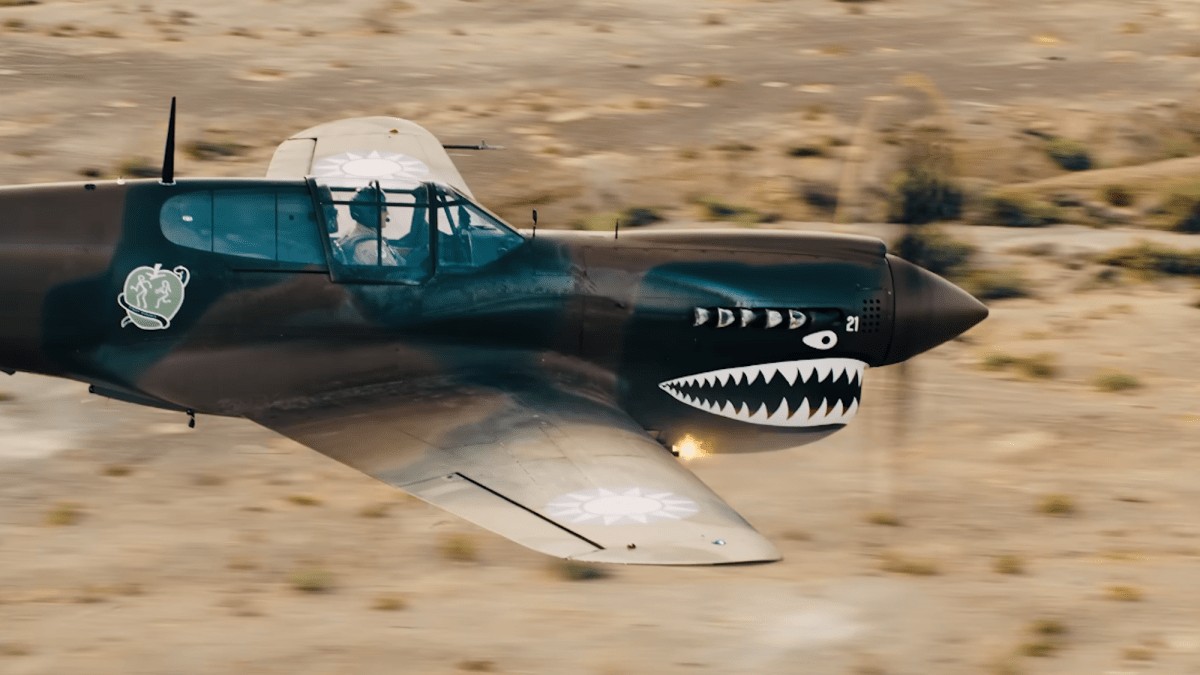
For over two years the Soaring By The Sea team worked on one of those legends: the Curtiss P-40 “Warhawk”. They didn’t just want it flying. They wanted it ready for a dogfight, more than eighty years after the war ended. Specifically they wanted to make its six .50-caliber machine guns sing.
Recent footage suggests they nailed it. The guns work.
A flawed icon
The P-40 is unmistakable. American design. Debuted in 1938. Single engine. Solo pilot. By war’s end, they had churned out over 13,000 of them. You found them in the Pacific desert sand in North Africa even over Europe. Some early models had Allison engines, roughly 1,000 hp. Later versions got upgraded with Rolls-Royce Merlins. They carried bombs occasionally, even dropped small tanks on occasion.
Was it good? Not really.
Allies found it mediocre at best. That Allison engine sucked the performance out of it at high altitude. Japanese Zeros and German Me 109s would laugh at its climb rate. Top speed? Forget it. The competition was faster, higher, sharper.
But it arrived. Early. In volume. While factories elsewhere fiddled, the P-40 was out there killing time, and maybe a few planes, while better options were drawn up. It was the interim hero. Good enough.
This one’s scars
The specific plane here is P-40N-1, tail number A29-448. Handed to the Royal Australian Air Force in May 1943, just before things got messy. It flew dozens of sorties. Covered bombers. Strafed the ground. Patrolled hostile skies.
It fought. Seven times at least.
Then hydraulic lines failed, electrical gremlins appeared. The pilot pulled off a belly landing near Tadji in Papua New Guinea in May 1944, leaving the plane behind on a remote strip. It sat. Gathering dust. Forgotten by war. Found by history again in 1974. Hauled to New Zealand. Restorations started in the nineties, flying for airshows by 2000, a beautiful ghost.
This latest job required digging up 1940s manuals, tracing original engineering specs for the gun mounts, making sure those bullets fired straight without tearing the fuselage apart. Safety mattered. Authenticity mattered.
We want to keep these things active.
Coy Pfaff, executive director for the foundation, put it bluntly. Letting history rust doesn’t do anyone any good. A documentary drops July 10 on the foundation’s YouTube channel, tracking the resurrection, the wiring, the final test firing.
There’s a strange violence to seeing a vintage bird unleashed. You expect wood and fabric, fragility, elegance. Not brass casings spinning onto a tarmac, smoke hanging heavy in the air, the sharp report of weapons meant for death now used for memory.
Maybe we like seeing the danger still live.